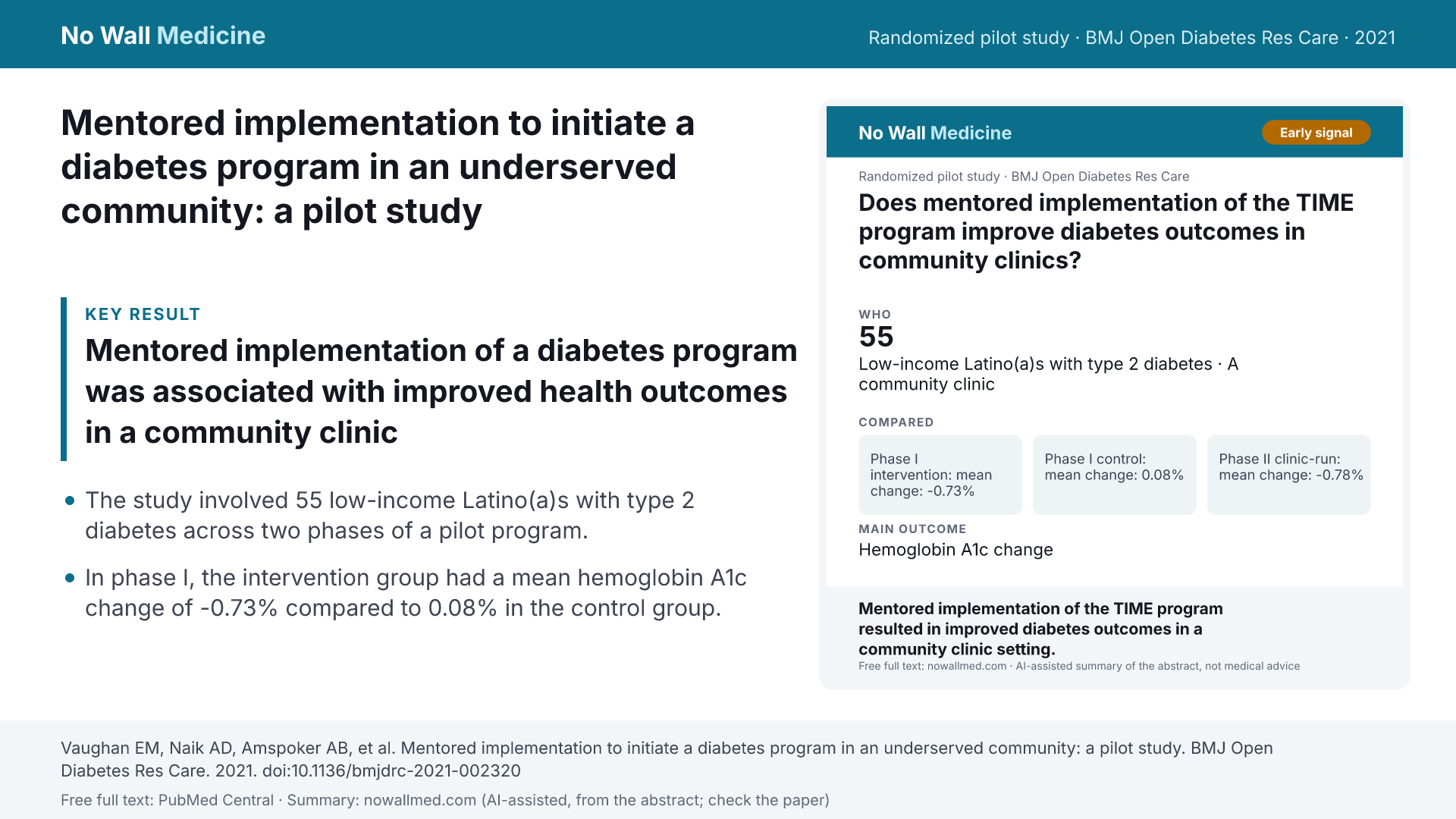
Mentored implementation to initiate a diabetes program in an underserved community: a pilot study
Key result: Mentored implementation of a diabetes program was associated with improved health outcomes in a community clinic
Key points
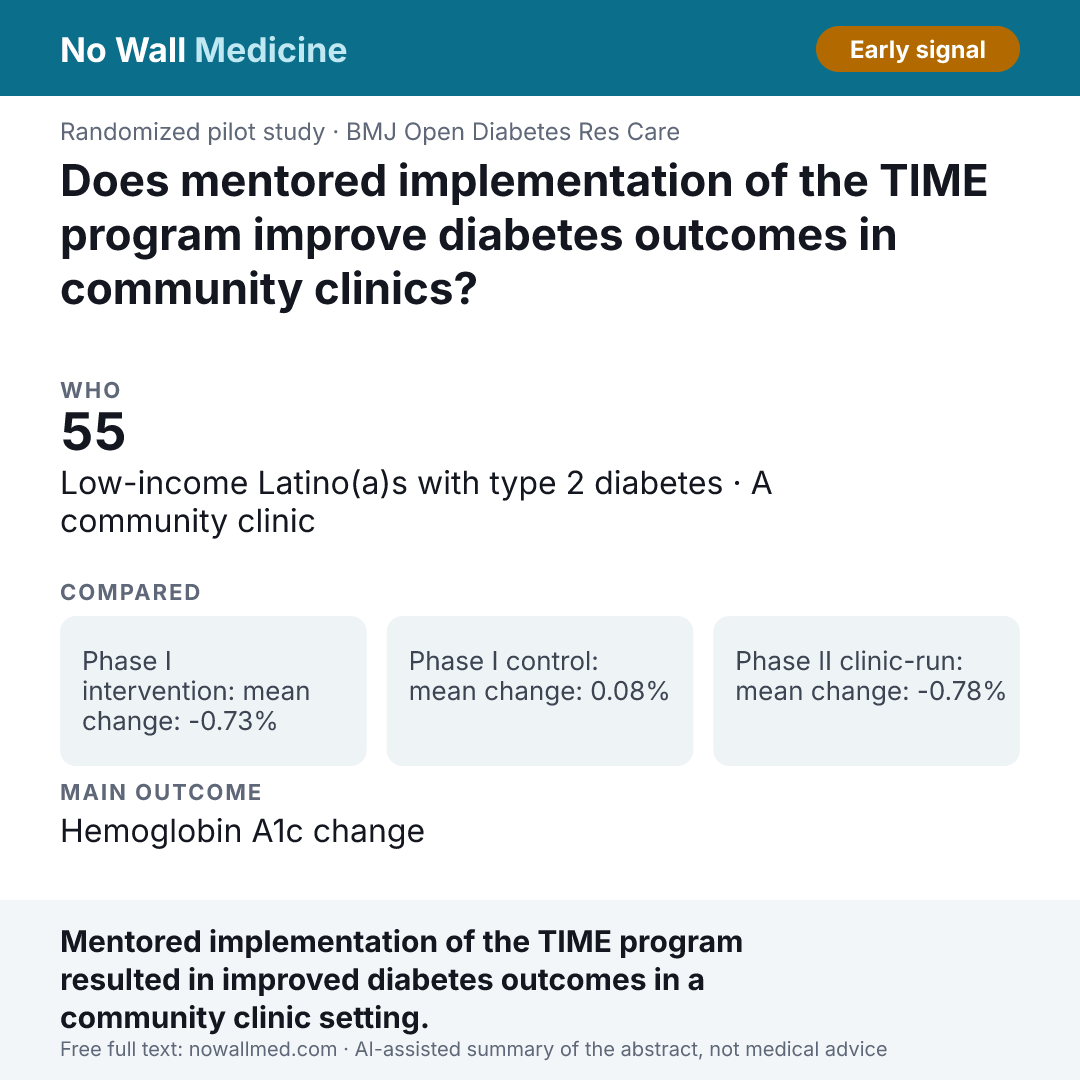
- The study involved 55 low-income Latino(a)s with type 2 diabetes across two phases of a pilot program.
- In phase I, the intervention group had a mean hemoglobin A1c change of -0.73% compared to 0.08% in the control group.
- In phase II, participants had a mean hemoglobin A1c change of -0.78% and community health workers improved their knowledge scores.
Why it matters: Community clinics face practical barriers that make it difficult to start new programs or replicate results from controlled research trials.
Limitation the authors note: Larger studies of longer duration are needed to fully evaluate the potential of mentoring community clinics.
Discussion prompts
- Would these patients look like yours? Who was left out?
- Is the main outcome one that matters to patients?
- Is the difference large enough to change what you do?
Cite: Vaughan EM, Naik AD, Amspoker AB, et al. Mentored implementation to initiate a diabetes program in an underserved community: a pilot study. BMJ Open Diabetes Res Care. 2021. doi:10.1136/bmjdrc-2021-002320
Free full text: PubMed Central · Summary and visual abstract: nowallmed.com/a/mentored-implementation-to-initiate-a-diabetes-program-in-an-jsffw/ (AI-assisted from the abstract; check the paper before relying on it).