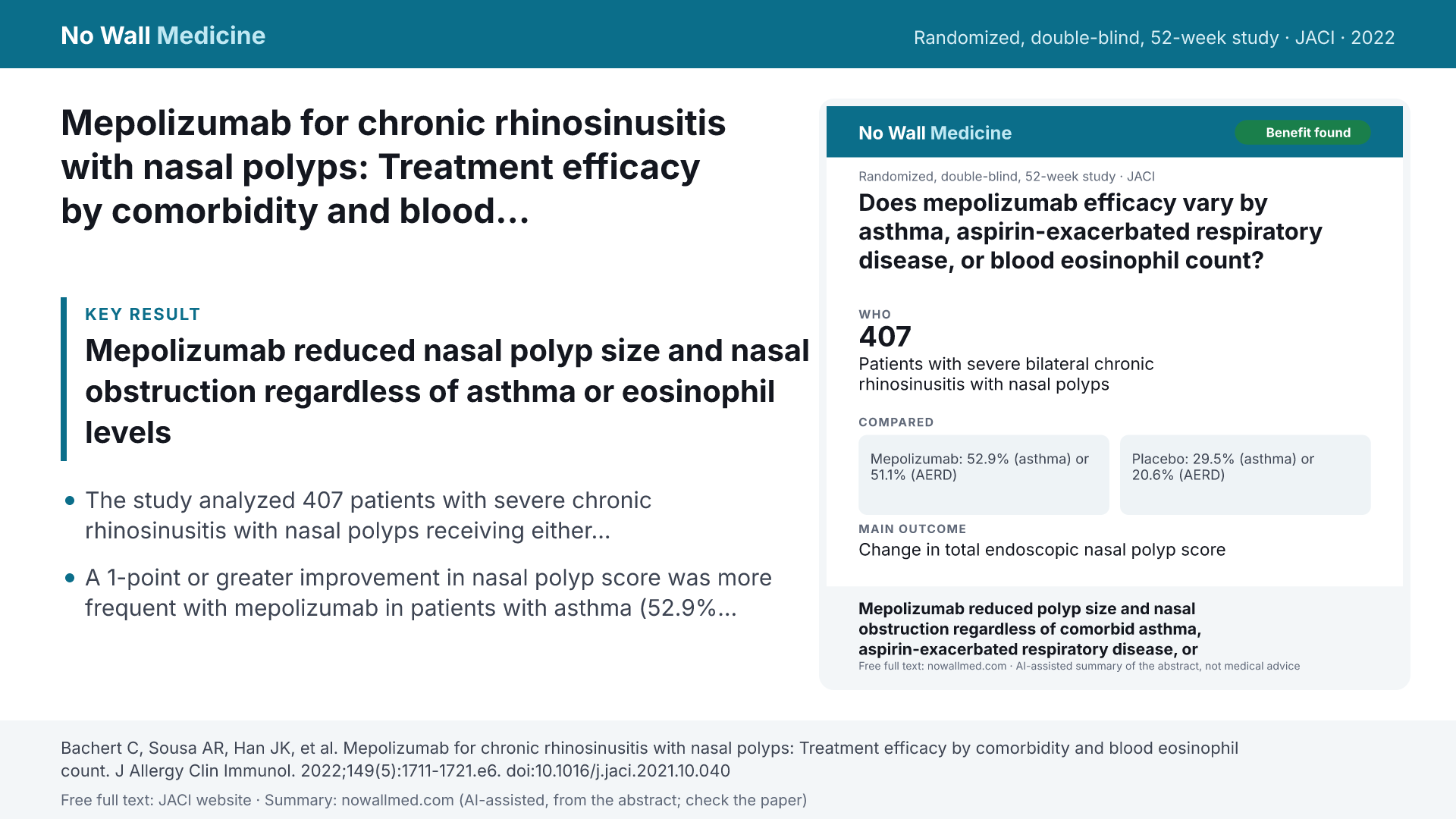
Mepolizumab reduced nasal polyp size and nasal obstruction regardless of asthma or eosinophil levels
Mepolizumab for chronic rhinosinusitis with nasal polyps: Treatment efficacy by comorbidity and blood eosinophil count
Randomized, double-blind, 52-week studyBenefit found
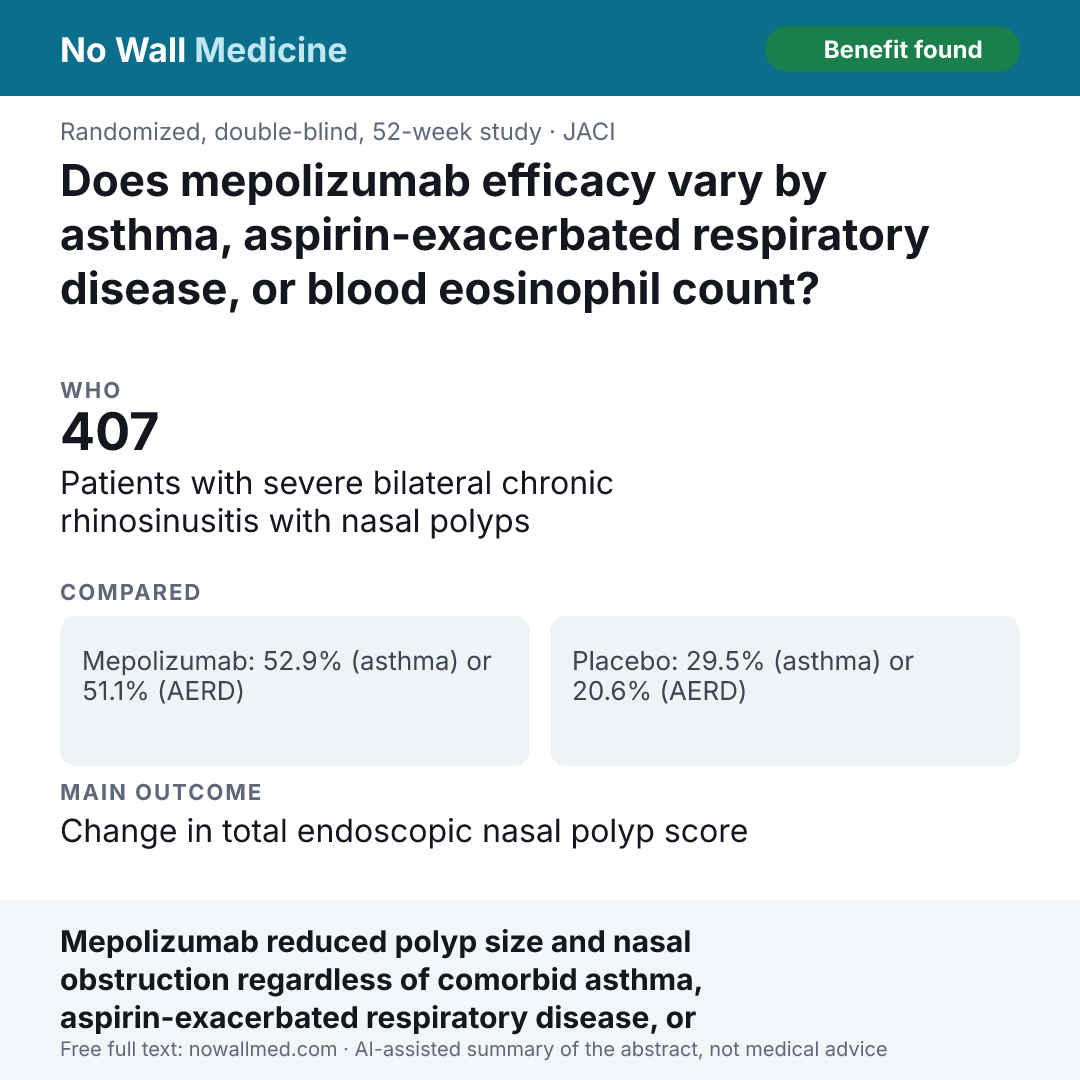
Does mepolizumab efficacy vary by asthma, aspirin-exacerbated respiratory disease, or blood eosinophil count?
Who
407
Patients with severe bilateral chronic rhinosinusitis with nasal polyps
Compared
Mepolizumab: 52.9% (asthma) or 51.1% (AERD)
Placebo: 29.5% (asthma) or 20.6% (AERD)
Main outcome
Change in total endoscopic nasal polyp score
Bottom line: Mepolizumab reduced polyp size and nasal obstruction regardless of comorbid asthma, aspirin-exacerbated respiratory disease, or blood eosinophil count.
JACI · 2022-01-07 · NCT03085797
Same trial (NCT03085797)
Papers we list that report this registered trial, oldest first. Read a secondary analysis alongside the main results.
- Main results Benefit found
This paper JACI 2022-01 - Related analysis Benefit found
Mepolizumab was associated with lower steroid use in patients with chronic rhinosinusitis with nasal polyps J Allergy Clin Immunol Pract 2023-08
Headline and visual abstract written with AI from the paper’s abstract, with every number checked against it. Read the paper before relying on them.
Was this summary helpful?
Subject terms
Cite this article
Bachert C, Sousa AR, Han JK, et al. Mepolizumab for chronic rhinosinusitis with nasal polyps: Treatment efficacy by comorbidity and blood eosinophil count. J Allergy Clin Immunol. 2022;149(5):1711-1721.e6. doi:10.1016/j.jaci.2021.10.040
Spotted a mistake? Suggest a correction