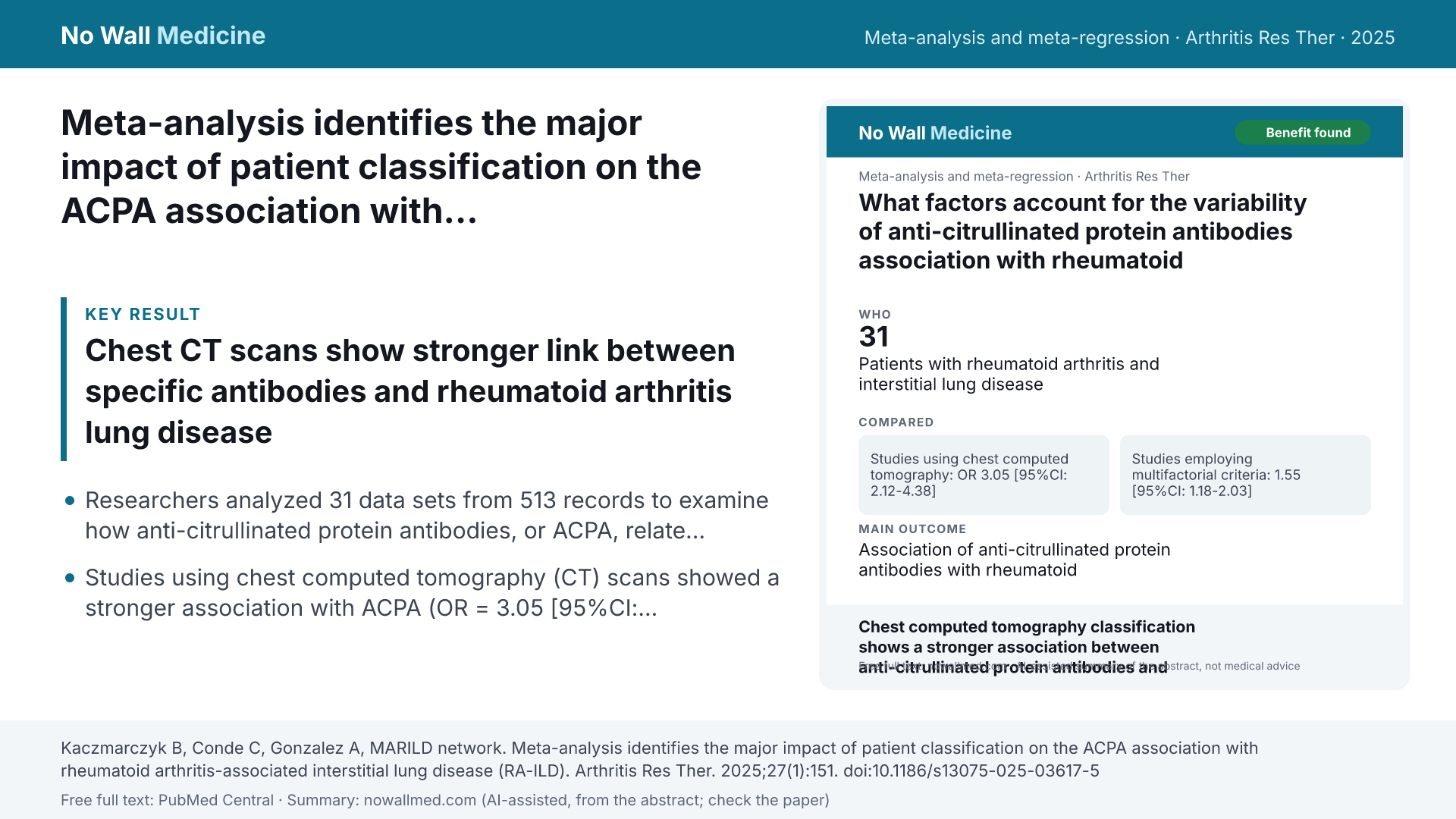
Meta-analysis identifies the major impact of patient classification on the ACPA association with rheumatoid arthritis-associated interstitial lung disease (RA-ILD)
Key result: Chest CT scans show stronger link between specific antibodies and rheumatoid arthritis lung disease
Key points
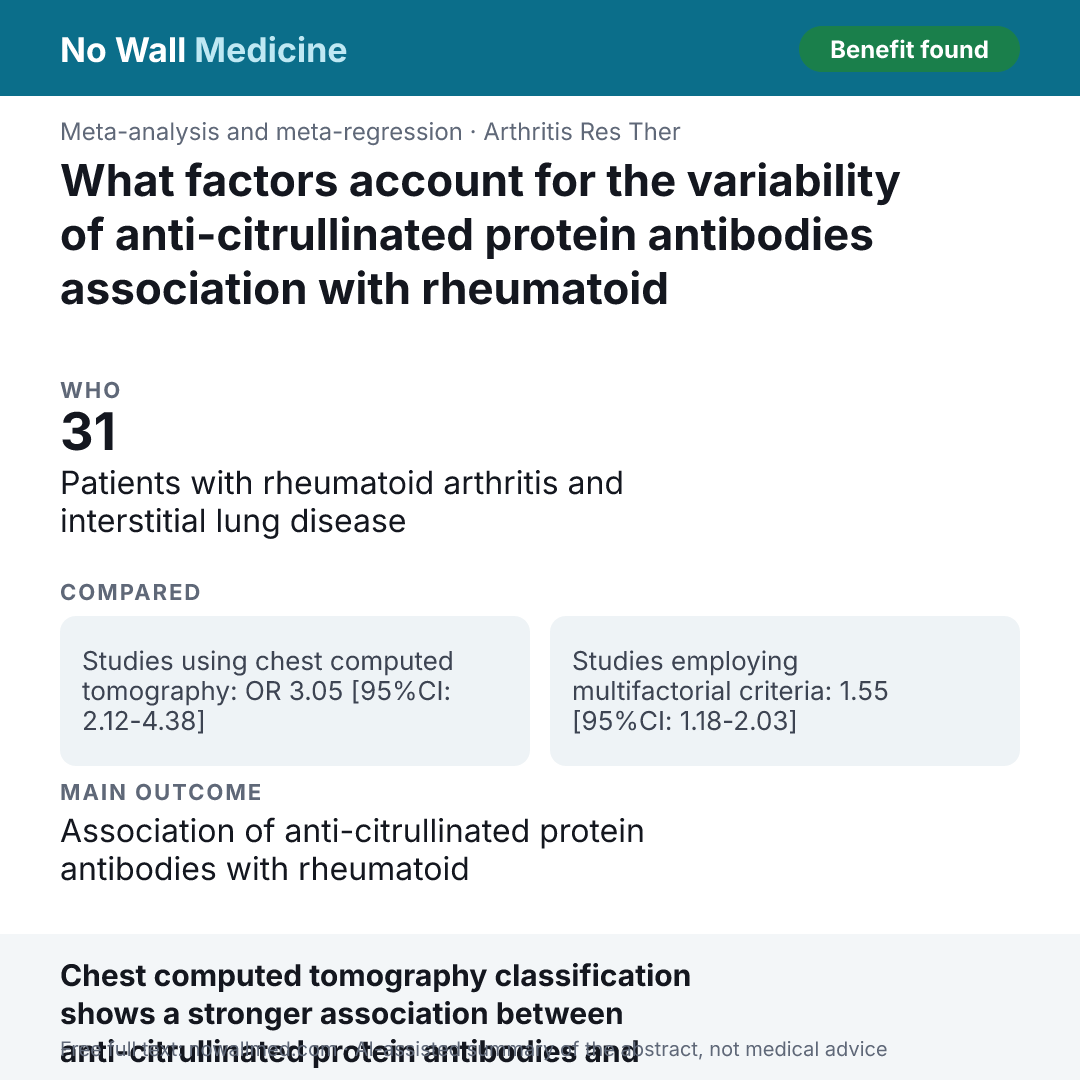
- Researchers analyzed 31 data sets from 513 records to examine how anti-citrullinated protein antibodies, or ACPA, relate to rheumatoid arthritis-associated interstitial lung disease.
- Studies using chest computed tomography (CT) scans showed a stronger association with ACPA (OR = 3.05 [95%CI: 2.12-4.38]) than those using multifactorial criteria (1.55 [95%CI: 1.18-2.03]).
- One outlier study accounted for 58.1% of the initial heterogeneity in the results due to different recruitment contexts.
Why it matters: Existing screenings disagree regarding the association of anti-citrullinated protein antibodies with rheumatoid arthritis-associated interstitial lung disease.
Discussion prompts
- Would these patients look like yours? Who was left out?
- Is the main outcome one that matters to patients?
- Is the difference large enough to change what you do?
Cite: Kaczmarczyk B, Conde C, Gonzalez A, MARILD network. Meta-analysis identifies the major impact of patient classification on the ACPA association with rheumatoid arthritis-associated interstitial lung disease (RA-ILD). Arthritis Res Ther. 2025;27(1):151. doi:10.1186/s13075-025-03617-5
Free full text: PubMed Central · Summary and visual abstract: nowallmed.com/a/meta-analysis-identifies-the-major-impact-of-patient-classification-7aosby/ (AI-assisted from the abstract; check the paper before relying on it).