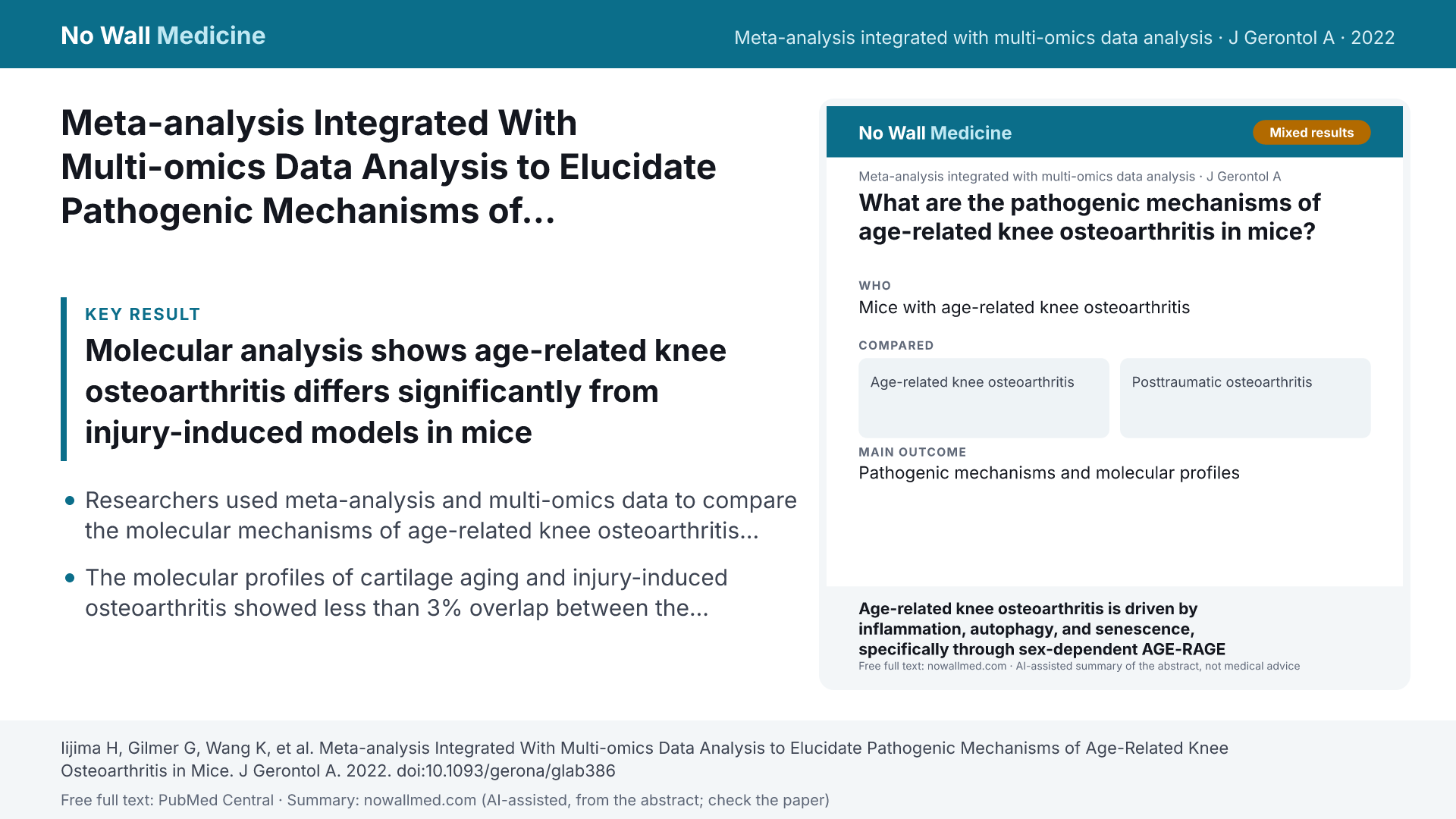
Meta-analysis Integrated With Multi-omics Data Analysis to Elucidate Pathogenic Mechanisms of Age-Related Knee Osteoarthritis in Mice
Key result: Molecular analysis shows age-related knee osteoarthritis differs significantly from injury-induced models in mice
Key points
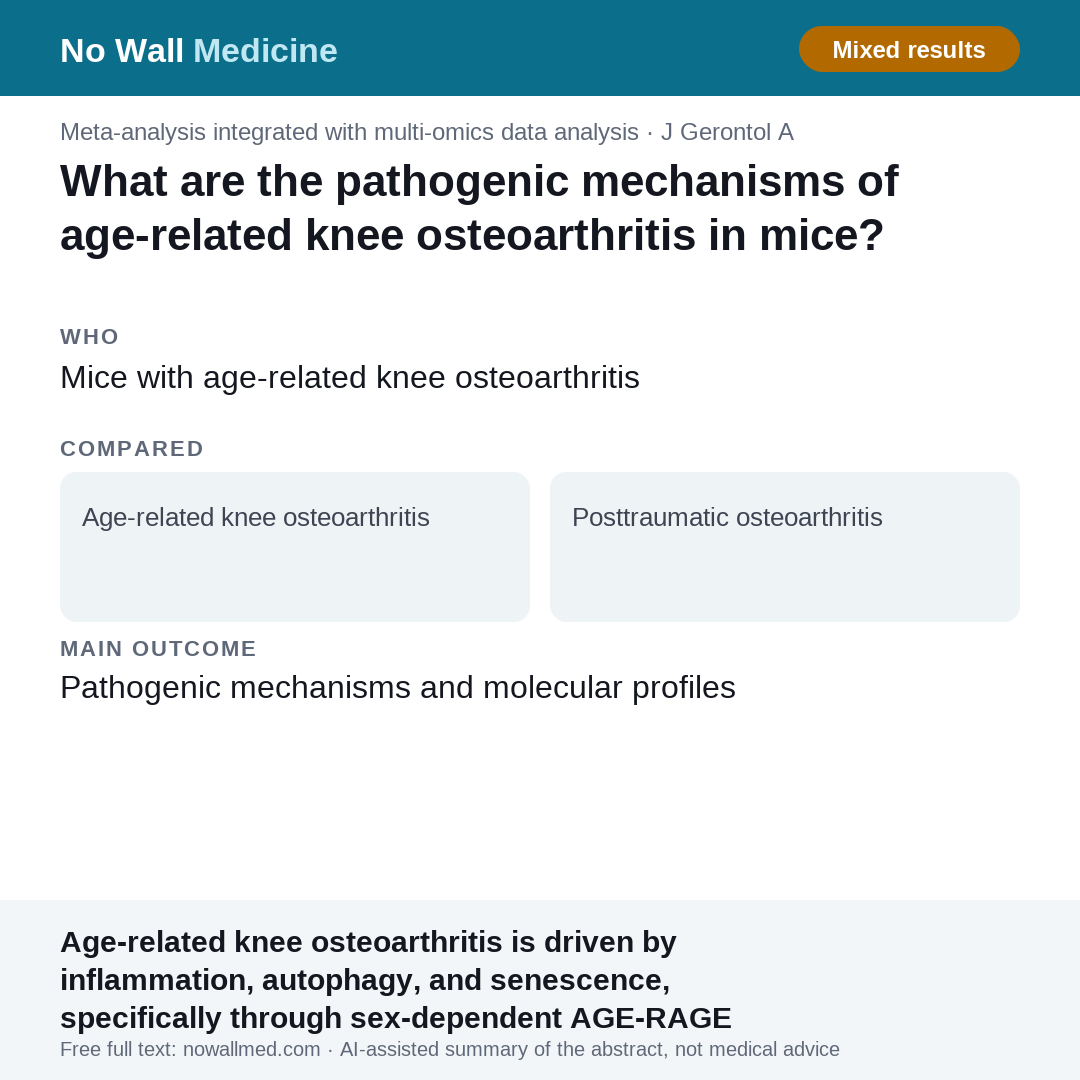
- Researchers used meta-analysis and multi-omics data to compare the molecular mechanisms of age-related knee osteoarthritis and posttraumatic osteoarthritis in mice.
- The molecular profiles of cartilage aging and injury-induced osteoarthritis showed less than 3% overlap between the two models.
- The advanced glycation end product and receptor for advanced glycation end product signaling pathway was associated with age-related knee osteoarthritis, specifically in male mice.
Why it matters: Most mechanistic understanding of knee osteoarthritis comes from surgically induced injury models rather than the age-related processes seen in most clinical cases.
Discussion prompts
- Would these patients look like yours? Who was left out?
- Is the main outcome one that matters to patients?
- Is the difference large enough to change what you do?
Cite: Iijima H, Gilmer G, Wang K, et al. Meta-analysis Integrated With Multi-omics Data Analysis to Elucidate Pathogenic Mechanisms of Age-Related Knee Osteoarthritis in Mice. J Gerontol A. 2022. doi:10.1093/gerona/glab386
Free full text: PubMed Central · Summary and visual abstract: nowallmed.com/a/meta-analysis-integrated-with-multi-omics-data-analysis-to-elucidate-1uu9wnm/ (AI-assisted from the abstract; check the paper before relying on it).