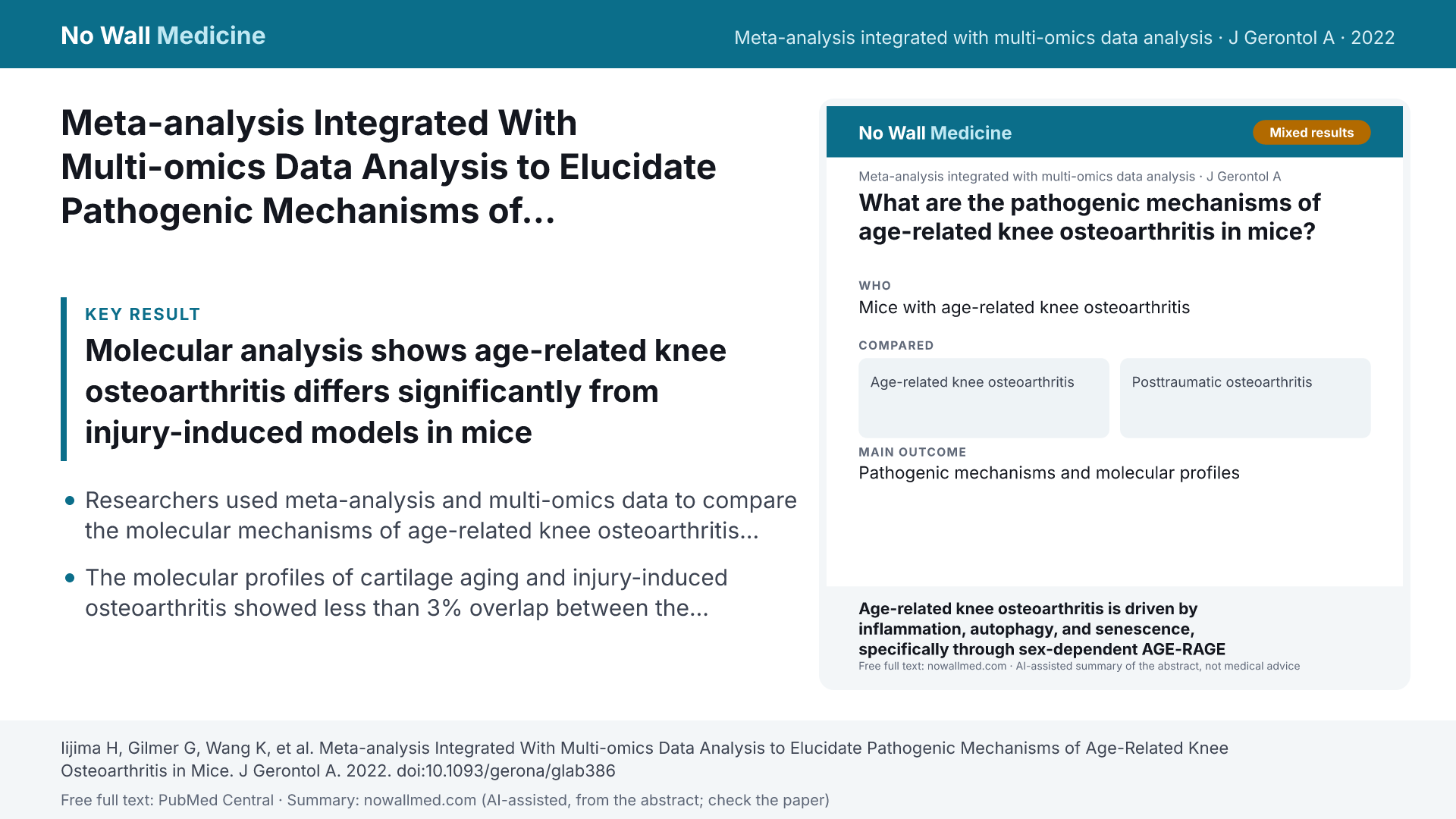
Molecular analysis shows age-related knee osteoarthritis differs significantly from injury-induced models in mice
Meta-analysis Integrated With Multi-omics Data Analysis to Elucidate Pathogenic Mechanisms of Age-Related Knee Osteoarthritis in Mice
Meta-analysis integrated with multi-omics data analysisMixed results
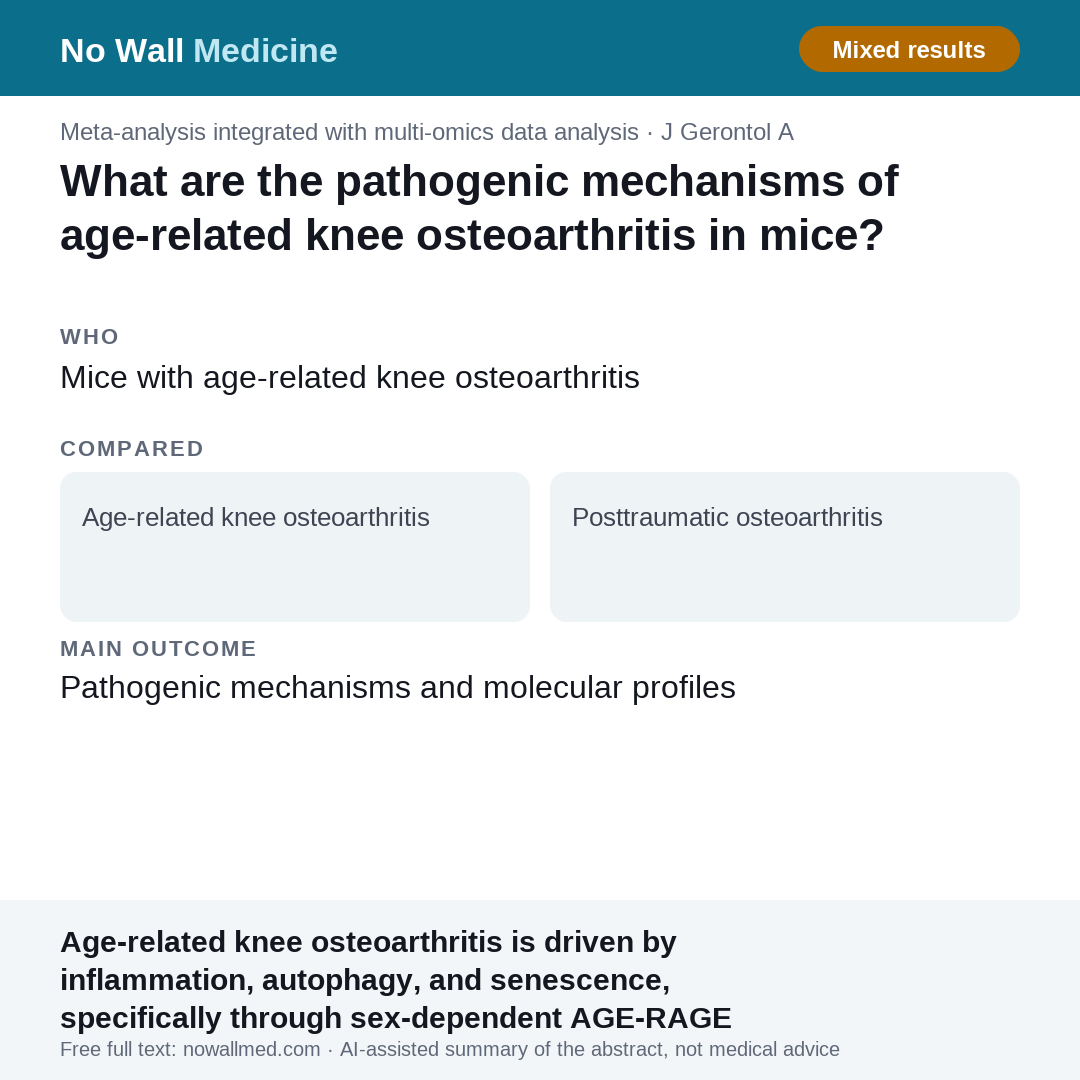
What are the pathogenic mechanisms of age-related knee osteoarthritis in mice?
Who
Mice with age-related knee osteoarthritis
Compared
Age-related knee osteoarthritis
Posttraumatic osteoarthritis
Main outcome
Pathogenic mechanisms and molecular profiles
Bottom line: Age-related knee osteoarthritis is driven by inflammation, autophagy, and senescence, specifically through sex-dependent AGE-RAGE signaling.
J Gerontol A · 2022-01-04Download image
Clinical question: What are the pathogenic mechanisms of age-related knee osteoarthritis in mice?
Why it matters: Most mechanistic understanding of knee osteoarthritis comes from surgically induced injury models rather than the age-related processes seen in most clinical cases.
Key points
- Researchers used meta-analysis and multi-omics data to compare the molecular mechanisms of age-related knee osteoarthritis and posttraumatic osteoarthritis in mice.
- The molecular profiles of cartilage aging and injury-induced osteoarthritis showed less than 3% overlap between the two models.
- The advanced glycation end product and receptor for advanced glycation end product signaling pathway was associated with age-related knee osteoarthritis, specifically in male mice.
Headline and key points written with AI from the paper’s abstract, with every number checked against it. Read the paper before relying on them.
Was this summary helpful?
Subject terms
Cite this article
Iijima H, Gilmer G, Wang K, et al. Meta-analysis Integrated With Multi-omics Data Analysis to Elucidate Pathogenic Mechanisms of Age-Related Knee Osteoarthritis in Mice. J Gerontol A. 2022. doi:10.1093/gerona/glab386
Spotted a mistake? Suggest a correction