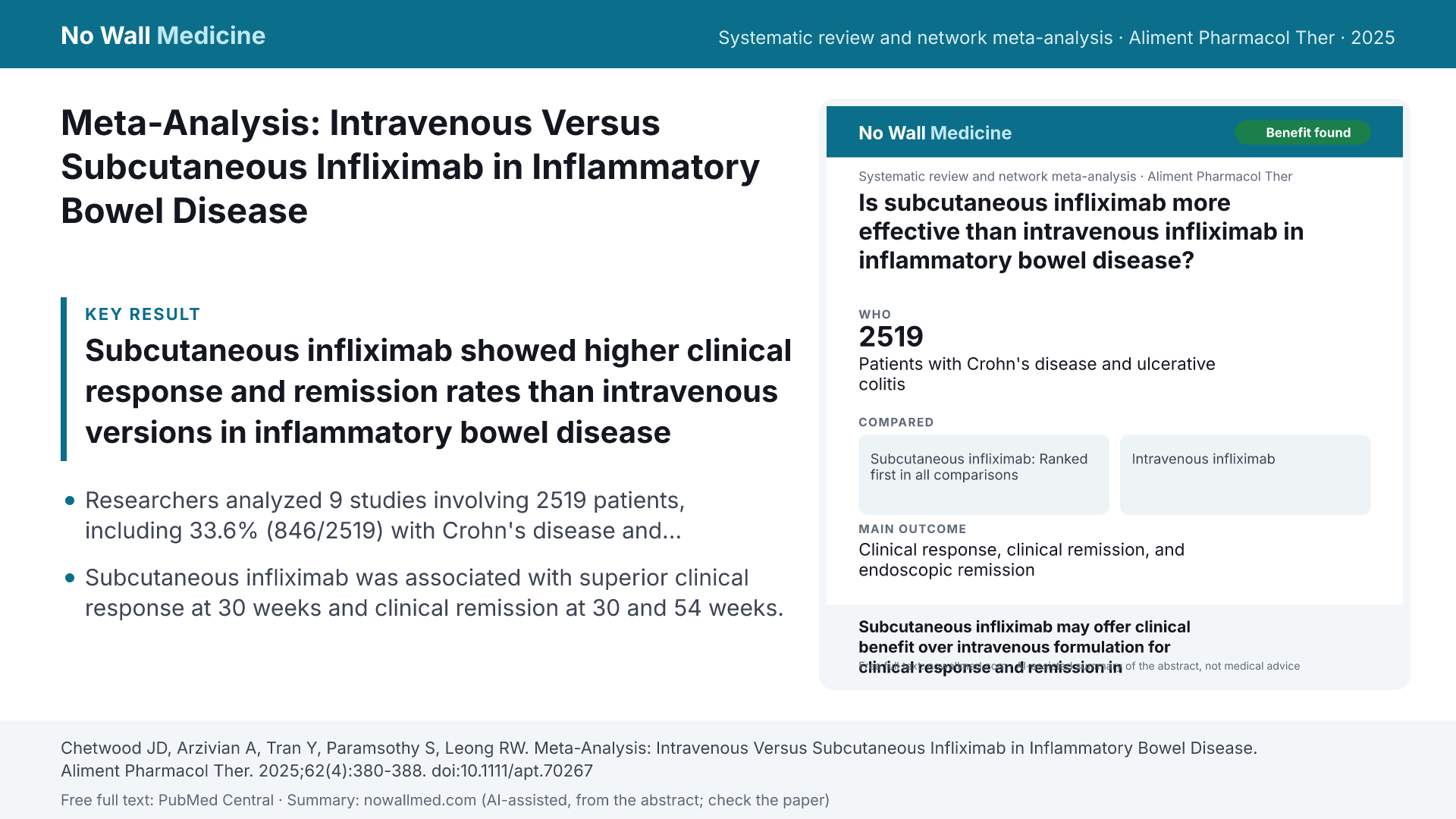
Subcutaneous infliximab showed higher clinical response and remission rates than intravenous versions in inflammatory bowel disease
Meta-Analysis: Intravenous Versus Subcutaneous Infliximab in Inflammatory Bowel Disease
Systematic review and network meta-analysisBenefit found
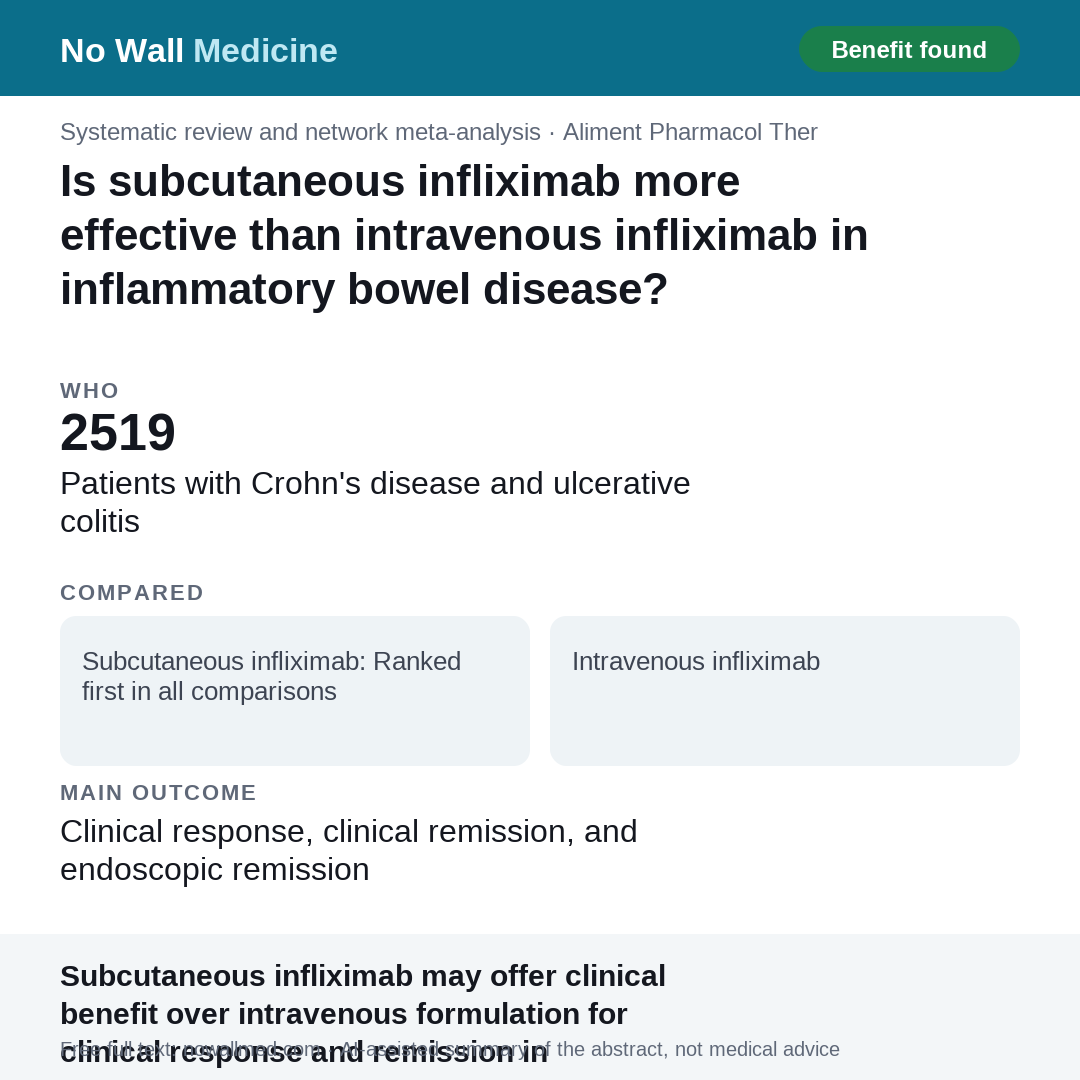
Is subcutaneous infliximab more effective than intravenous infliximab in inflammatory bowel disease?
Who
2519
Patients with Crohn's disease and ulcerative colitis
Compared
Subcutaneous infliximab: Ranked first in all comparisons
Intravenous infliximab
Main outcome
Clinical response, clinical remission, and endoscopic remission
Bottom line: Subcutaneous infliximab may offer clinical benefit over intravenous formulation for clinical response and remission in inflammatory bowel disease.
Limitation: Further head-to-head trials are needed to confirm the relative efficacy between these formulations.
Aliment Pharmacol Ther · 2025-07-10Download image
Clinical question: Is subcutaneous infliximab more effective than intravenous infliximab in inflammatory bowel disease?
Why it matters: There is uncertainty regarding the relative efficacy of subcutaneous versus intravenous infliximab for patients with inflammatory bowel disease.
Key points
- Researchers analyzed 9 studies involving 2519 patients, including 33.6% (846/2519) with Crohn's disease and 66.4% (1673/2519) with ulcerative colitis.
- Subcutaneous infliximab was associated with superior clinical response at 30 weeks and clinical remission at 30 and 54 weeks.
- No evidence of a difference was found between the two delivery methods for endoscopic remission at 54 weeks.
Headline and key points written with AI from the paper’s abstract, with every number checked against it. Read the paper before relying on them.
Was this summary helpful?
Subject terms
Cite this article
Chetwood JD, Arzivian A, Tran Y, Paramsothy S, Leong RW. Meta-Analysis: Intravenous Versus Subcutaneous Infliximab in Inflammatory Bowel Disease. Aliment Pharmacol Ther. 2025. doi:10.1111/apt.70267
Spotted a mistake? Suggest a correction