Proactive drug monitoring was associated with higher endoscopic healing in children with Crohn's disease
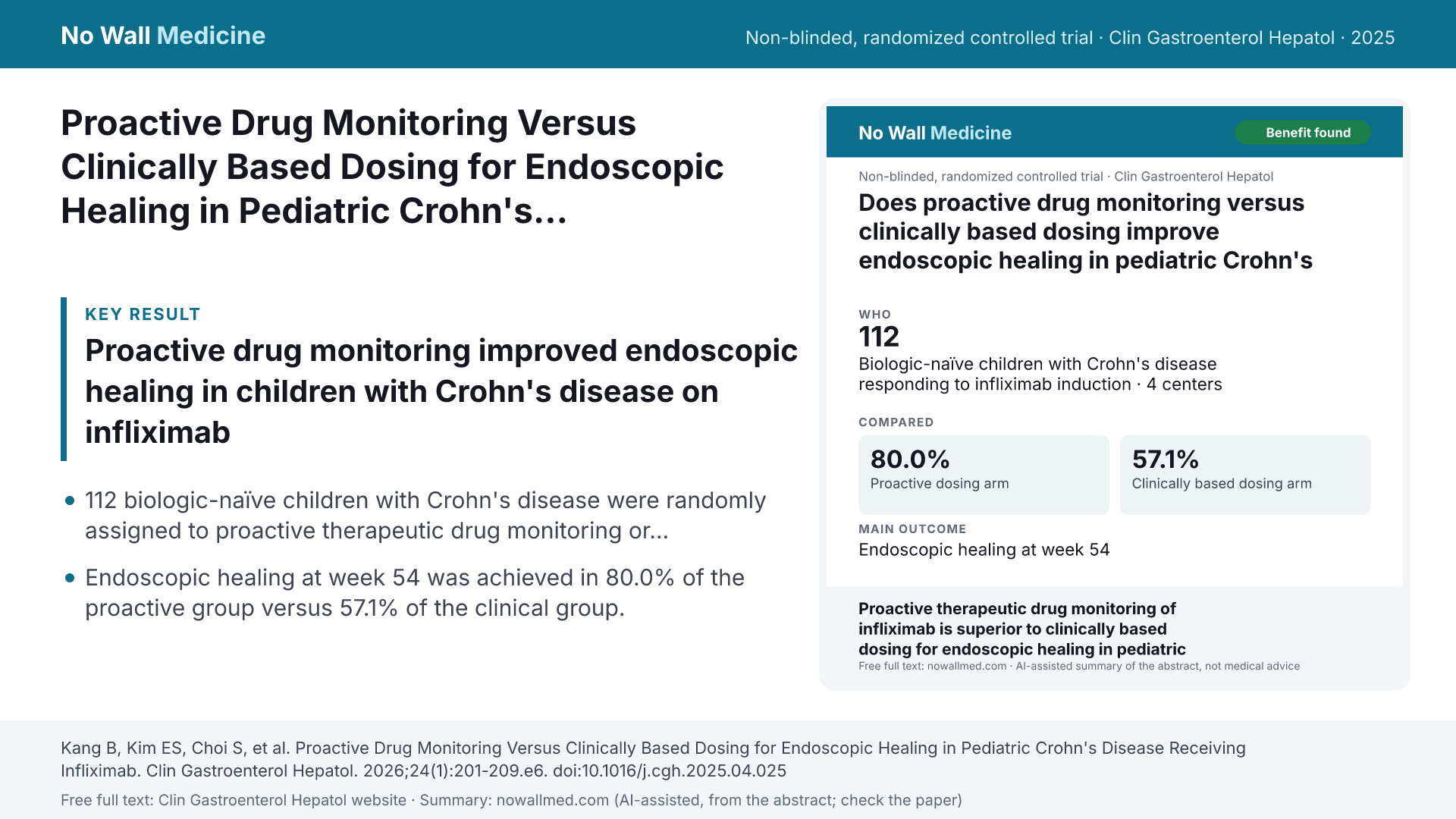
Proactive Drug Monitoring Versus Clinically Based Dosing for Endoscopic Healing in Pediatric Crohn's Disease Receiving Infliximab
Non-blinded, randomized controlled trialBenefit found
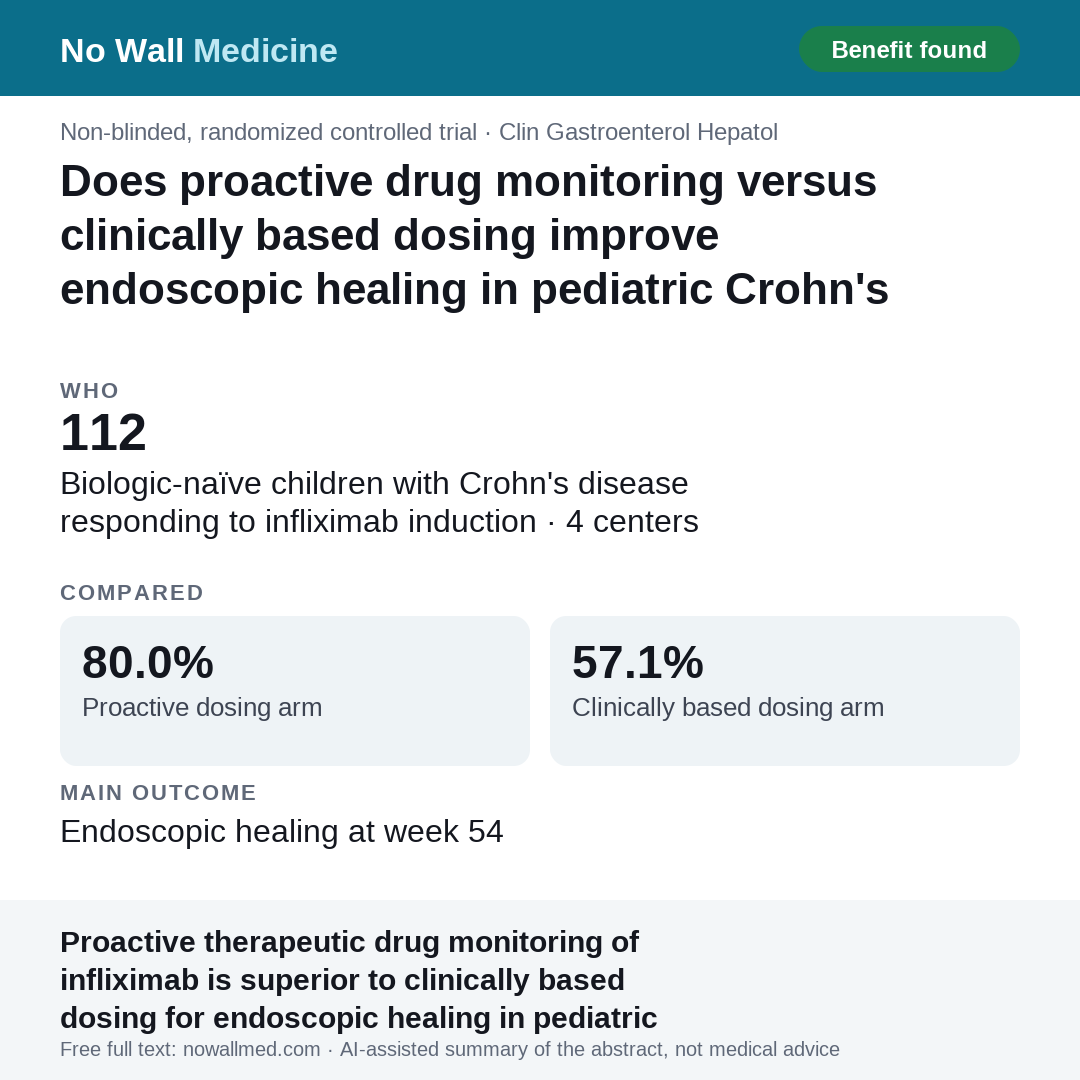
Does proactive drug monitoring versus clinically based dosing improve endoscopic healing in pediatric Crohn's disease?
Who
112
Biologic-naïve children with Crohn's disease responding to infliximab induction · 4 centers in South Korea
Compared
80.0%Proactive dosing arm (40/50)
57.1%Clinically based dosing arm (28/49)
Main outcome
Endoscopic healing at week 54
Result: odds ratio 3.48 (95% confidence interval 1.26-10.43)
Bottom line: Proactive therapeutic drug monitoring of infliximab is superior to clinically based dosing for endoscopic healing in pediatric Crohn's disease.
Clin Gastroenterol Hepatol · 2025-05-14Download image
Clinical question: Does proactive drug monitoring versus clinically based dosing improve endoscopic healing in pediatric Crohn's disease?
Why it matters: It was unclear if proactive therapeutic drug monitoring, which involves checking medication levels in the blood before symptoms change, leads to better endoscopic healing than dosing based on clinical symptoms.
Key points
- Researchers conducted a randomized controlled trial of 112 children with Crohn's disease who were new to biologic medications.
- At week 54, endoscopic healing, which is the visible healing of the intestinal lining, was achieved by 80.0% (40/50) in the proactive drug monitoring group compared to 57.1% (28/49) in the clinical dosing group.
- The proactive drug monitoring group also had higher rates of sustained corticosteroid-free clinical remission at 89.3% (50/56) compared to 69.6% (39/56) in the clinical dosing group.
Headline and key points written with AI from the paper’s abstract, with every number checked against it. Read the paper before relying on them.
Was this summary helpful?
Subject terms
Cite this article
Kang B, Kim ES, Choi S, Choe BH, Moon JS, Ko JS. Proactive Drug Monitoring Versus Clinically Based Dosing for Endoscopic Healing in Pediatric Crohn's Disease Receiving Infliximab. Clin Gastroenterol Hepatol. 2025. doi:10.1016/j.cgh.2025.04.025
Spotted a mistake? Suggest a correction