Proactive Drug Monitoring Versus Clinically Based Dosing for Endoscopic Healing in Pediatric Crohn's Disease Receiving Infliximab
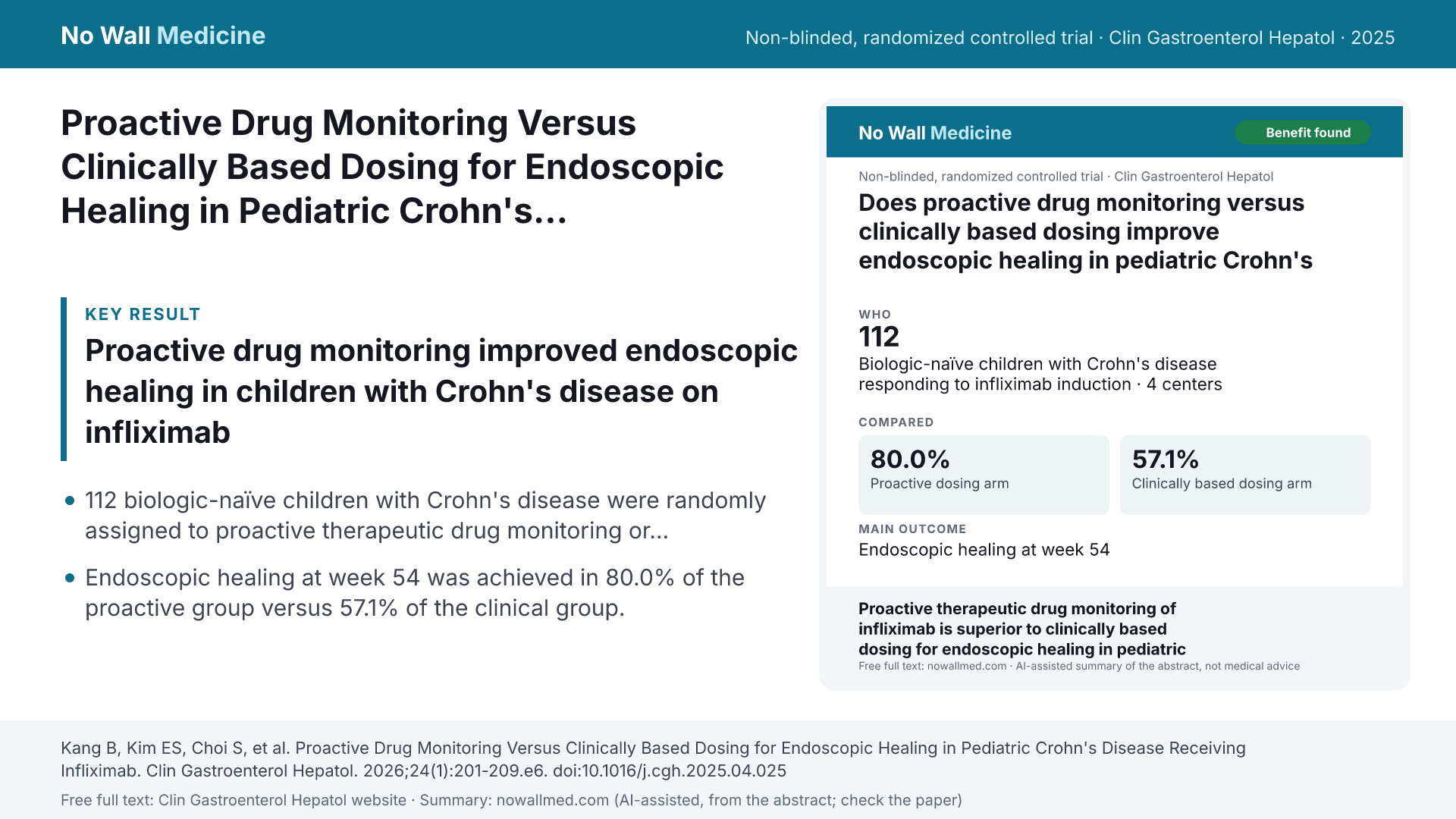
Key result: Proactive drug monitoring improved endoscopic healing in children with Crohn's disease on infliximab
Key points
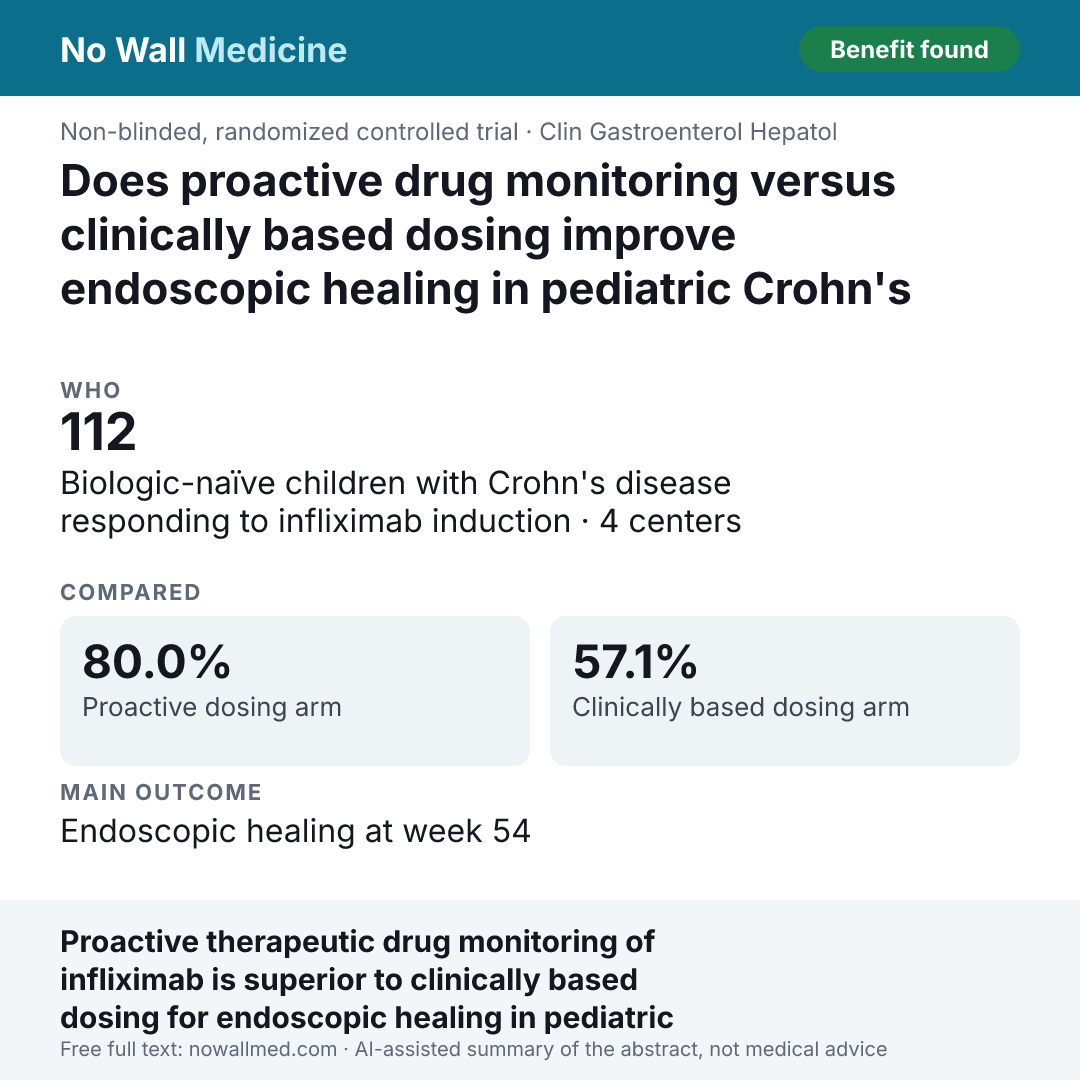
- 112 biologic-naïve children with Crohn's disease were randomly assigned to proactive therapeutic drug monitoring or clinically based dosing of infliximab.
- Endoscopic healing at week 54 was achieved in 80.0% of the proactive group versus 57.1% of the clinical group.
- Sustained corticosteroid-free clinical remission was higher in the proactive group at 89.3% compared to 69.6% in the clinical group.
Why it matters: While proactive dosing of adalimumab is linked to better remission, it was unknown if this strategy improves endoscopic healing for infliximab in children.
Discussion prompts
- Would these patients look like yours? Who was left out?
- Is the main outcome one that matters to patients?
- Is the difference large enough to change what you do?
Cite: Kang B, Kim ES, Choi S, et al. Proactive Drug Monitoring Versus Clinically Based Dosing for Endoscopic Healing in Pediatric Crohn's Disease Receiving Infliximab. Clin Gastroenterol Hepatol. 2026;24(1):201-209.e6. doi:10.1016/j.cgh.2025.04.025
Free full text: Clin Gastroenterol Hepatol website · Summary and visual abstract: nowallmed.com/a/proactive-drug-monitoring-versus-clinically-based-dosing-for-1xs53df/ (AI-assisted from the abstract; check the paper before relying on it).