Electronic health interventions reduced the risk of medication errors by 15 percent in meta-analysis
Meta-analysis of randomized controlled trials of electronic health interventions to reduce medication errors
Meta-analysis of randomized controlled trialsBenefit found
Do electronic health interventions reduce medication errors compared to usual care?
Who
Patients receiving healthcare services
Compared
Electronic interventions
Usual care
Main outcome
Risk of medication errors
Result: relative risk 0.85 (95% CI 0.77 to 0.94)
Bottom line: Electronic interventions are associated with a 15% reduction in the risk of medication errors.
NPJ Digit Med · 2025-12-17 · Save PNG
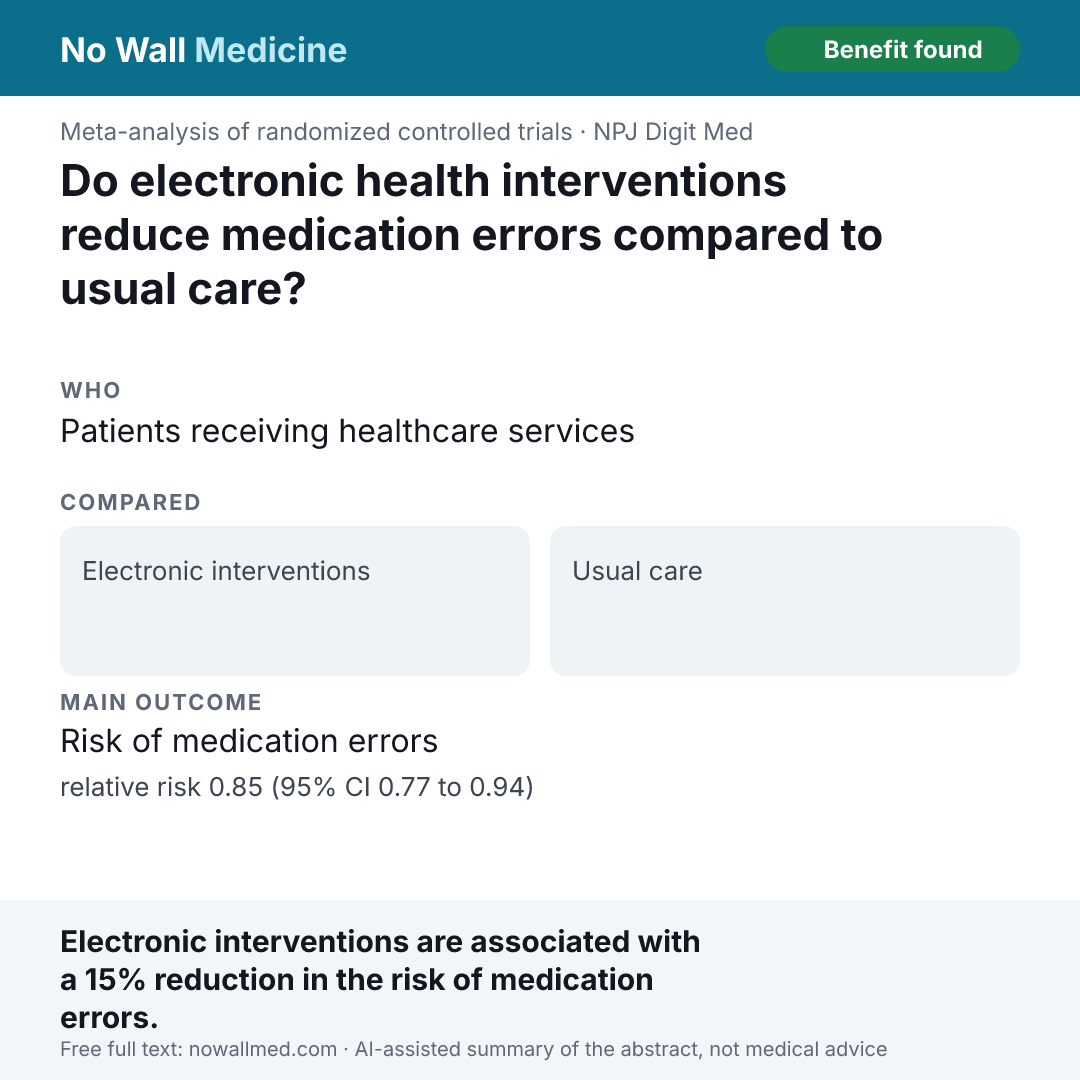
Clinical question: Do electronic health interventions reduce medication errors compared to usual care?
Why it matters: Medication errors, including both potential mistakes and actual adverse drug events, pose a significant safety concern in healthcare settings.
Key points
- Researchers analyzed 12 studies from various databases to compare electronic health interventions against usual care for reducing medication errors.
- The meta-analysis found that electronic interventions were associated with a 15% reduction in the risk of medication errors (RR = 0.85; 95% CI: 0.77-0.94).
- Subgroup analysis indicated that computerized decision-support systems, which are digital tools that provide clinicians with automated guidance, were particularly effective.
Headline and key points written with AI from the paper’s abstract, with every number checked against it. Read the paper before relying on them.
Was this summary helpful?
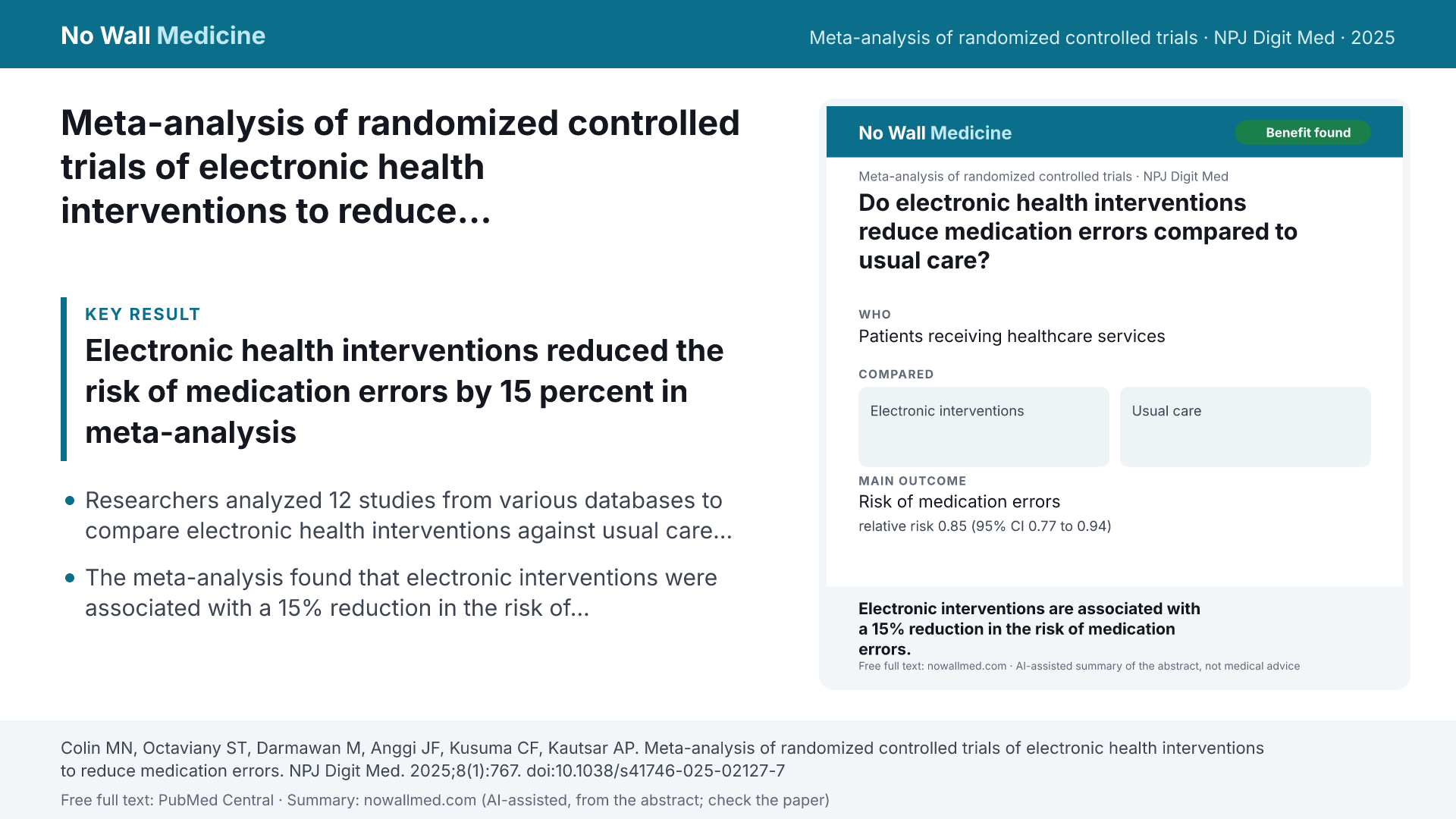
Headline, design, result, key points, caveat and citation as plain text.
Cite this article
Colin MN, Octaviany ST, Darmawan M, Anggi JF, Kusuma CF, Kautsar AP. Meta-analysis of randomized controlled trials of electronic health interventions to reduce medication errors. NPJ Digit Med. 2025;8(1):767. doi:10.1038/s41746-025-02127-7
Spotted a mistake? Suggest a correction