Meta-analysis identifies consistent changes in stomach bacteria during the progression of gastric cancer
Meta-analysis reveals Helicobacter pylori mutual exclusivity and reproducible gastric microbiome alterations during gastric carcinoma progression
Meta-analysis of nine 16S datasetsBenefit found
Are there reproducible gastric microbiome alterations during gastric carcinoma progression?
Who
Patients with gastric cancer, gastritis, and precancerous stages
Compared
Gastric cancer: enriched Fusobacterium, Leptotrichia, Bifidobacterium, Lactobacillus, and Streptococcus anginosus
Gastritis
Main outcome
gastric microbiome composition and microbial patterns
Bottom line: Consistent microbial patterns and enrichment of specific bacteria occur during gastric carcinogenesis progression.
Limitation: study-specific batch effect
Gut Microbes · 2023-04-05Download image
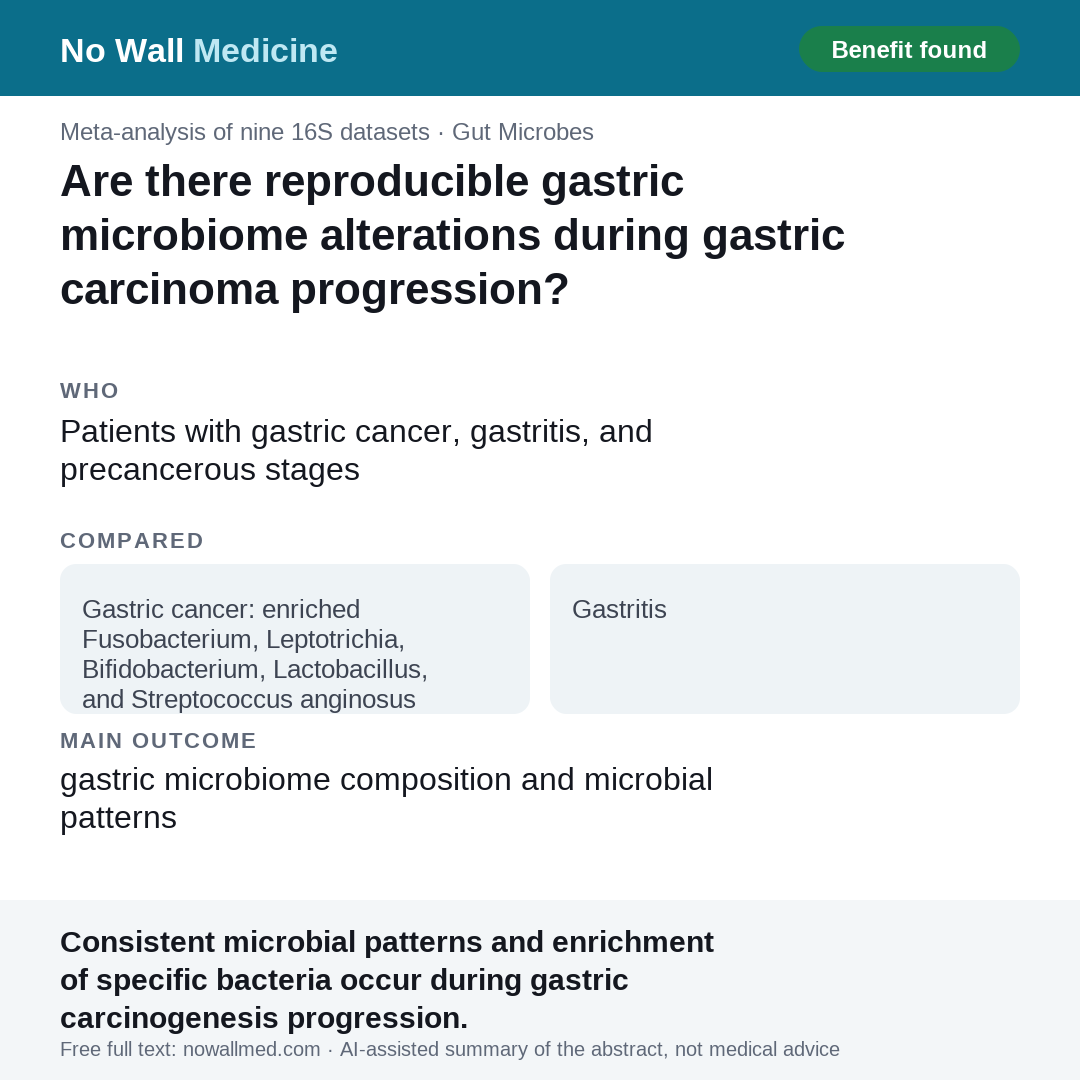
Clinical question: Are there reproducible gastric microbiome alterations during gastric carcinoma progression?
Why it matters: Reported alterations of the stomach microbiota have not always been consistent across different scientific studies.
Key points
- Researchers performed a meta-analysis of nine publicly available 16S datasets to identify reproducible signals in the stomach microbiome during gastric cancer development.
- Microbes such as Fusobacterium, Leptotrichia, and lactic acid bacteria like Bifidobacterium, Lactobacillus, and Streptococcus anginosus were frequently enriched in gastric cancer patients compared to gastritis.
- Oral microbes were significantly enriched in gastric cancer compared to precancerous stages, and different Helicobacter pylori species showed mutual exclusivity across studies.
Headline and key points written with AI from the paper’s abstract, with every number checked against it. Read the paper before relying on them.
Was this summary helpful?
Subject terms
Cite this article
Li Y, Hu Y, Zhan X, Song Y, Xu M, Wang S. Meta-analysis reveals Helicobacter pylori mutual exclusivity and reproducible gastric microbiome alterations during gastric carcinoma progression. Gut Microbes. 2023. doi:10.1080/19490976.2023.2197835
Spotted a mistake? Suggest a correction
Top studies every Monday
The week’s key trials and guidelines in your specialties, plus any topics you follow. By email, free.
Get the weekly digest