Metabolite levels in blood and urine were associated with type 2 diabetes risk
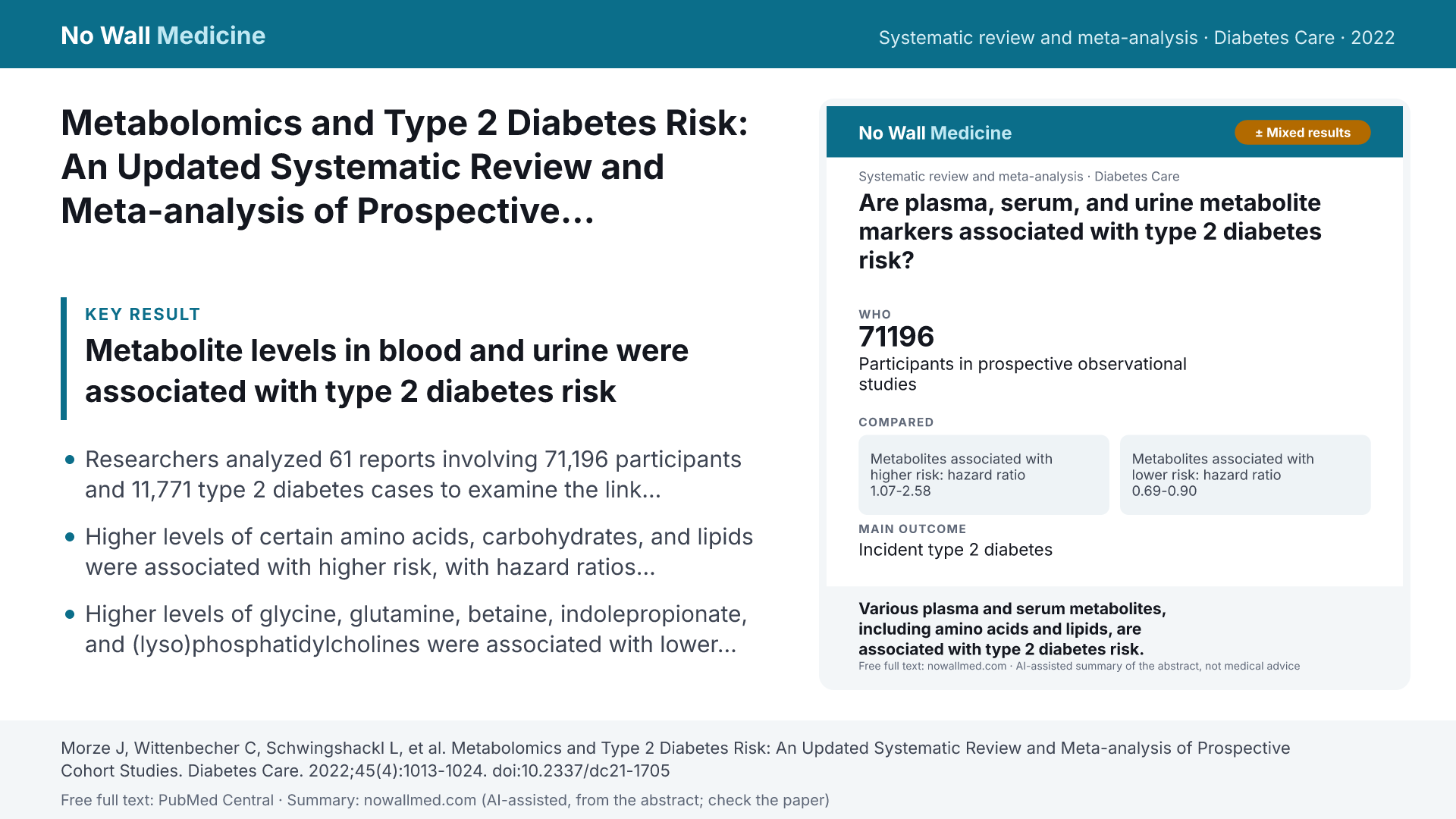
Metabolomics and Type 2 Diabetes Risk: An Updated Systematic Review and Meta-analysis of Prospective Cohort Studies
Systematic review and meta-analysisMixed results
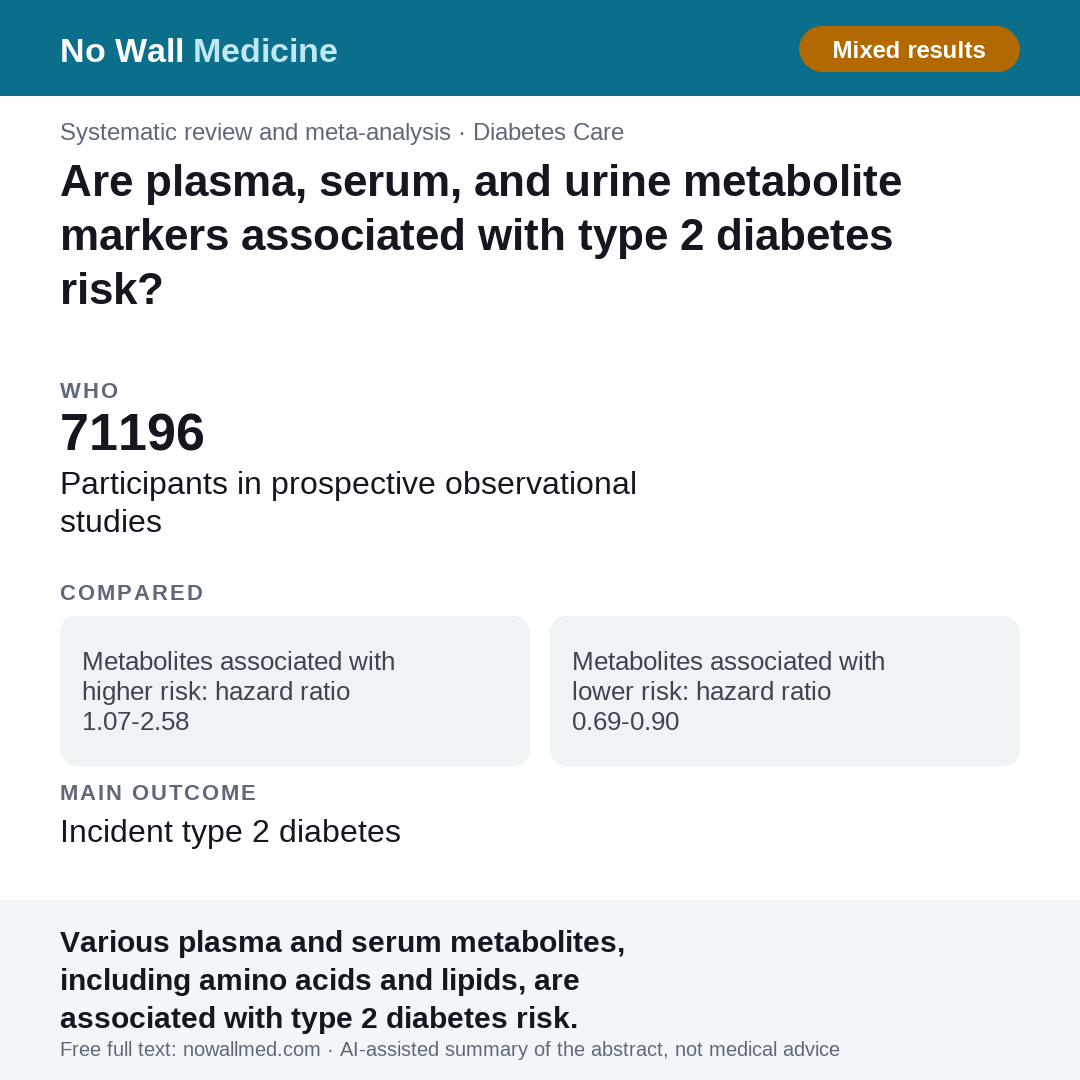
Are plasma, serum, and urine metabolite markers associated with type 2 diabetes risk?
Who
71196
Participants in prospective observational studies
Compared
Metabolites associated with higher risk: hazard ratio 1.07-2.58
Metabolites associated with lower risk: hazard ratio 0.69-0.90
Main outcome
Incident type 2 diabetes
Bottom line: Various plasma and serum metabolites, including amino acids and lipids, are associated with type 2 diabetes risk.
Limitation: Substantial heterogeneity was observed for some of the metabolites.
Diabetes Care · 2022-03-29Download image
Clinical question: Are plasma, serum, and urine metabolite markers associated with type 2 diabetes risk?
Why it matters: The increasing availability of metabolomics data requires updated evidence regarding how specific metabolite markers relate to the development of type 2 diabetes.
Key points
- Researchers analyzed 61 reports involving 71,196 participants and 11,771 type 2 diabetes cases to examine the link between metabolites and diabetes risk.
- Higher levels of certain amino acids, carbohydrates, and lipids were associated with higher risk, with hazard ratios ranging from 1.07-2.58.
- Higher levels of glycine, glutamine, betaine, indolepropionate, and (lyso)phosphatidylcholines were associated with lower risk, with hazard ratios ranging from 0.69-0.90.
Limitation the authors note: Substantial heterogeneity was observed for some of the metabolites.
Headline and key points written with AI from the paper’s abstract, with every number checked against it. Read the paper before relying on them.
Was this summary helpful?
Subject terms
Cite this article
Morze J, Wittenbecher C, Schwingshackl L, et al. Metabolomics and Type 2 Diabetes Risk: An Updated Systematic Review and Meta-analysis of Prospective Cohort Studies. Diabetes Care. 2022. doi:10.2337/dc21-1705
Spotted a mistake? Suggest a correction