Metabolomics and Type 2 Diabetes Risk: An Updated Systematic Review and Meta-analysis of Prospective Cohort Studies
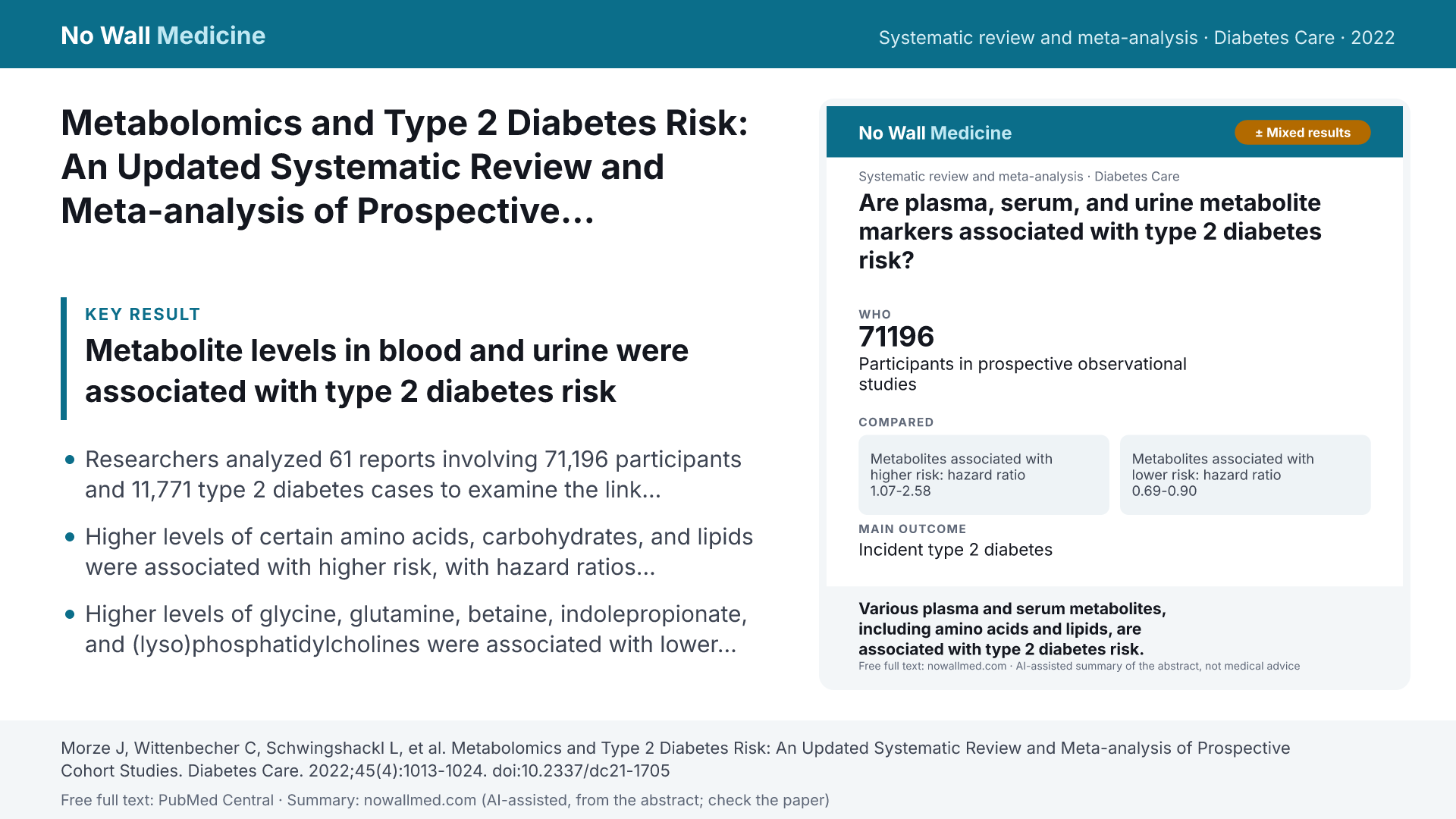
Key result: Metabolite levels in blood and urine were associated with type 2 diabetes risk
Key points
- Researchers analyzed 61 reports involving 71,196 participants and 11,771 type 2 diabetes cases to examine the link between metabolites and diabetes risk.
- Higher levels of certain amino acids, carbohydrates, and lipids were associated with higher risk, with hazard ratios ranging from 1.07-2.58.
- Higher levels of glycine, glutamine, betaine, indolepropionate, and (lyso)phosphatidylcholines were associated with lower risk, with hazard ratios ranging from 0.69-0.90.
Why it matters: The increasing availability of metabolomics data requires updated evidence regarding how specific metabolite markers relate to the development of type 2 diabetes.
Limitation the authors note: Substantial heterogeneity was observed for some of the metabolites.
Discussion prompts
- Would these patients look like yours? Who was left out?
- Is the main outcome one that matters to patients?
- Is the difference large enough to change what you do?
Cite: Morze J, Wittenbecher C, Schwingshackl L, et al. Metabolomics and Type 2 Diabetes Risk: An Updated Systematic Review and Meta-analysis of Prospective Cohort Studies. Diabetes Care. 2022;45(4):1013-1024. doi:10.2337/dc21-1705
Free full text: PubMed Central · Summary and visual abstract: nowallmed.com/a/metabolomics-and-type-2-diabetes-risk-an-updated-systematic-review-1n66jvg/ (AI-assisted from the abstract; check the paper before relying on it).