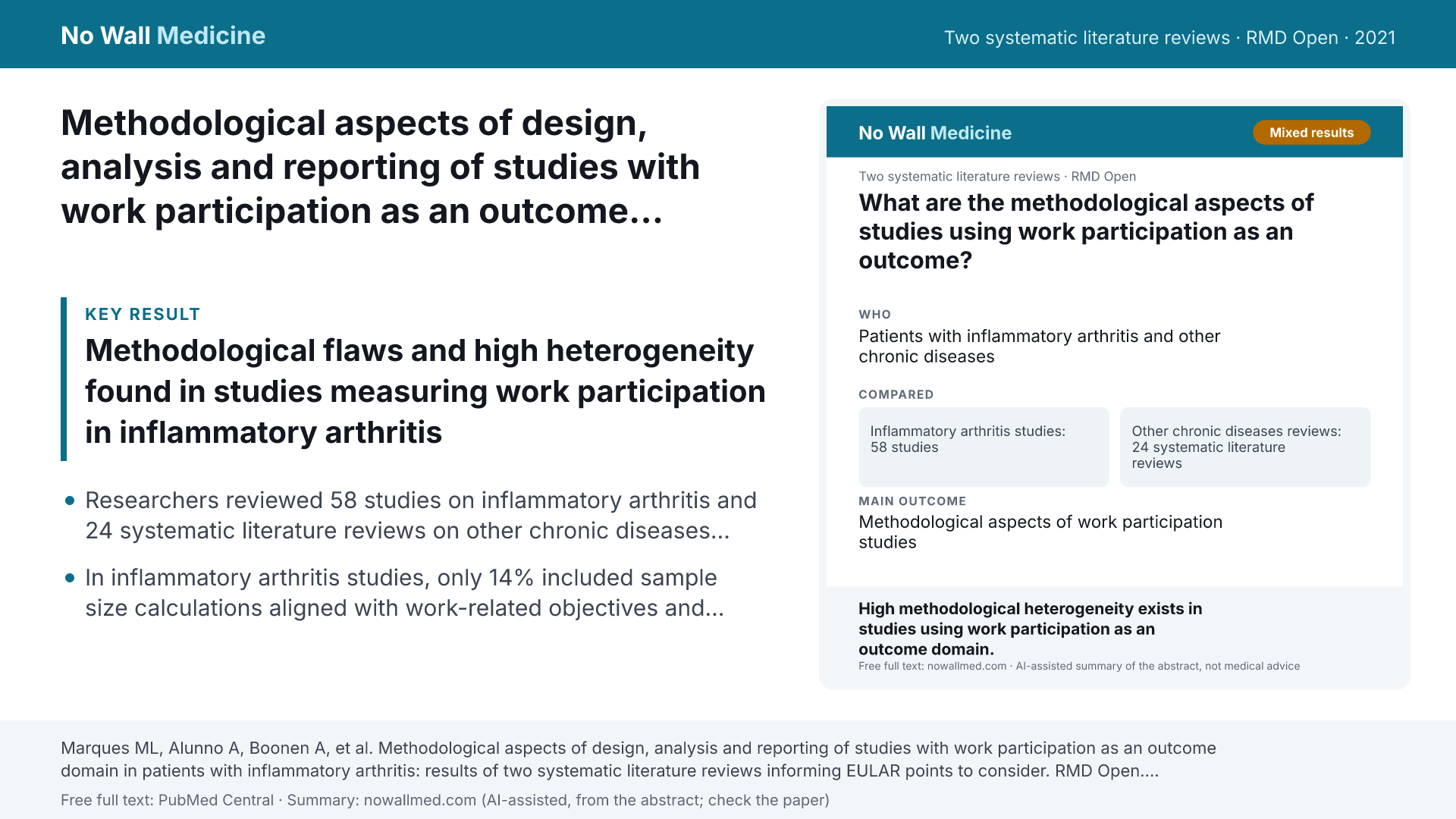
Methodological flaws and high heterogeneity found in studies measuring work participation in inflammatory arthritis
Methodological aspects of design, analysis and reporting of studies with work participation as an outcome domain in patients with inflammatory arthritis: results of two systematic literature reviews informing EULAR points to consider
Two systematic literature reviewsMixed results
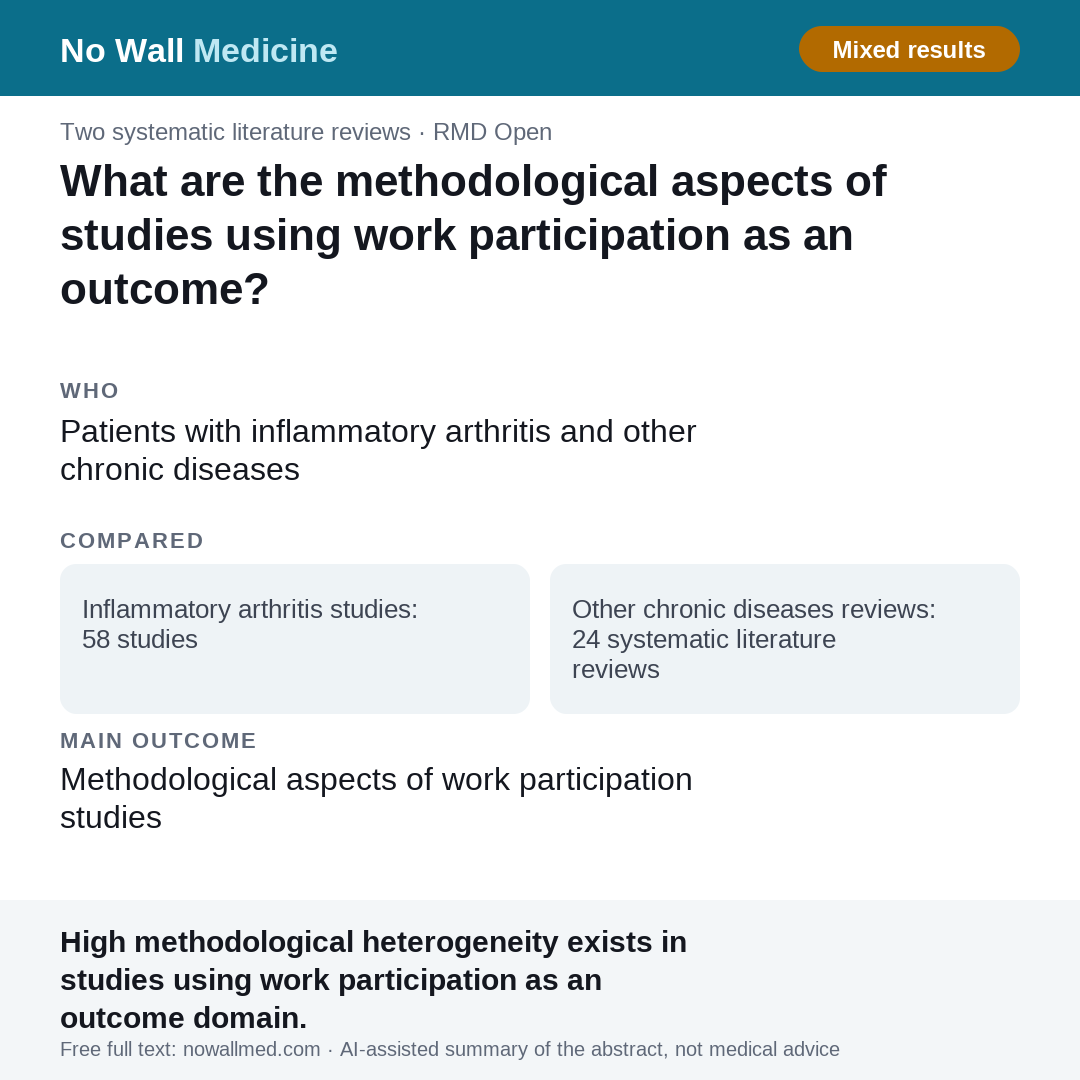
What are the methodological aspects of studies using work participation as an outcome?
Who
Patients with inflammatory arthritis and other chronic diseases
Compared
Inflammatory arthritis studies: 58 studies
Other chronic diseases reviews: 24 systematic literature reviews
Main outcome
Methodological aspects of work participation studies
Bottom line: High methodological heterogeneity exists in studies using work participation as an outcome domain.
RMD Open · 2021-02-05Download image
Clinical question: What are the methodological aspects of studies using work participation as an outcome?
Why it matters: There is a lack of consensus regarding the best methods for designing, analyzing, and reporting studies that use work participation as a measurement of health.
Key points
- Researchers reviewed 58 studies on inflammatory arthritis and 24 systematic literature reviews on other chronic diseases to assess how work participation is measured.
- In inflammatory arthritis studies, only 14% included sample size calculations aligned with work-related objectives and only 2% reported reasons for participants leaving the study.
- Work participation was the primary outcome in 26/58 (45%) of the inflammatory arthritis studies reviewed.
Headline and key points written with AI from the paper’s abstract, with every number checked against it. Read the paper before relying on them.
Was this summary helpful?
Abstract
Objective
To summarise the methodological aspects in studies with work participation (WP) as outcome domain in inflammatory arthritis (IA) and other chronic diseases. Methods
Two systematic literature reviews (SLRs) were conducted in key electronic databases (2014-2019): search 1 focused on longitudinal prospective studies in IA and search 2 on SLRs in other chronic diseases. Two reviewers independently identified eligible studies and extracted data covering pre-defined methodological areas. Results
In total, 58 studies in IA (22 randomised controlled trials, 36 longitudinal observational studies) and 24 SLRs in other chronic diseases were included. WP was the primary outcome in 26/58 (45%) studies. The methodological aspects least accounted for in IA studies were as follows (proportions of studies positively adhering to the topic are shown): aligning the studied population (16/58 (28%)) and sample size calculation (8/58 (14%)) with the work-related study objective; attribution of WP to overall health (28/58 (48%)); accounting for skewness of presenteeism/sick leave (10/52 (19%)); accounting for work-related contextual factors (25/58 (43%)); reporting attrition and its reasons (1/58 (2%)); reporting both aggregated results and proportions of individuals reaching predefined meaningful change or state (11/58 (16%)). SLRs in other chronic diseases confirmed heterogeneity and methodological flaws identified in IA studies without identifying new issues. Conclusion
High methodological heterogeneity was observed in studies with WP as outcome domain. Consensus around various methodological aspects specific to WP studies is needed to improve quality of future studies. This review informs the EULAR Points to Consider for conducting and reporting studies with WP as an outcome in IA.
Abstract reproduced under the article’s CC BY NC licence.
Subject terms
Cite this article
Marques ML, Alunno A, Boonen A, Ter Wee MM, Falzon L, Ramiro S. Methodological aspects of design, analysis and reporting of studies with work participation as an outcome domain in patients with inflammatory arthritis: results of two systematic literature reviews informing EULAR points to consider. RMD Open. 2021. doi:10.1136/rmdopen-2020-001522
Spotted a mistake? Suggest a correction
Top studies every Monday
The week’s key trials and guidelines in your specialties, plus any topics you follow. By email, free.
Get the weekly digest