Microultrasonography-guided biopsy was noninferior to MRI fusion-guided biopsy for detecting prostate cancer
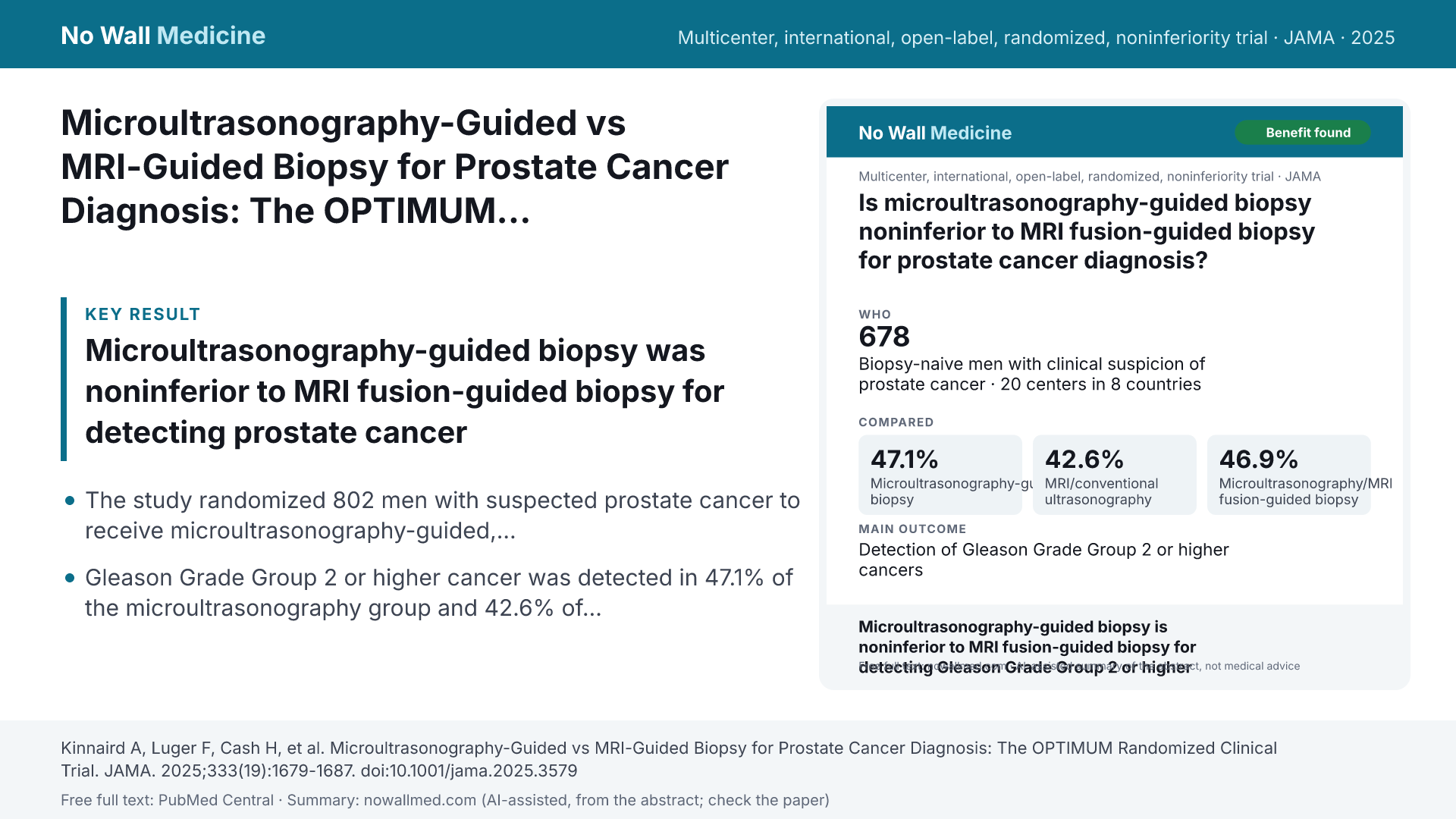
Microultrasonography-Guided vs MRI-Guided Biopsy for Prostate Cancer Diagnosis: The OPTIMUM Randomized Clinical Trial
Multicenter, international, open-label, randomized, noninferiority trialBenefit found
Is microultrasonography-guided biopsy noninferior to MRI fusion-guided biopsy for prostate cancer diagnosis?
Who
678
Biopsy-naive men with clinical suspicion of prostate cancer · 20 centers in 8 countries
Compared
47.1%Microultrasonography-guided biopsy
42.6%MRI/conventional ultrasonography fusion-guided biopsy
46.9%Microultrasonography/MRI fusion-guided biopsy
Main outcome
Detection of Gleason Grade Group 2 or higher cancers
Result: difference, 3.52% (95% CI, -3.95% to 10.92%)
Bottom line: Microultrasonography-guided biopsy is noninferior to MRI fusion-guided biopsy for detecting Gleason Grade Group 2 or higher prostate cancer.
JAMA · 2025-03-23Download image
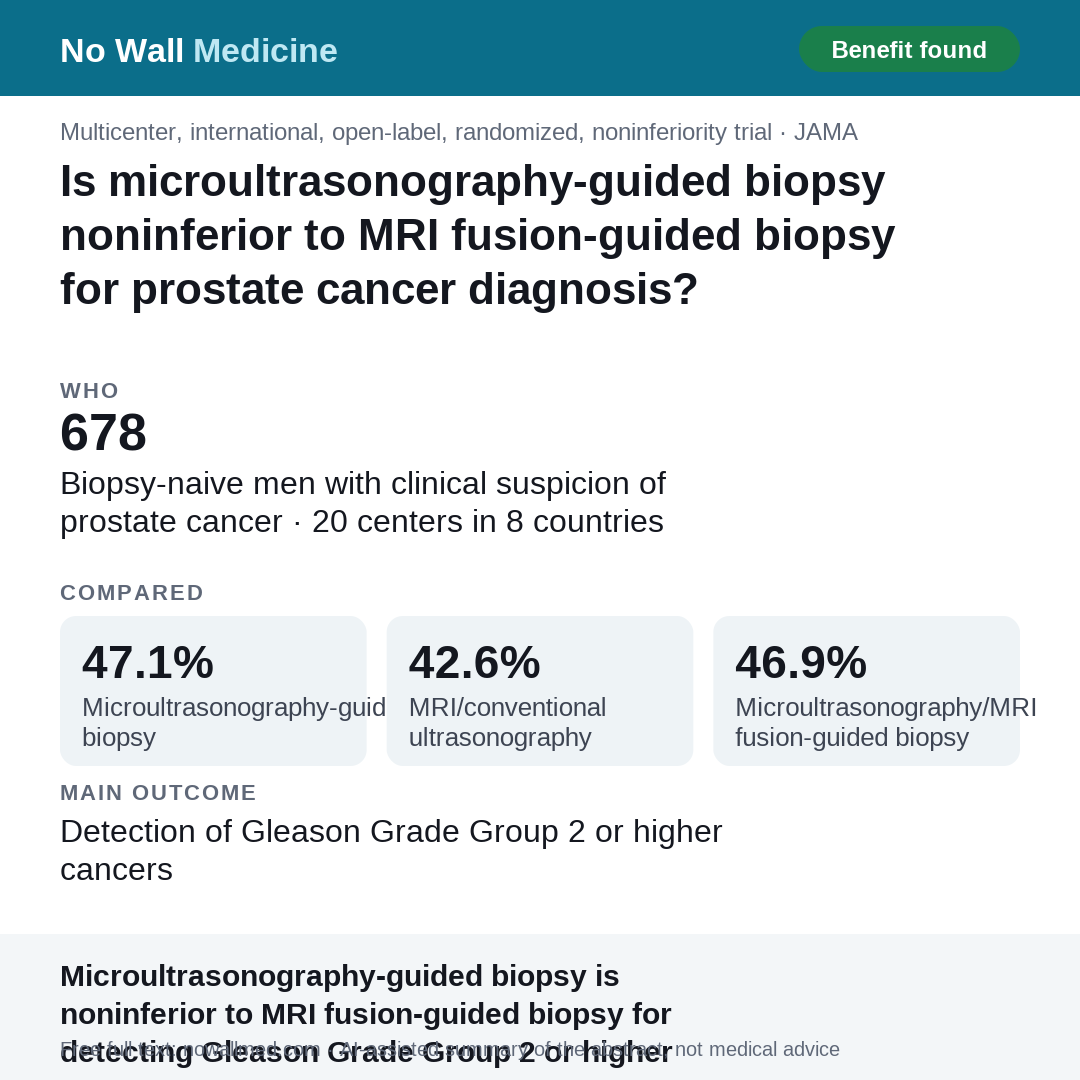
Clinical question: Is microultrasonography-guided biopsy noninferior to MRI fusion-guided biopsy for prostate cancer diagnosis?
Why it matters: High-resolution microultrasonography-guided biopsy is an alternative to MRI fusion-guided biopsy for diagnosing prostate cancer.
Key points
- The study randomized 802 men with suspected prostate cancer to receive microultrasonography-guided, microultrasonography/MRI fusion-guided, or MRI/conventional ultrasonography fusion-guided biopsy.
- Gleason Grade Group 2 or higher cancer was detected in 47.1% of the microultrasonography group and 42.6% of the MRI/conventional ultrasonography group.
- Microultrasonography-guided biopsy was noninferior to MRI fusion-guided biopsy with a difference of 3.52% (95% CI, -3.95% to 10.92%).
Headline and key points written with AI from the paper’s abstract, with every number checked against it. Read the paper before relying on them.
Was this summary helpful?
Subject terms
Cite this article
Kinnaird A, Luger F, Cash H, et al. Microultrasonography-Guided vs MRI-Guided Biopsy for Prostate Cancer Diagnosis: The OPTIMUM Randomized Clinical Trial. JAMA. 2025. doi:10.1001/jama.2025.3579
Spotted a mistake? Suggest a correction