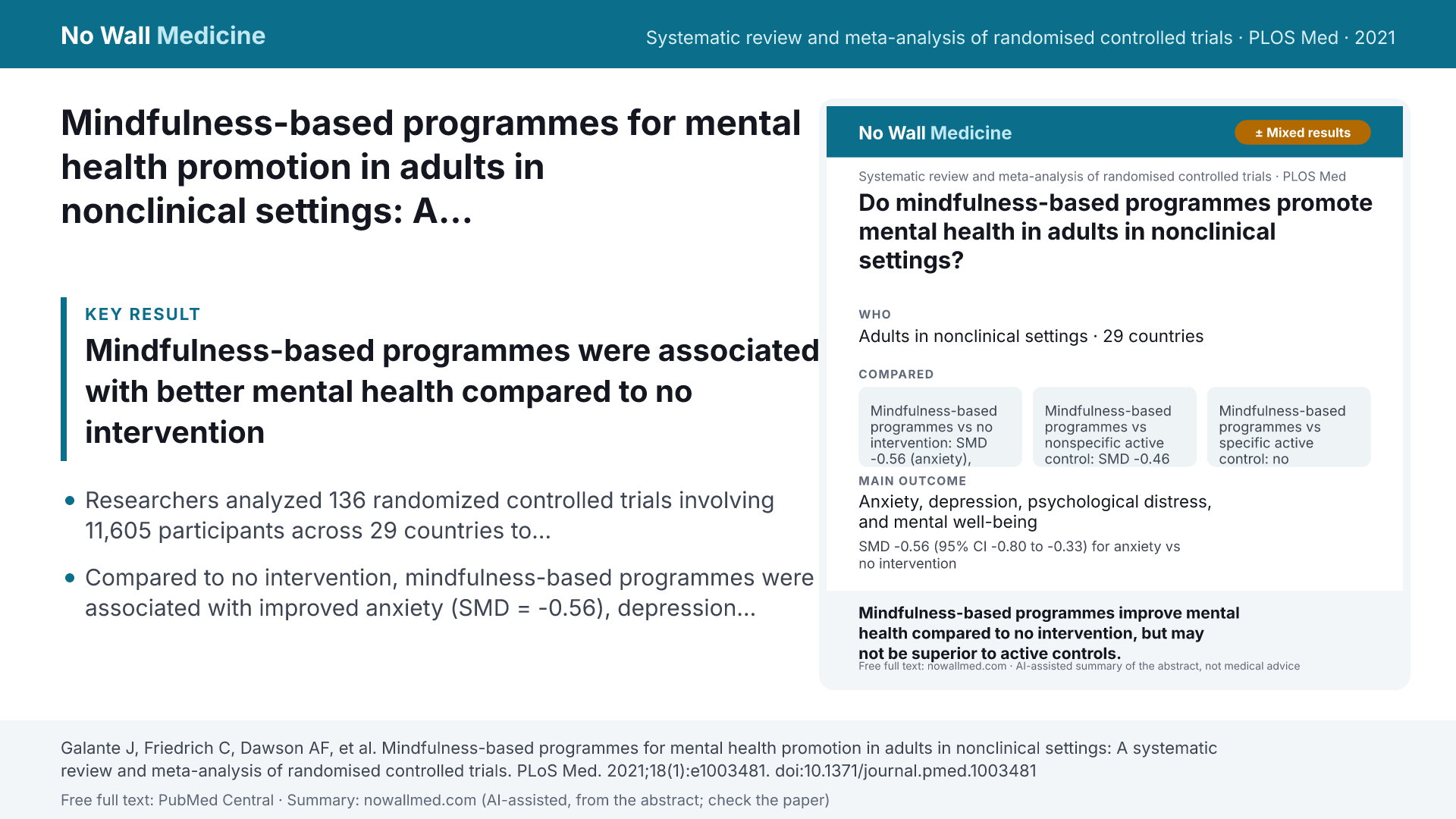
Mindfulness-based programmes for mental health promotion in adults in nonclinical settings: A systematic review and meta-analysis of randomised controlled trials
Key result: Mindfulness-based programmes were associated with better mental health compared to no intervention
Key points
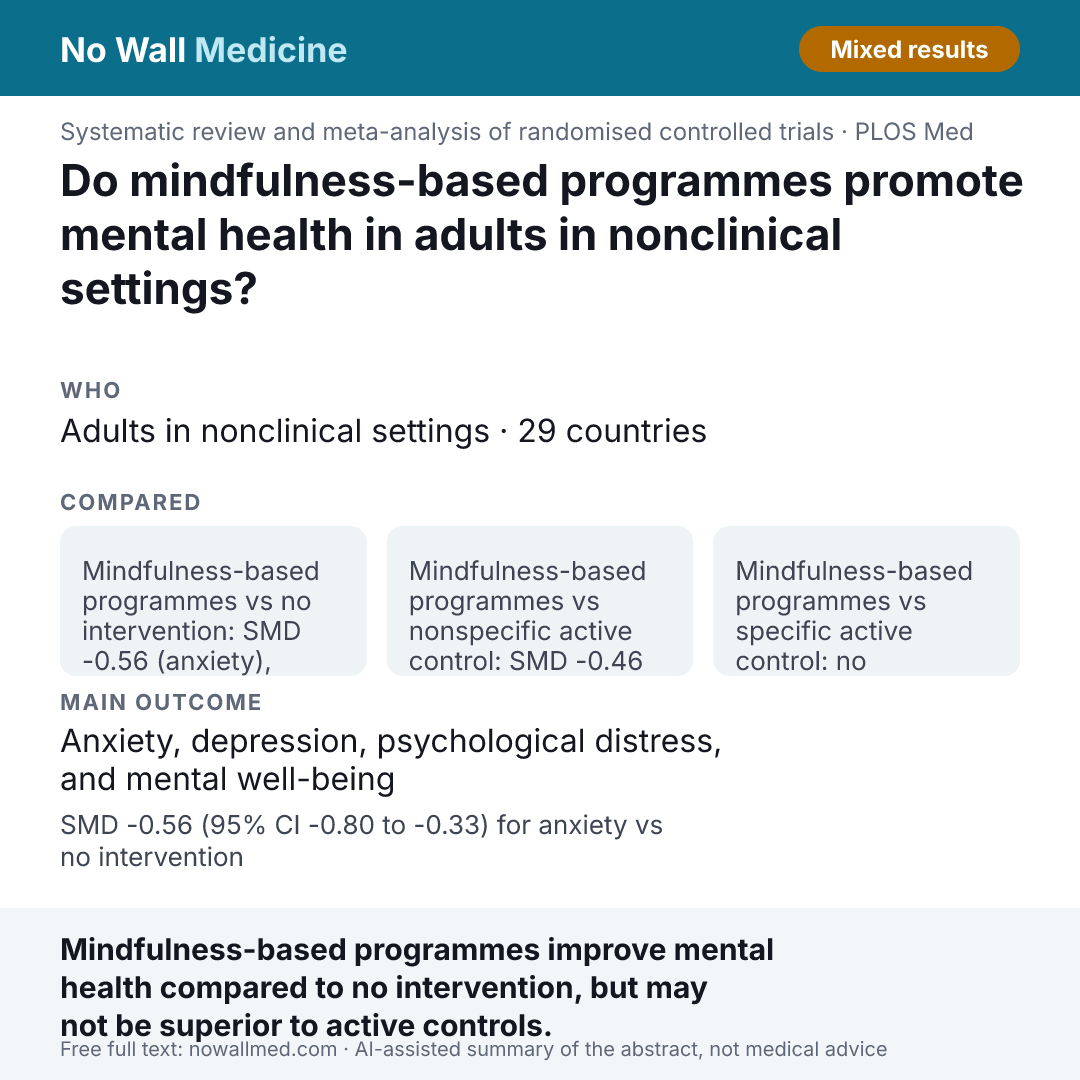
- Researchers analyzed 136 randomized controlled trials involving 11,605 participants across 29 countries to assess mindfulness-based programmes in nonclinical settings.
- Compared to no intervention, mindfulness-based programmes were associated with improved anxiety (SMD = -0.56), depression (SMD = -0.53), distress (SMD = -0.45), and well-being (SMD = 0.33).
- When compared to specific active control conditions, there was no statistically significant evidence that mindfulness-based programmes were superior.
Why it matters: A comprehensive evidence synthesis was lacking regarding whether mindfulness-based programmes promote mental health in nonclinical settings.
Limitation the authors note: The authors stated that confidence in the findings was moderate to very low due to inconsistency and high risk of bias in many trials.
Discussion prompts
- Would these patients look like yours? Who was left out?
- Is the main outcome one that matters to patients?
- Is the difference large enough to change what you do?
Cite: Galante J, Friedrich C, Dawson AF, et al. Mindfulness-based programmes for mental health promotion in adults in nonclinical settings: A systematic review and meta-analysis of randomised controlled trials. PLoS Med. 2021;18(1):e1003481. doi:10.1371/journal.pmed.1003481
Free full text: PubMed Central · Summary and visual abstract: nowallmed.com/a/mindfulness-based-programmes-for-mental-health-promotion-in-adults-in-9ho6yv/ (AI-assisted from the abstract; check the paper before relying on it).