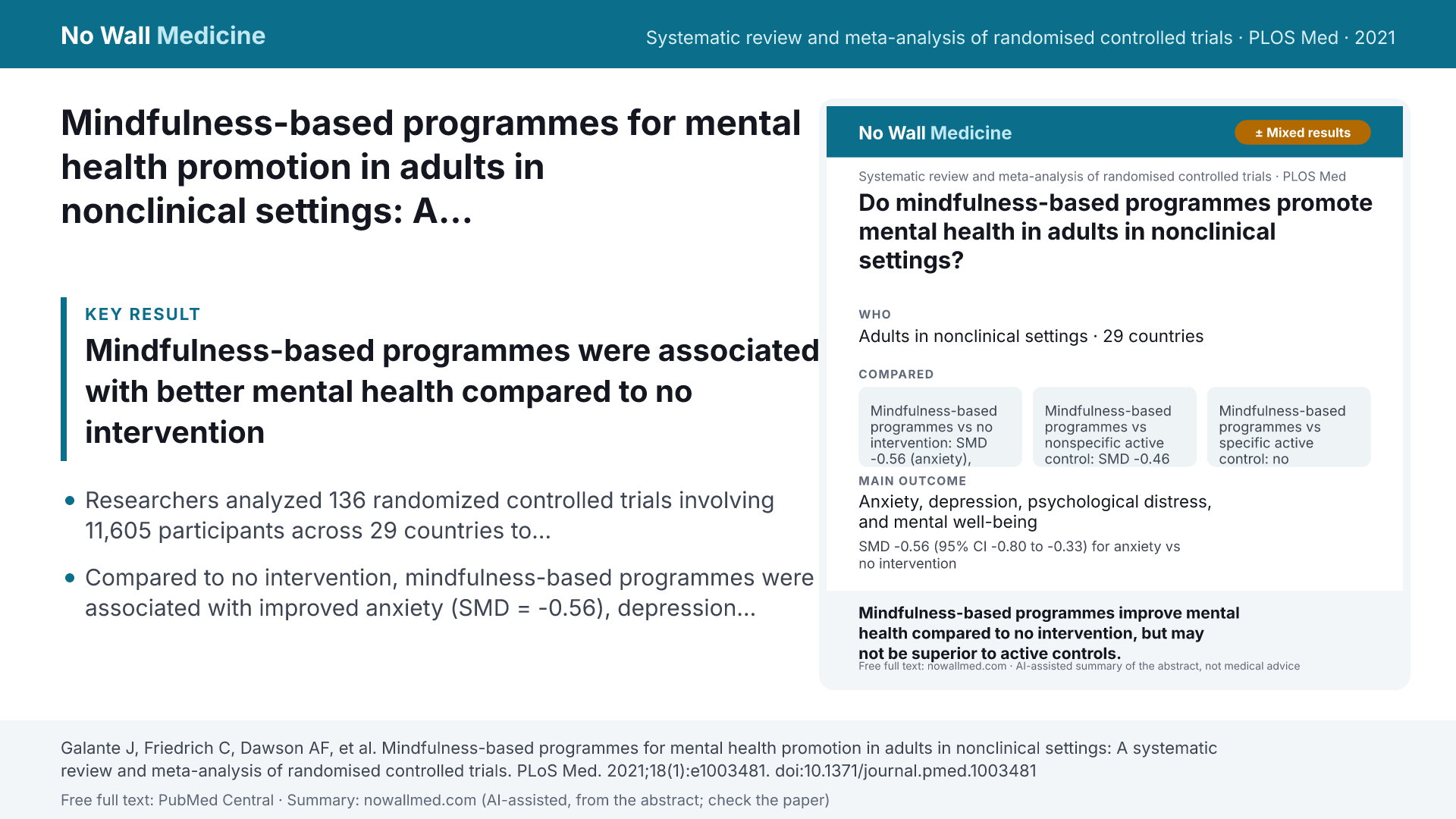
Mindfulness-based programmes were associated with better mental health compared to no intervention
Mindfulness-based programmes for mental health promotion in adults in nonclinical settings: A systematic review and meta-analysis of randomised controlled trials
Systematic review and meta-analysis of randomised controlled trialsMixed results
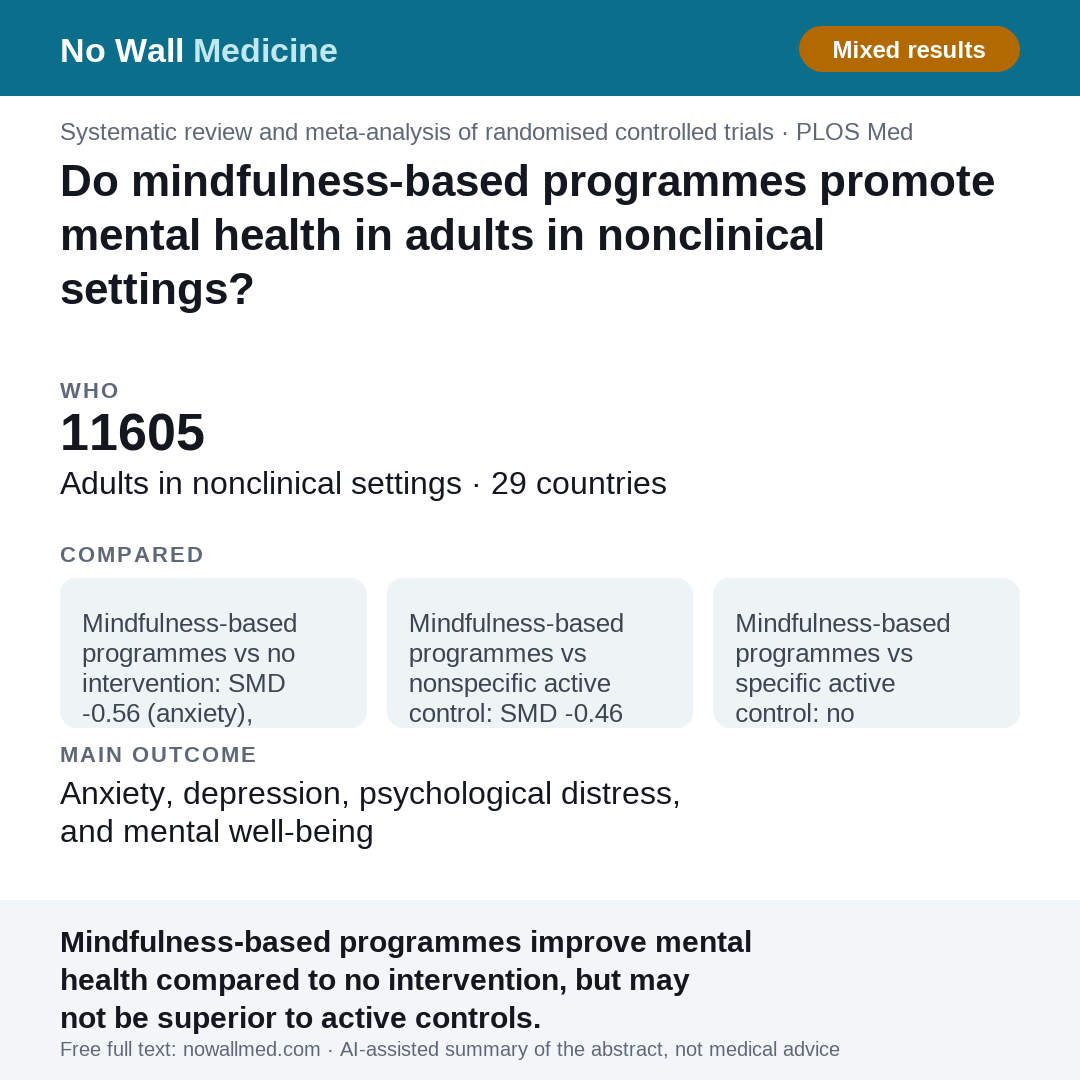
Do mindfulness-based programmes promote mental health in adults in nonclinical settings?
Who
11605
Adults in nonclinical settings · 29 countries
Compared
Mindfulness-based programmes vs no intervention: SMD -0.56 (anxiety), -0.53 (depression), -0.45 (distress), 0.33 (well-being)
Mindfulness-based programmes vs nonspecific active control: SMD -0.46 (depression)
Mindfulness-based programmes vs specific active control: no statistically significant evidence of superiority
Main outcome
Anxiety, depression, psychological distress, and mental well-being
Result: SMD -0.56 (95% CI -0.80 to -0.33) for anxiety vs no intervention
Bottom line: Mindfulness-based programmes improve mental health compared to no intervention, but may not be superior to active controls.
Limitation: Confidence is moderate to very low due to inconsistency and high risk of bias in many trials.
PLOS Med · 2021-01-11Download image
Clinical question: Do mindfulness-based programmes promote mental health in adults in nonclinical settings?
Why it matters: A comprehensive evidence synthesis was lacking regarding whether mindfulness-based programmes promote mental health in nonclinical settings.
Key points
- Researchers analyzed 136 randomized controlled trials involving 11,605 participants across 29 countries to assess mindfulness-based programmes in nonclinical settings.
- Compared to no intervention, mindfulness-based programmes were associated with improved anxiety (SMD = -0.56), depression (SMD = -0.53), distress (SMD = -0.45), and well-being (SMD = 0.33).
- When compared to specific active control conditions, there was no statistically significant evidence that mindfulness-based programmes were superior.
Limitation the authors note: The authors stated that confidence in the findings was moderate to very low due to inconsistency and high risk of bias in many trials.
Headline and key points written with AI from the paper’s abstract, with every number checked against it. Read the paper before relying on them.
Was this summary helpful?
Subject terms
Cite this article
Galante J, Friedrich C, Dawson AF, Modrego-Alarcón M, Gebbing P, Delgado-Suárez I. Mindfulness-based programmes for mental health promotion in adults in nonclinical settings: A systematic review and meta-analysis of randomised controlled trials. PLOS Med. 2021. doi:10.1371/journal.pmed.1003481
Spotted a mistake? Suggest a correction
Top studies every Monday
The week’s key trials and guidelines in your specialties, plus any topics you follow. By email, free.
Get the weekly digest