Physical Activity Interventions to Alleviate Depressive Symptoms in Children and Adolescents: A Systematic Review and Meta-analysis
Systematic review and meta-analysisBenefit found
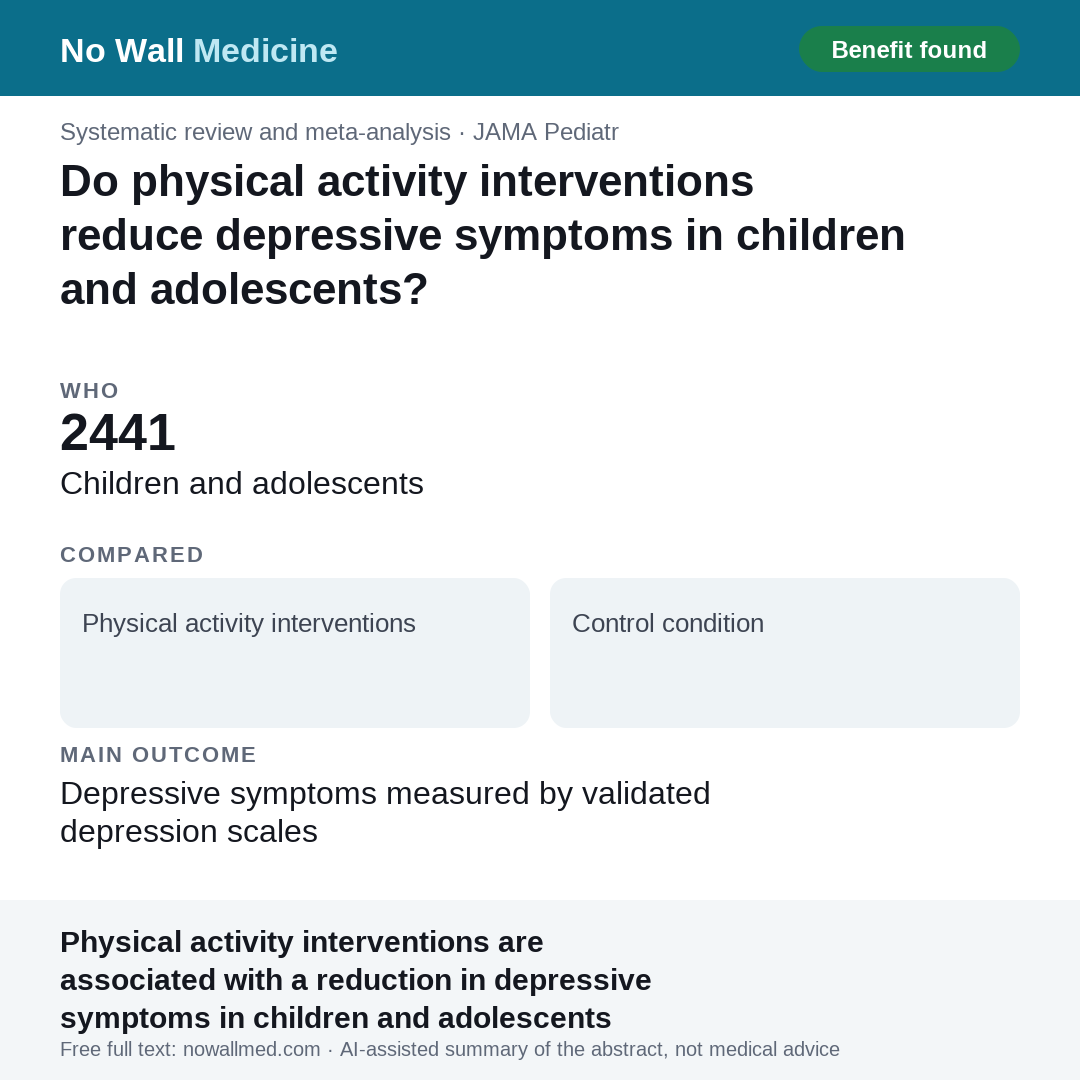
Do physical activity interventions reduce depressive symptoms in children and adolescents?
Who
2441
Children and adolescents
Compared
Physical activity interventions
Control condition
Main outcome
Depressive symptoms measured by validated depression scales
Result: Hedges g -0.29 (95% CI, -0.47 to -0.10)
Bottom line: Physical activity interventions are associated with a reduction in depressive symptoms in children and adolescents postintervention.
Limitation: The association with physical activity frequency, duration, and supervision remains unclear.
JAMA Pediatr · 2023-01-04Download image
Clinical question: Do physical activity interventions reduce depressive symptoms in children and adolescents?
Abstract
Importance
Depression is the second most prevalent mental disorder among children and adolescents, yet only a small proportion seek or receive disorder-specific treatment. Physical activity interventions hold promise as an alternative or adjunctive approach to clinical treatment for depression.Objective
To determine the association of physical activity interventions with depressive symptoms in children and adolescents.Data sources
PubMed, CINAHL, PsycINFO, EMBASE, and SPORTDiscus were searched from inception to February 2022 for relevant studies written in English, Chinese, or Italian.Study selection
Two independent researchers selected studies that assessed the effects of physical activity interventions on depressive symptoms in children and adolescents compared with a control condition.Data extraction and synthesis
A random-effects meta-analysis using Hedges g was performed. Heterogeneity, risk of bias, and publication bias were assessed independently by multiple reviewers. Meta-regressions and sensitivity analyses were conducted to substantiate the overall results. The study followed the PRISMA reporting guideline.Main outcomes and measures
The main outcome was depressive symptoms as measured by validated depression scales at postintervention and follow-up.Results
Twenty-one studies involving 2441 participants (1148 [47.0%] boys; 1293 [53.0%] girls; mean [SD] age, 14 [3] years) were included. Meta-analysis of the postintervention differences revealed that physical activity interventions were associated with a reduction in depressive symptoms compared with the control condition (g = -0.29; 95% CI, -0.47 to -0.10; P = .004). Analysis of the follow-up outcomes in 4 studies revealed no differences between the physical activity and control groups (g = -0.39; 95% CI, -1.01 to 0.24; P = .14). Moderate study heterogeneity was detected (Q = 53.92; df = 20; P Conclusions and relevance
Physical activity interventions may be used to reduce depressive symptoms in children and adolescents. Greater reductions in depressive symptoms were derived from participants older than 13 years and with a mental illness and/or depression diagnosis. The association with physical activity parameters such as frequency, duration, and supervision of the sessions remains unclear and needs further investigation.
Subject terms
Cite this article
Recchia F, Bernal JDK, Fong DY, Wong SHS, Chung PK, Chan DKC. Physical Activity Interventions to Alleviate Depressive Symptoms in Children and Adolescents: A Systematic Review and Meta-analysis. JAMA Pediatr. 2023. doi:10.1001/jamapediatrics.2022.5090
Spotted a mistake? Suggest a correction
Top studies every Monday
The week’s key trials and guidelines in your specialties, plus any topics you follow. By email, free.
Get the weekly digest