Spironolactone prevented aortic plaque progression and reduced heart mass in patients with diabetes and kidney disease
Mineralocorticoid Receptor Antagonism Prevents Aortic Plaque Progression and Reduces Left Ventricular Mass and Fibrosis in Patients With Type 2 Diabetes and Chronic Kidney Disease: The MAGMA Trial
Randomized, double-blind, placebo-controlled trialBenefit found
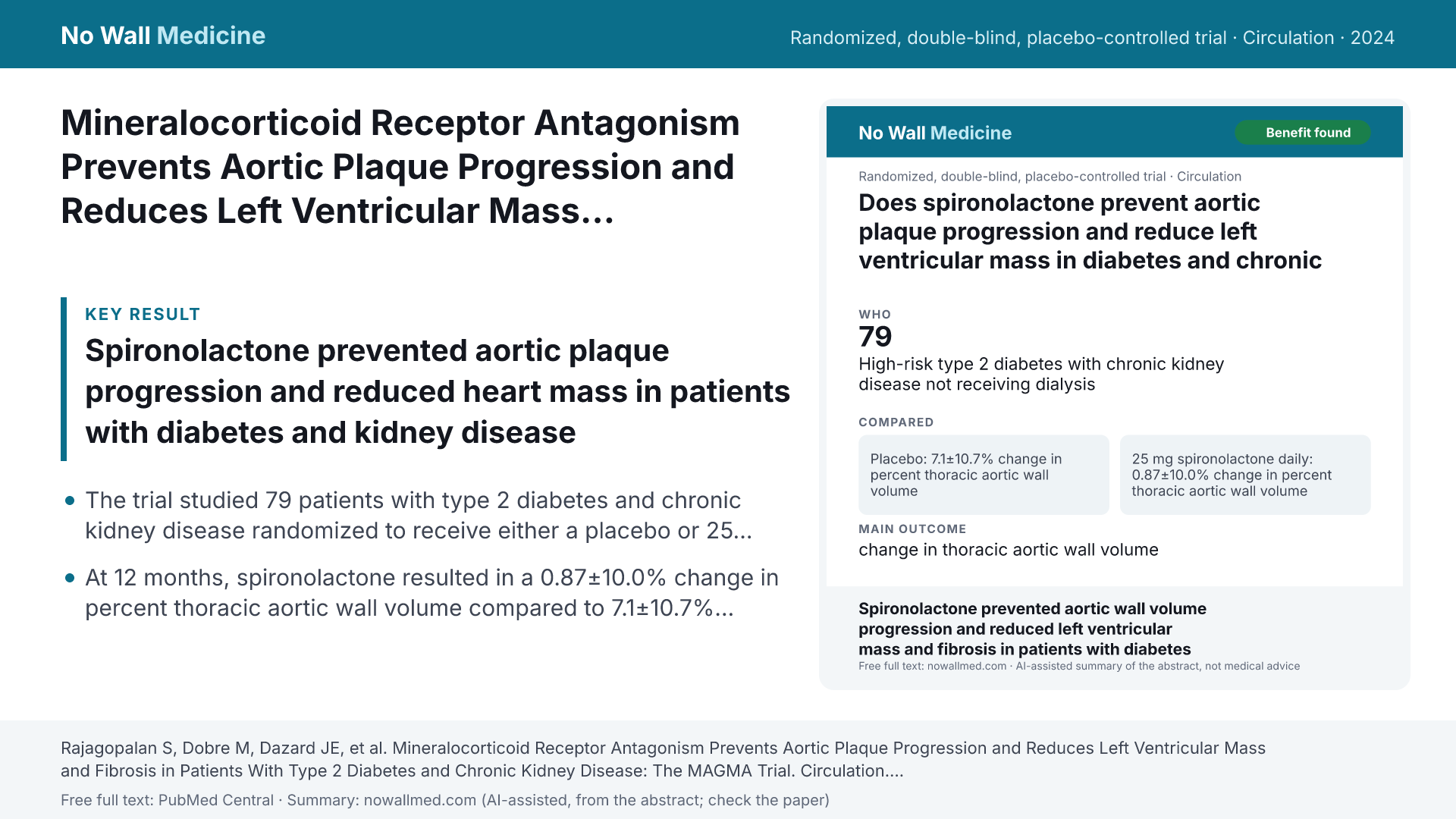
Does spironolactone prevent aortic plaque progression and reduce left ventricular mass in diabetes and chronic kidney disease?
Who
79
High-risk type 2 diabetes with chronic kidney disease not receiving dialysis
Compared
Placebo: 7.1±10.7% change in percent thoracic aortic wall volume
25 mg spironolactone daily: 0.87±10.0% change in percent thoracic aortic wall volume
Main outcome
change in thoracic aortic wall volume
Bottom line: Spironolactone prevented aortic wall volume progression and reduced left ventricular mass and fibrosis in patients with diabetes and chronic kidney disease.
Circulation · 2024-08-12 · Save PNG

Clinical question: Does spironolactone prevent aortic plaque progression and reduce left ventricular mass in diabetes and chronic kidney disease?
Why it matters: The direct mechanistic pathways by which mineralocorticoid receptor antagonists reduce cardiovascular complications in humans are lacking.
Key points
- The trial studied 79 patients with type 2 diabetes and chronic kidney disease randomized to receive either a placebo or 25 mg of spironolactone daily.
- At 12 months, spironolactone resulted in a 0.87±10.0% change in percent thoracic aortic wall volume compared to 7.1±10.7% in the placebo group.
- Spironolactone was associated with a -5.8±8.4 g change in left ventricular mass compared to a 3.1±8.4 g change in the placebo group.
Headline and key points written with AI from the paper’s abstract, with every number checked against it. Read the paper before relying on them.
Was this summary helpful?
Subject terms
Headline, design, result, key points, caveat and citation as plain text.
Cite this article
Rajagopalan S, Dobre M, Dazard JE, et al. Mineralocorticoid Receptor Antagonism Prevents Aortic Plaque Progression and Reduces Left Ventricular Mass and Fibrosis in Patients With Type 2 Diabetes and Chronic Kidney Disease: The MAGMA Trial. Circulation. 2024;150(9):663-676. doi:10.1161/CIRCULATIONAHA.123.067620
Spotted a mistake? Suggest a correction