Low-dose esketamine and dexmedetomidine combination reduced moderate-to-severe pain after scoliosis correction surgery
Mini-dose esketamine-dexmedetomidine combination to supplement analgesia for patients after scoliosis correction surgery: a double-blind randomised trial
Double-blind randomised trialBenefit found
Does mini-dose esketamine-dexmedetomidine combination improve analgesia after scoliosis correction surgery?
Who
199
Two hundred male and female adults having scoliosis correction surgery
Compared
combined supplement: 65.7% [65/99]
placebo: 86.0% [86/100]
Main outcome
incidence of moderate-to-severe pain within 72 h
Result: relative risk 0.76; 95% confidence interval: 0.65-0.90
Bottom line: Mini-dose esketamine-dexmedetomidine combination safely improved analgesia and subjective sleep quality after scoliosis correction surgery.
Br J Anaesth · 2023-06-09Download image
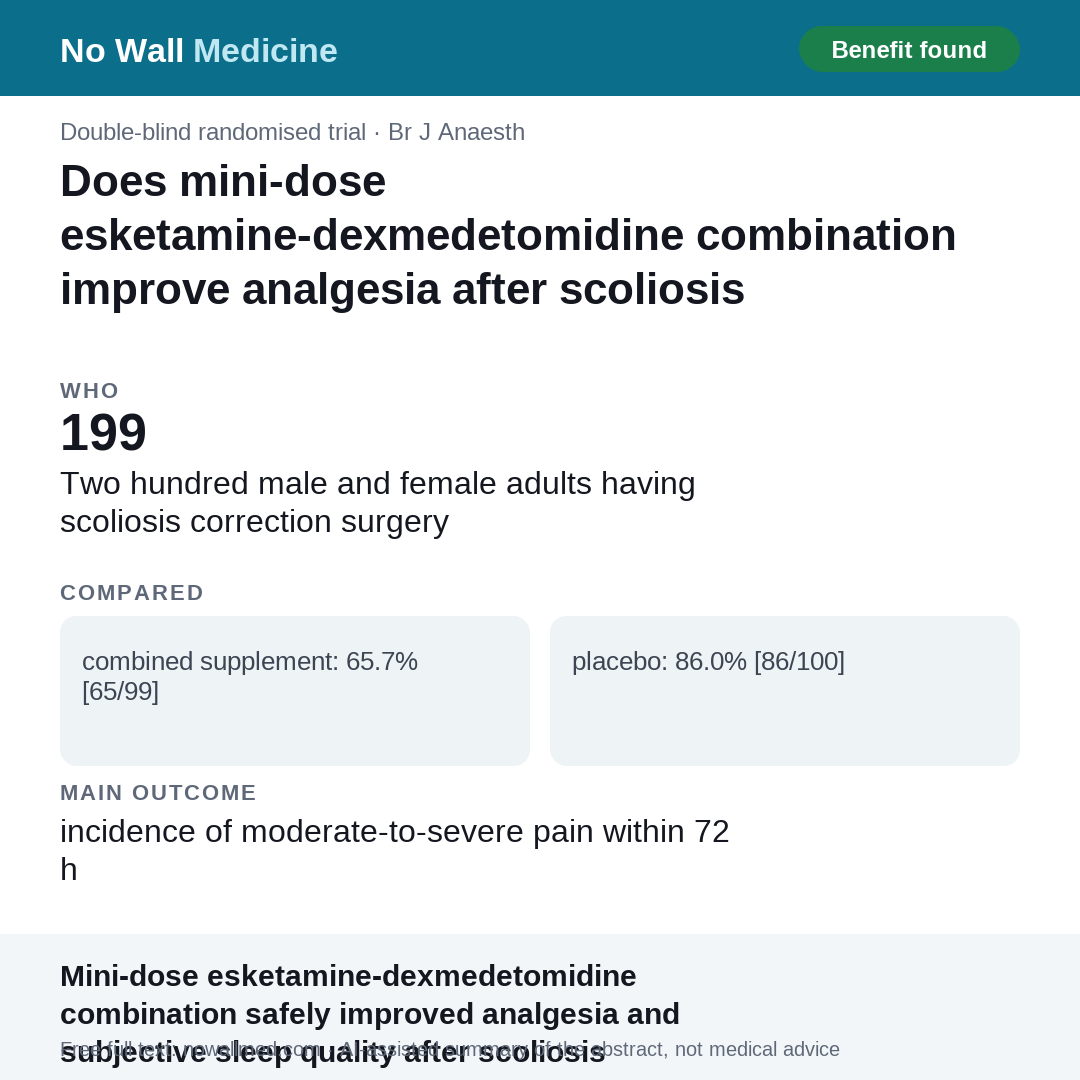
Clinical question: Does mini-dose esketamine-dexmedetomidine combination improve analgesia after scoliosis correction surgery?
Why it matters: It was unknown if adding a low-dose combination of esketamine and dexmedetomidine to standard pain medication could safely improve pain relief and sleep after scoliosis surgery.
In absolute numbers
combined supplement: 65.7% · placebo: 86% → a difference of 20.3 percentage points, so about 5 people would need the treatment for 1 more to benefit (number needed to treat) over the trial’s follow-up.
Worked out by us from the two group results above, not reported by the authors. Check the paper for the exact outcome and timing.
Key points
- Researchers studied 199 adults undergoing scoliosis correction surgery who received either a combined supplement of esketamine and dexmedetomidine or a placebo alongside patient-controlled sufentanil analgesia.
- The incidence of moderate-to-severe pain within 72 hours was 65.7% in the supplement group compared to 86.0% in the placebo group.
- Patients receiving the combination also reported lower pain intensity at rest and during movement, as well as better subjective sleep quality for the first 5 nights.
Headline and key points written with AI from the paper’s abstract, with every number checked against it. Read the paper before relying on them.
Was this summary helpful?
Subject terms
Cite this article
Zhang Y, Cui F, Ma JH, Wang DX. Mini-dose esketamine-dexmedetomidine combination to supplement analgesia for patients after scoliosis correction surgery: a double-blind randomised trial. Br J Anaesth. 2023. doi:10.1016/j.bja.2023.05.001
Spotted a mistake? Suggest a correction
Top studies every Monday
The week’s key trials and guidelines in your specialties, plus any topics you follow. By email, free.
Get the weekly digest