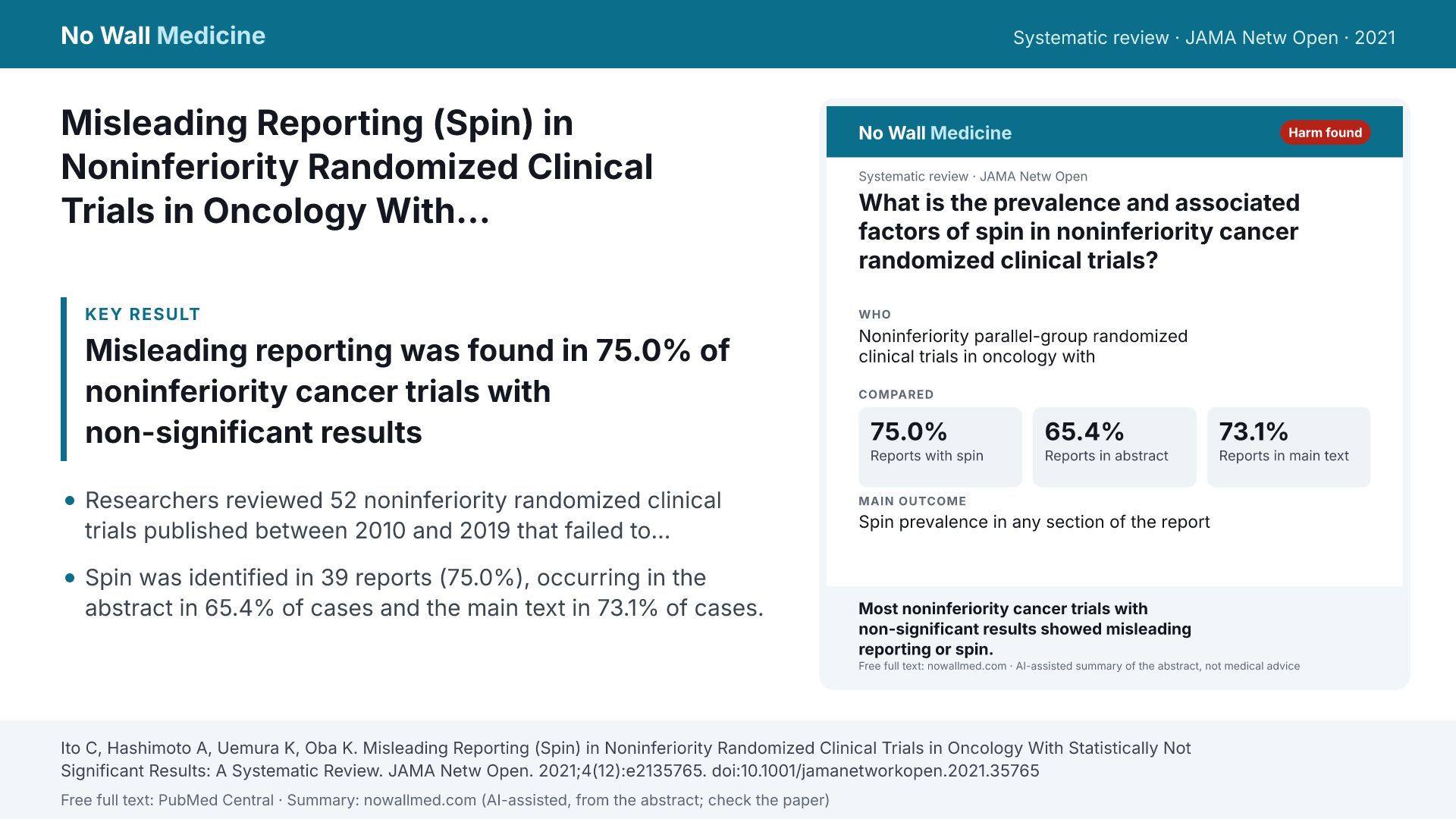
Misleading reporting was found in 75.0% of noninferiority cancer trials with non-significant results
Misleading Reporting (Spin) in Noninferiority Randomized Clinical Trials in Oncology With Statistically Not Significant Results: A Systematic Review
Systematic reviewHarm found
What is the prevalence and associated factors of spin in noninferiority cancer randomized clinical trials?
Who
52
Noninferiority parallel-group randomized clinical trials in oncology with non-significant primary results · PubMed database
Compared
75.0%Reports with spin (39/52)
65.4%Reports in abstract
73.1%Reports in main text
Main outcome
Spin prevalence in any section of the report
Bottom line: Most noninferiority cancer trials with non-significant results showed misleading reporting or spin.
JAMA Netw Open · 2021-12-01Download image
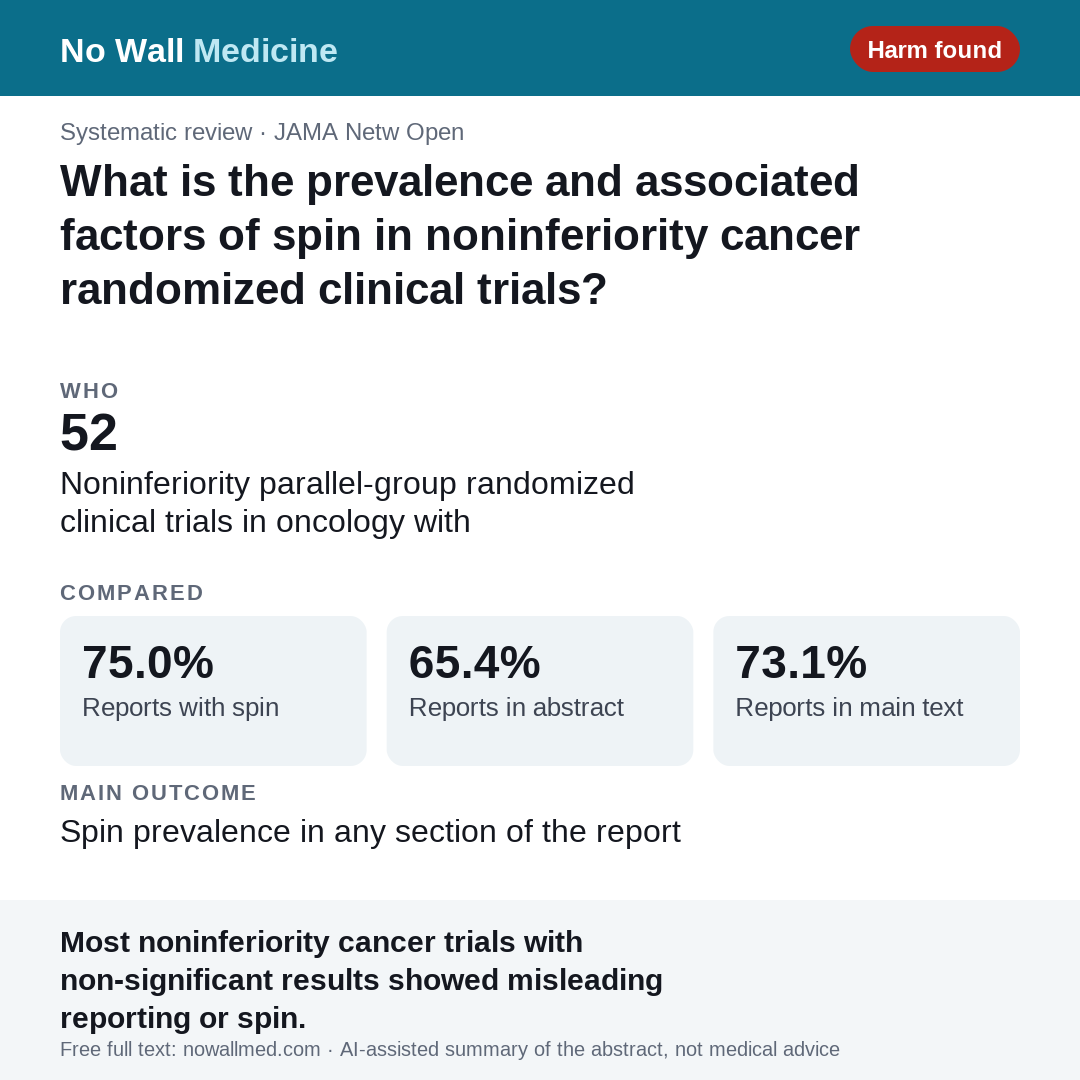
Clinical question: What is the prevalence and associated factors of spin in noninferiority cancer randomized clinical trials?
Why it matters: The prevalence of spin, or inaccurate reporting that highlights benefits despite non-significant results, in noninferiority cancer trials was unclear.
Key points
- Researchers reviewed 52 noninferiority randomized clinical trials published between 2010 and 2019 that failed to reach statistical significance for their primary outcomes.
- Spin was identified in 39 reports (75.0%), occurring in the abstract in 65.4% of cases and the main text in 73.1% of cases.
- The use of spin was associated with novel experimental treatments and funding coming only from nonprofit sources.
Headline and key points written with AI from the paper’s abstract, with every number checked against it. Read the paper before relying on them.
Was this summary helpful?
Subject terms
Cite this article
Ito C, Hashimoto A, Uemura K, Oba K. Misleading Reporting (Spin) in Noninferiority Randomized Clinical Trials in Oncology With Statistically Not Significant Results: A Systematic Review. JAMA Netw Open. 2021. doi:10.1001/jamanetworkopen.2021.35765
Spotted a mistake? Suggest a correction