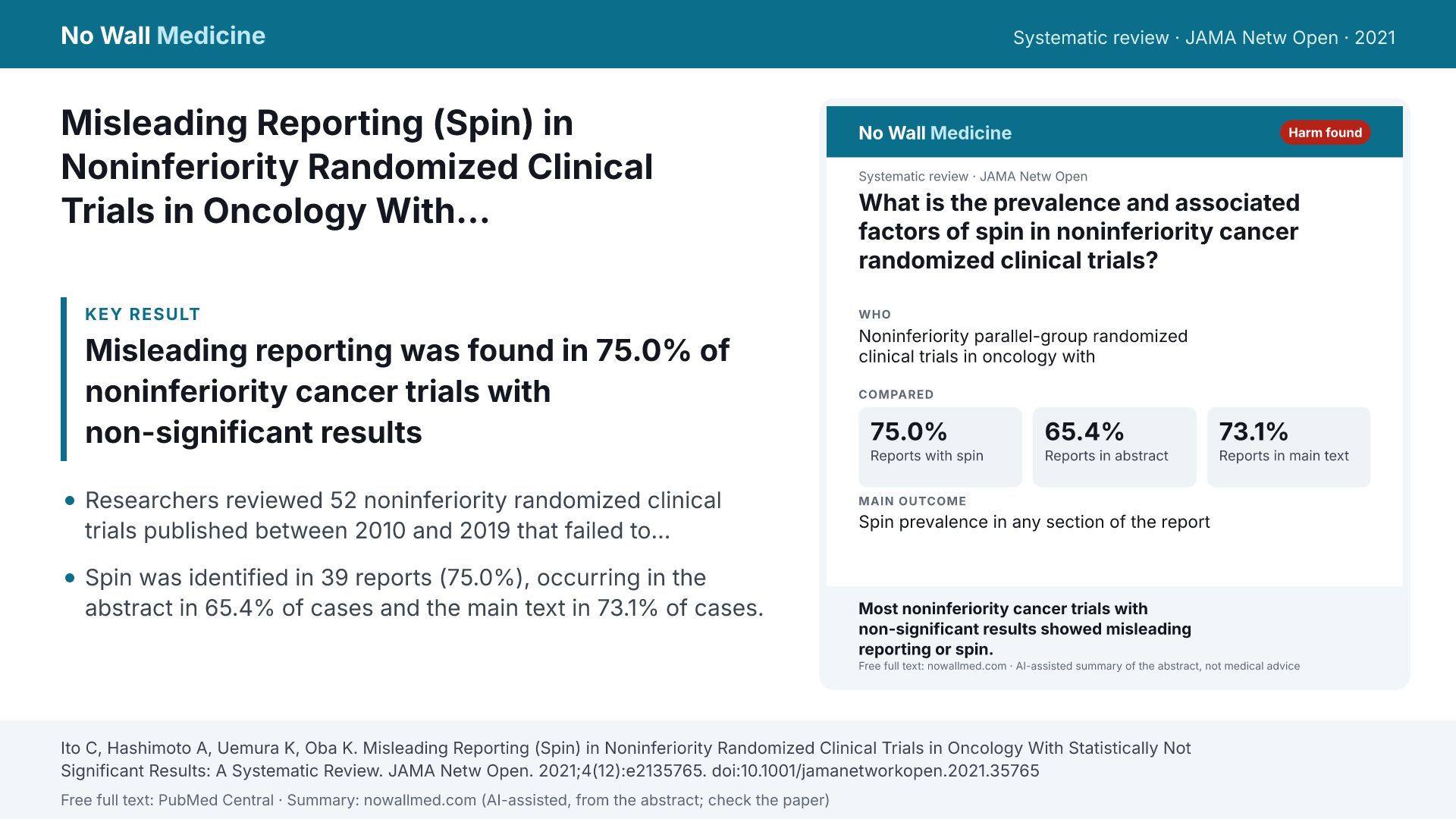
Misleading Reporting (Spin) in Noninferiority Randomized Clinical Trials in Oncology With Statistically Not Significant Results: A Systematic Review
Key result: Misleading reporting was found in 75.0% of noninferiority cancer trials with non-significant results
Key points
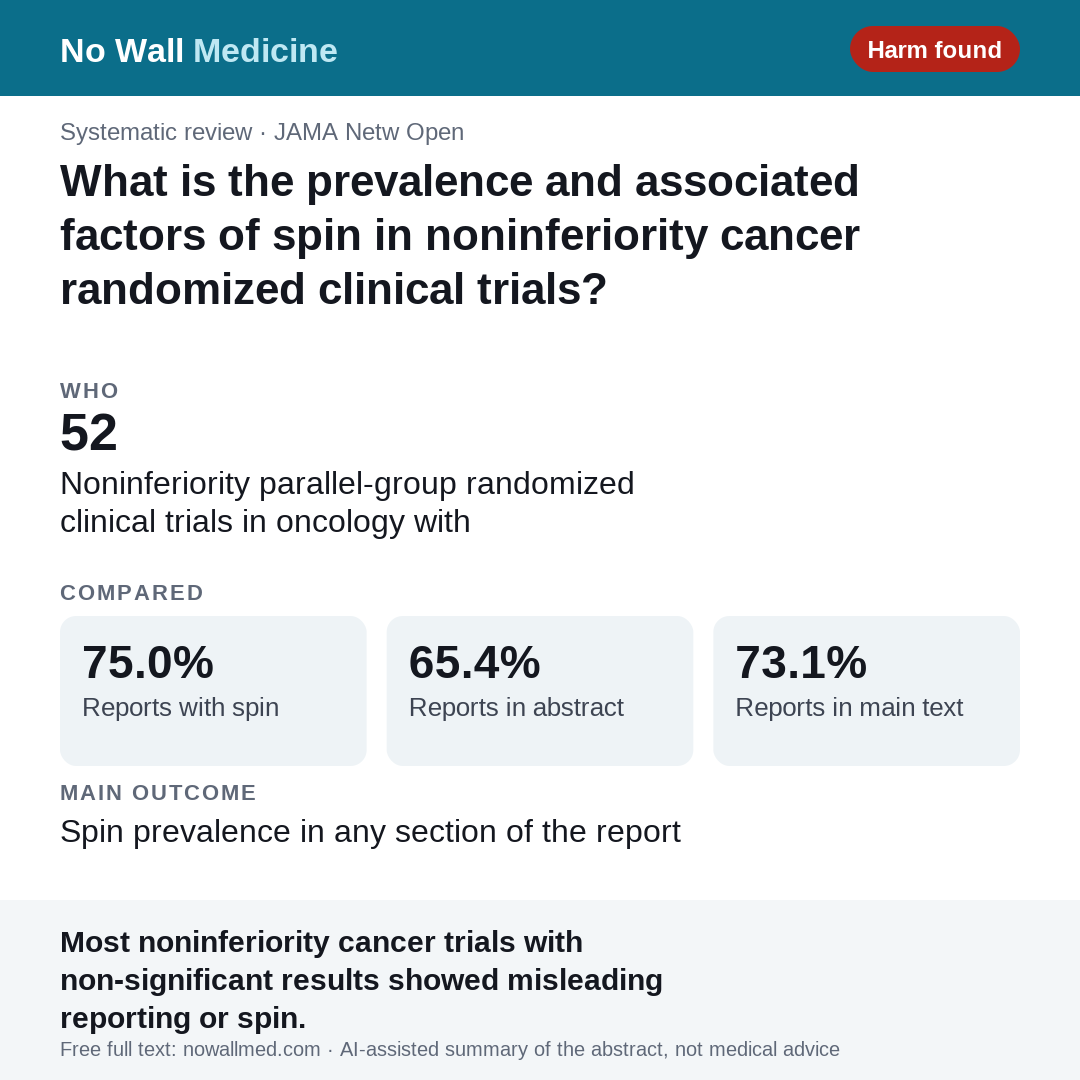
- Researchers reviewed 52 noninferiority randomized clinical trials published between 2010 and 2019 that failed to reach statistical significance for their primary outcomes.
- Spin was identified in 39 reports (75.0%), occurring in the abstract in 65.4% of cases and the main text in 73.1% of cases.
- The use of spin was associated with novel experimental treatments and funding coming only from nonprofit sources.
Why it matters: The prevalence of spin, or inaccurate reporting that highlights benefits despite non-significant results, in noninferiority cancer trials was unclear.
Discussion prompts
- Would these patients look like yours? Who was left out?
- Is the main outcome one that matters to patients?
- Is the difference large enough to change what you do?
Cite: Ito C, Hashimoto A, Uemura K, Oba K. Misleading Reporting (Spin) in Noninferiority Randomized Clinical Trials in Oncology With Statistically Not Significant Results: A Systematic Review. JAMA Netw Open. 2021. doi:10.1001/jamanetworkopen.2021.35765
Free full text: PubMed Central · Summary and visual abstract: nowallmed.com/a/misleading-reporting-spin-in-noninferiority-randomized-clinical-120qxzv/ (AI-assisted from the abstract; check the paper before relying on it).