Mixed Reality Enhanced Otolaryngology Case-Based Learning: A Randomized Educational Study
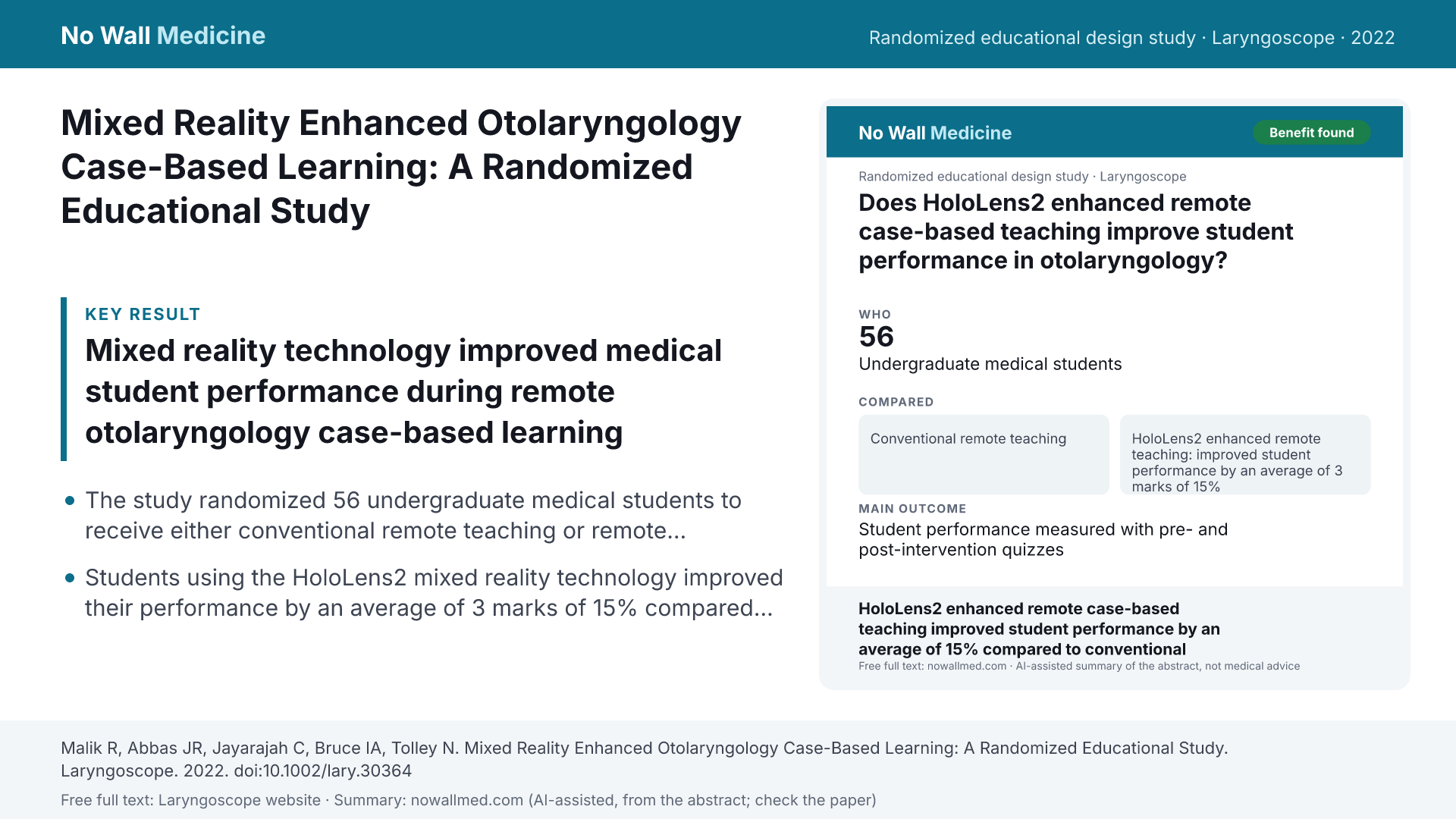
Key result: Mixed reality technology improved medical student performance during remote otolaryngology case-based learning
Randomized educational design studyBenefit found
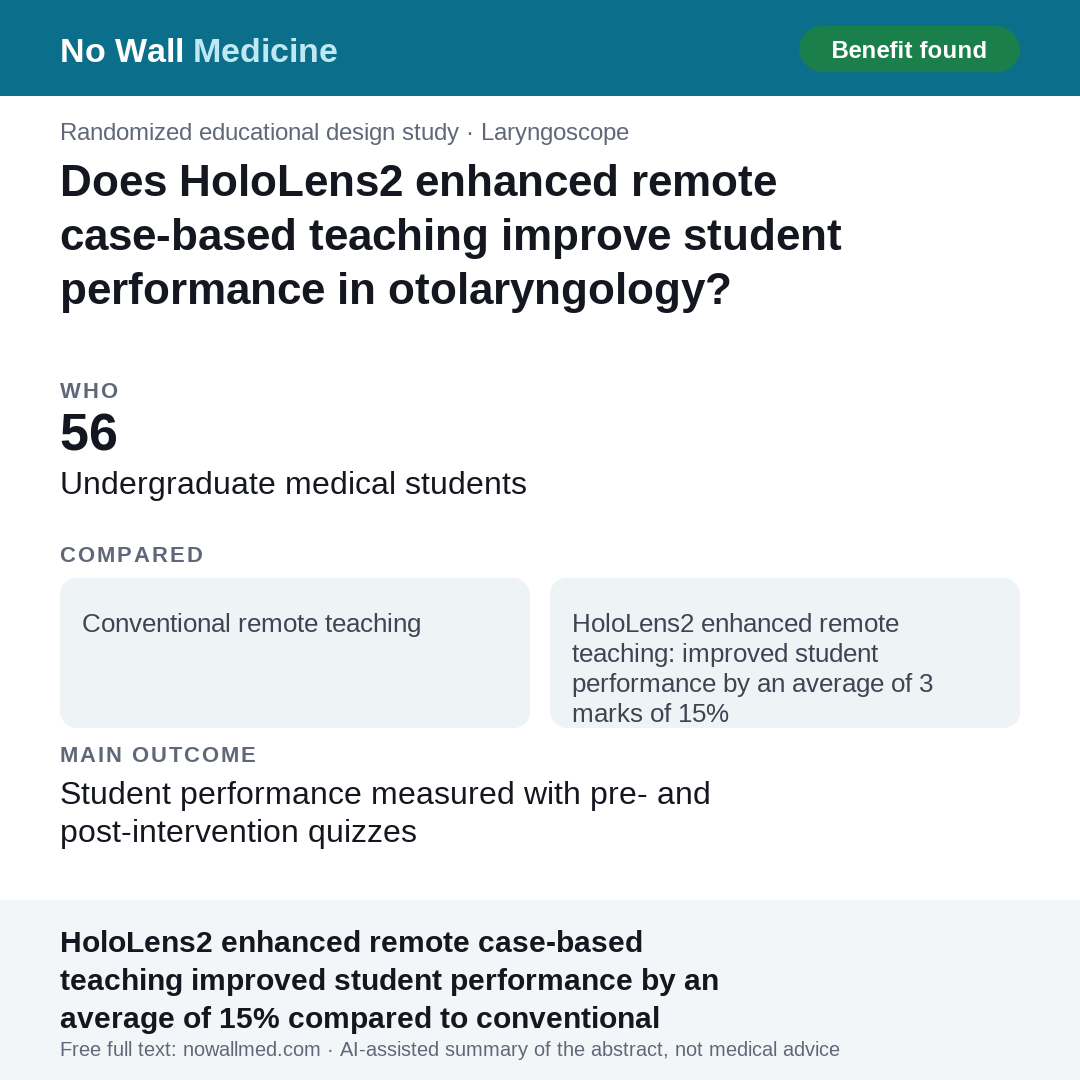
Does HoloLens2 enhanced remote case-based teaching improve student performance in otolaryngology?
Who
56
Undergraduate medical students
Compared
Conventional remote teaching
HoloLens2 enhanced remote teaching: improved student performance by an average of 3 marks of 15%
Main outcome
Student performance measured with pre- and post-intervention quizzes
Bottom line: HoloLens2 enhanced remote case-based teaching improved student performance by an average of 15% compared to conventional teaching.
Laryngoscope · 2022-09-08Download image
Key points
- The study randomized 56 undergraduate medical students to receive either conventional remote teaching or remote teaching enhanced with HoloLens2 mixed reality technology.
- Students using the HoloLens2 mixed reality technology improved their performance by an average of 3 marks of 15% compared to the conventional group.
- Secondary measures included student feedback on perceived enjoyment, engagement, and opinions regarding the role of this technology in education.
Why it matters: Medical education in specialties like otolaryngology faces challenges such as reduced hands-on training opportunities during remote learning periods.
Discussion prompts
- Would these patients look like yours? Who was left out?
- Is the main outcome one that matters to patients?
- Is the difference large enough to change what you do?
Cite: Malik R, Abbas JR, Jayarajah C, Bruce IA, Tolley N. Mixed Reality Enhanced Otolaryngology Case-Based Learning: A Randomized Educational Study. Laryngoscope. 2022. doi:10.1002/lary.30364
Free full text: Laryngoscope website · Summary and visual abstract: nowallmed.com/a/mixed-reality-enhanced-otolaryngology-case-based-learning-a-1ejx7nc/ (AI-assisted from the abstract; check the paper before relying on it).