Moderate and light aerobic exercise show similar effects on appetite and food cravings in inactive adults
Moderate-to-vigorous and light-intensity aerobic exercise yield similar effects on food reward, appetitive responses, and energy intake in physically inactive adults
Randomised, crossover trialNo clear difference
Do moderate-to-vigorous and light-intensity aerobic exercise have similar effects on food reward and intake?
Who
20
Twenty inactive, healthy adults
Compared
Moderate-to-vigorous intensity exercise
Light-intensity exercise
Main outcome
Food reward, appetite sensation, and energy intake
Bottom line: Acute aerobic exercise increases food wanting and appetite regardless of intensity, with no difference in absolute energy intake.
Eur J Clin Nutr · 2025-02-28Download image
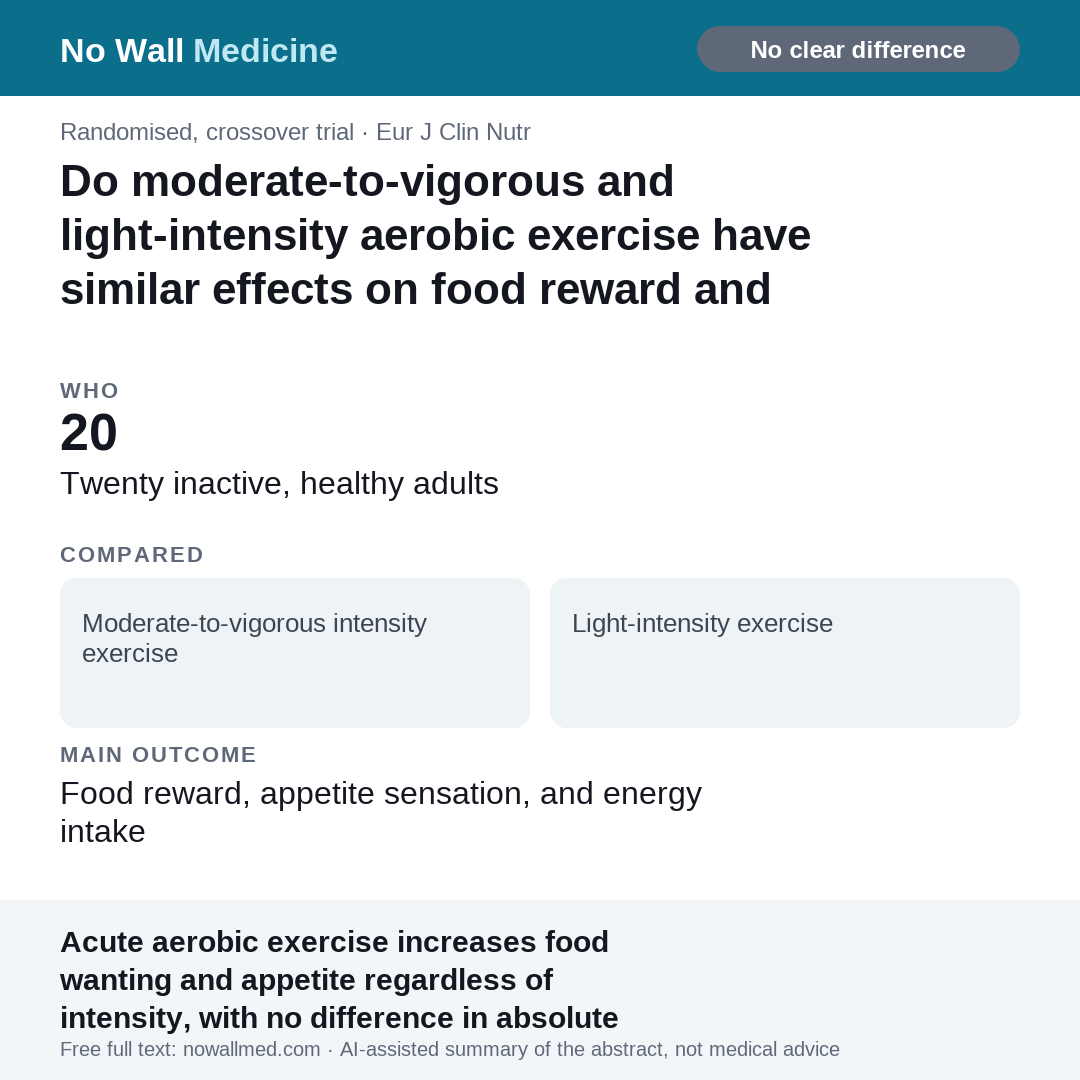
Clinical question: Do moderate-to-vigorous and light-intensity aerobic exercise have similar effects on food reward and intake?
Why it matters: It is unknown how different intensities of aerobic exercise affect food reward, appetite sensations, and energy intake in people who are not physically active.
Key points
- Twenty physically inactive healthy adults completed a randomized crossover trial comparing 40 minutes of cycling at 20% or 50% peak power output.
- Both exercise intensities were associated with increased appetite, food cravings, and wanting for high-fat and savoury foods.
- There was no difference between intensities for absolute energy intake, though relative energy intake was lower after moderate-to-vigorous exercise compared to light exercise.
Headline and key points written with AI from the paper’s abstract, with every number checked against it. Read the paper before relying on them.
Topics
Cite this article
Hsieh SS, Bala A, Layzell K, Fatima Q, Pushparajah C, Maguire RK. Moderate-to-vigorous and light-intensity aerobic exercise yield similar effects on food reward, appetitive responses, and energy intake in physically inactive adults. Eur J Clin Nutr. 2025. doi:10.1038/s41430-025-01574-5
Spotted a mistake? Suggest a correction
Top studies every Monday
The week’s key trials and guidelines in your specialties, plus any topics you follow. By email, free.
Get the weekly digest