Modified-release nicotinamide for the treatment of hyperphosphataemia in haemodialysis patients: 52-week efficacy and safety results of the phase 3 randomized controlled NOPHOS trial
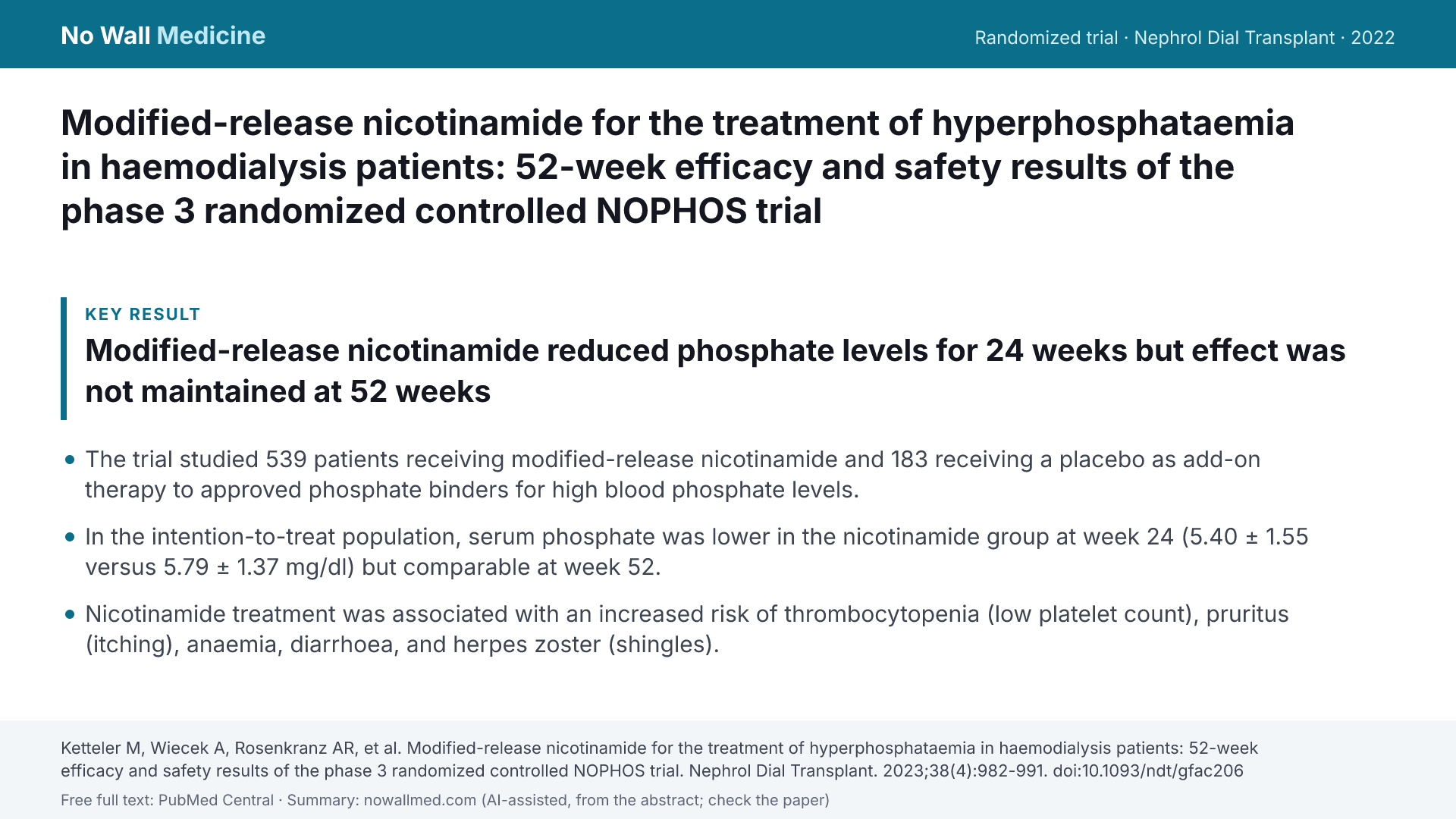
Key result: Modified-release nicotinamide reduced phosphate levels for 24 weeks but effect was not maintained at 52 weeks
Key points
- The trial studied 539 patients receiving modified-release nicotinamide and 183 receiving a placebo as add-on therapy to approved phosphate binders for high blood phosphate levels.
- In the intention-to-treat population, serum phosphate was lower in the nicotinamide group at week 24 (5.40 ± 1.55 versus 5.79 ± 1.37 mg/dl) but comparable at week 52.
- Nicotinamide treatment was associated with an increased risk of thrombocytopenia (low platelet count), pruritus (itching), anaemia, diarrhoea, and herpes zoster (shingles).
Discussion prompts
- Would these patients look like yours? Who was left out?
- Is the main outcome one that matters to patients?
- Is the difference large enough to change what you do?
Cite: Ketteler M, Wiecek A, Rosenkranz AR, et al. Modified-release nicotinamide for the treatment of hyperphosphataemia in haemodialysis patients: 52-week efficacy and safety results of the phase 3 randomized controlled NOPHOS trial. Nephrol Dial Transplant. 2023;38(4):982-991. doi:10.1093/ndt/gfac206
Free full text: PubMed Central · Summary and visual abstract: nowallmed.com/a/modified-release-nicotinamide-for-the-treatment-of-hyperphosphataemia-1nlcp82/ (AI-assisted from the abstract; check the paper before relying on it).