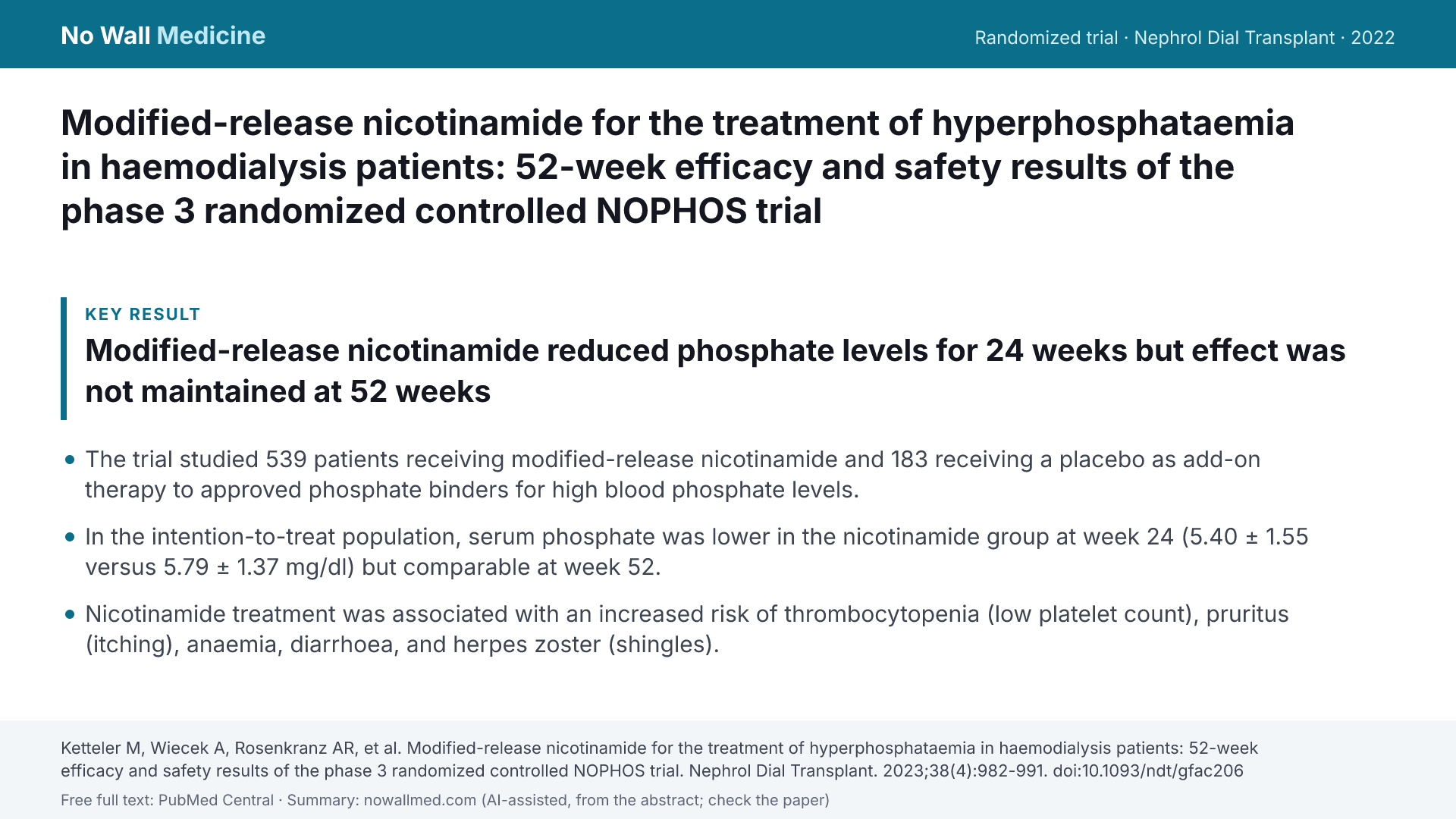
Modified-release nicotinamide reduced phosphate levels for 24 weeks but effect was not maintained at 52 weeks
Modified-release nicotinamide for the treatment of hyperphosphataemia in haemodialysis patients: 52-week efficacy and safety results of the phase 3 randomized controlled NOPHOS trial
Why it matters: It was unknown if the long-term efficacy and safety of modified-release nicotinamide for treating high phosphate levels in haemodialysis patients could be maintained for 52 weeks.
Key points
- The trial studied 539 patients receiving modified-release nicotinamide and 183 receiving a placebo as add-on therapy to approved phosphate binders for high blood phosphate levels.
- In the intention-to-treat population, serum phosphate was lower in the nicotinamide group at week 24 (5.40 ± 1.55 versus 5.79 ± 1.37 mg/dl) but comparable at week 52.
- Nicotinamide treatment was associated with an increased risk of thrombocytopenia (low platelet count), pruritus (itching), anaemia, diarrhoea, and herpes zoster (shingles).
Headline and key points written with AI from the paper’s abstract, with every number checked against it. Read the paper before relying on them.
Was this summary helpful?
Subject terms
Cite this article
Ketteler M, Wiecek A, Rosenkranz AR, et al. Modified-release nicotinamide for the treatment of hyperphosphataemia in haemodialysis patients: 52-week efficacy and safety results of the phase 3 randomized controlled NOPHOS trial. Nephrol Dial Transplant. 2022. doi:10.1093/ndt/gfac206
Spotted a mistake? Suggest a correction