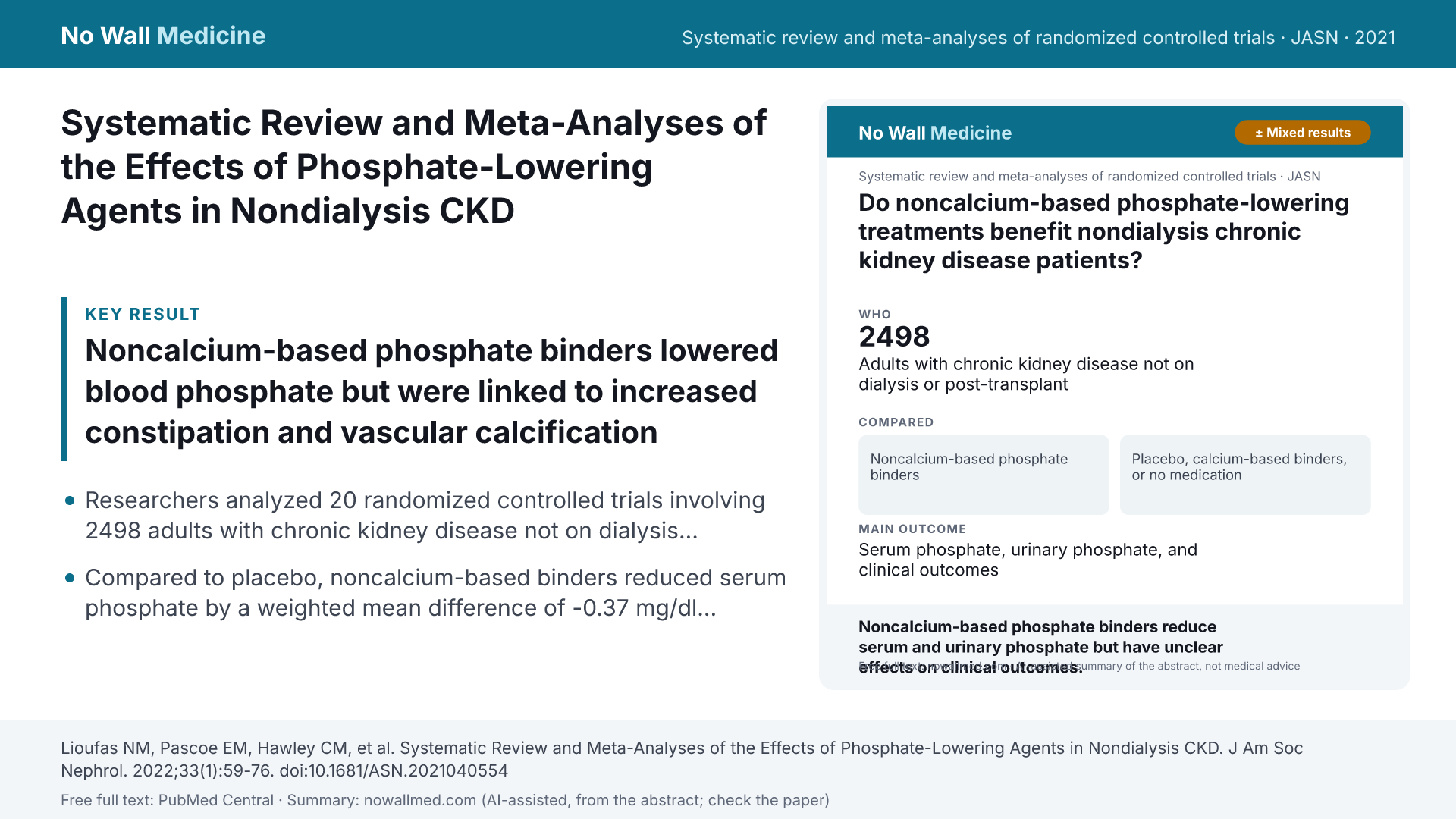
Noncalcium-based phosphate binders lowered blood phosphate but were linked to increased constipation and vascular calcification
Systematic Review and Meta-Analyses of the Effects of Phosphate-Lowering Agents in Nondialysis CKD
Systematic review and meta-analyses of randomized controlled trialsMixed results
Do noncalcium-based phosphate-lowering treatments benefit nondialysis chronic kidney disease patients?
Who
2498
Adults with chronic kidney disease not on dialysis or post-transplant
Compared
Noncalcium-based phosphate binders
Placebo, calcium-based binders, or no medication
Main outcome
Serum phosphate, urinary phosphate, and clinical outcomes
Result: serum phosphate weighted mean difference -0.37 (95% CI, -0.58 to -0.15 mg/dl)
Bottom line: Noncalcium-based phosphate binders reduce serum and urinary phosphate but have unclear effects on clinical outcomes.
Limitation: Data for effects on cardiovascular events and death were scant.
JASN · 2021-10-13 · Save PNG
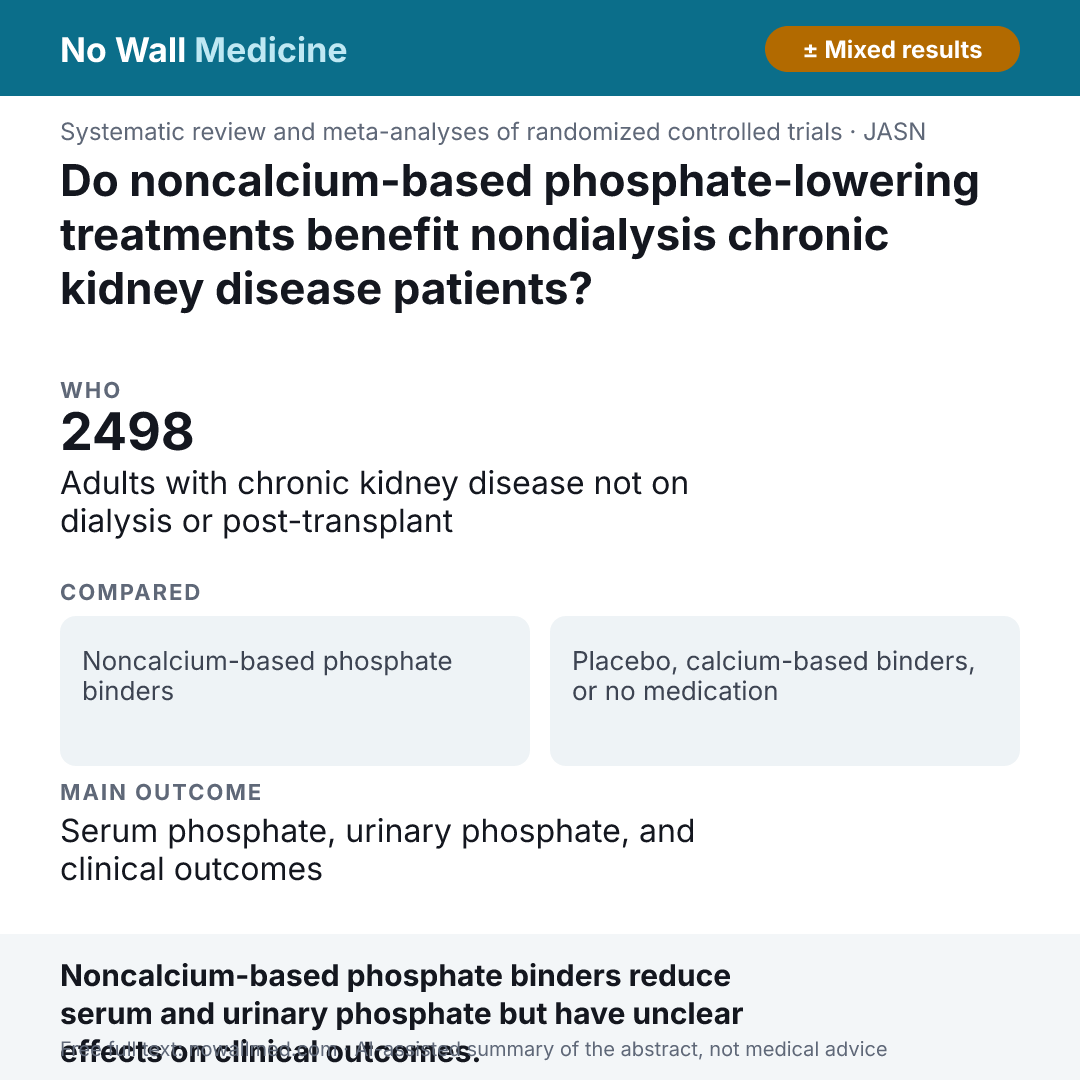
Clinical question: Do noncalcium-based phosphate-lowering treatments benefit nondialysis chronic kidney disease patients?
Key points
- Researchers analyzed 20 randomized controlled trials involving 2498 adults with chronic kidney disease not on dialysis or post-transplant.
- Compared to placebo, noncalcium-based binders reduced serum phosphate by a weighted mean difference of -0.37 mg/dl and urinary phosphate excretion by a standardized mean difference of -0.61.
- The use of these binders was associated with increased constipation and a greater vascular calcification score, which is the buildup of calcium in blood vessel walls.
Limitation the authors note: Data regarding the effects of phosphate-lowering therapy on cardiovascular events and death were scant.
Headline and key points written with AI from the paper’s abstract, with every number checked against it. Read the paper before relying on them.
Was this summary helpful?
Subject terms
Headline, design, result, key points, caveat and citation as plain text.
Cite this article
Lioufas NM, Pascoe EM, Hawley CM, et al. Systematic Review and Meta-Analyses of the Effects of Phosphate-Lowering Agents in Nondialysis CKD. J Am Soc Nephrol. 2022;33(1):59-76. doi:10.1681/ASN.2021040554
Spotted a mistake? Suggest a correction