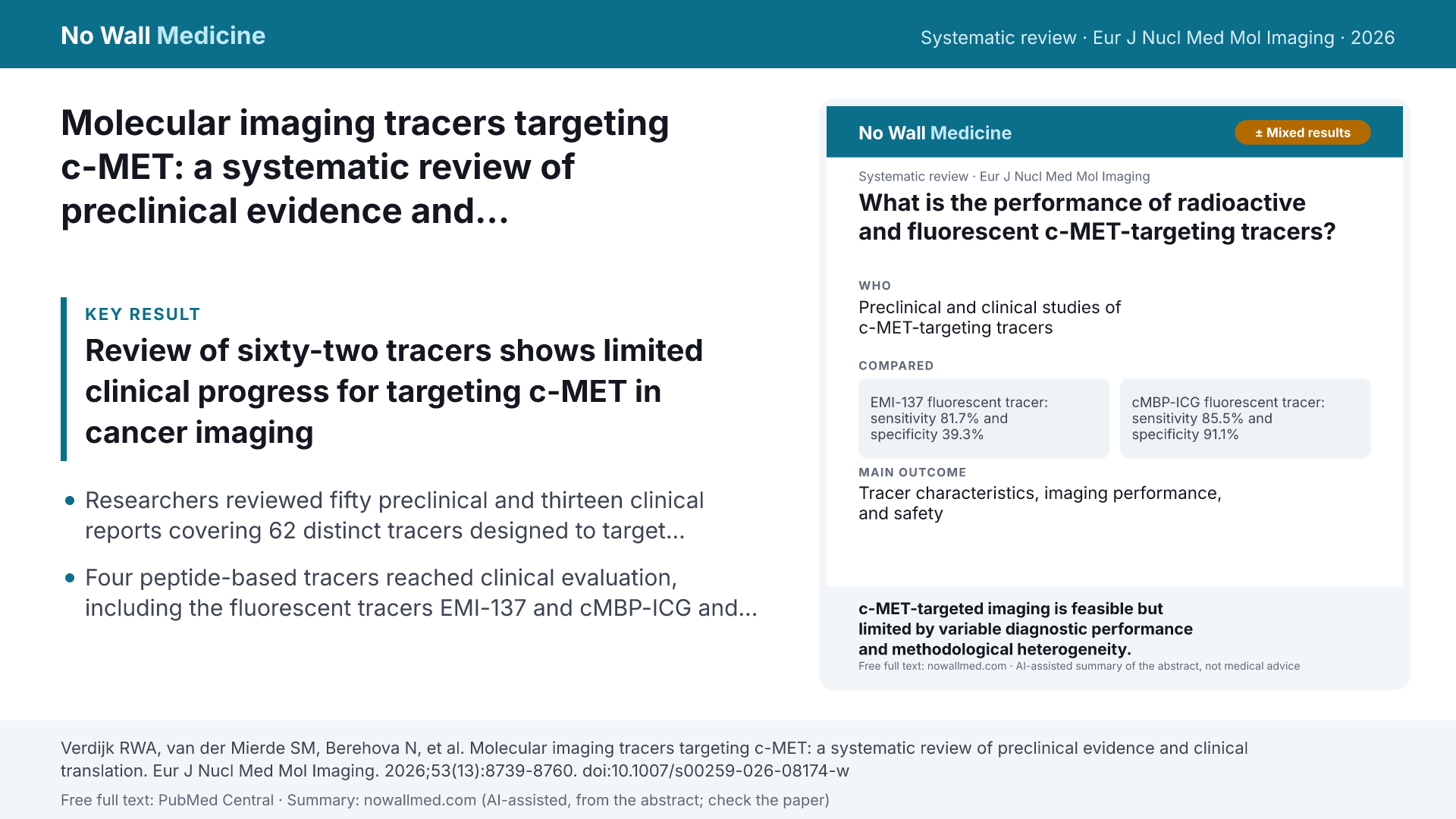
Molecular imaging tracers targeting c-MET: a systematic review of preclinical evidence and clinical translation
Key result: Review of sixty-two tracers shows limited clinical progress for targeting c-MET in cancer imaging
Key points
- Researchers reviewed fifty preclinical and thirteen clinical reports covering 62 distinct tracers designed to target the mesenchymal-epithelial transition factor protein.
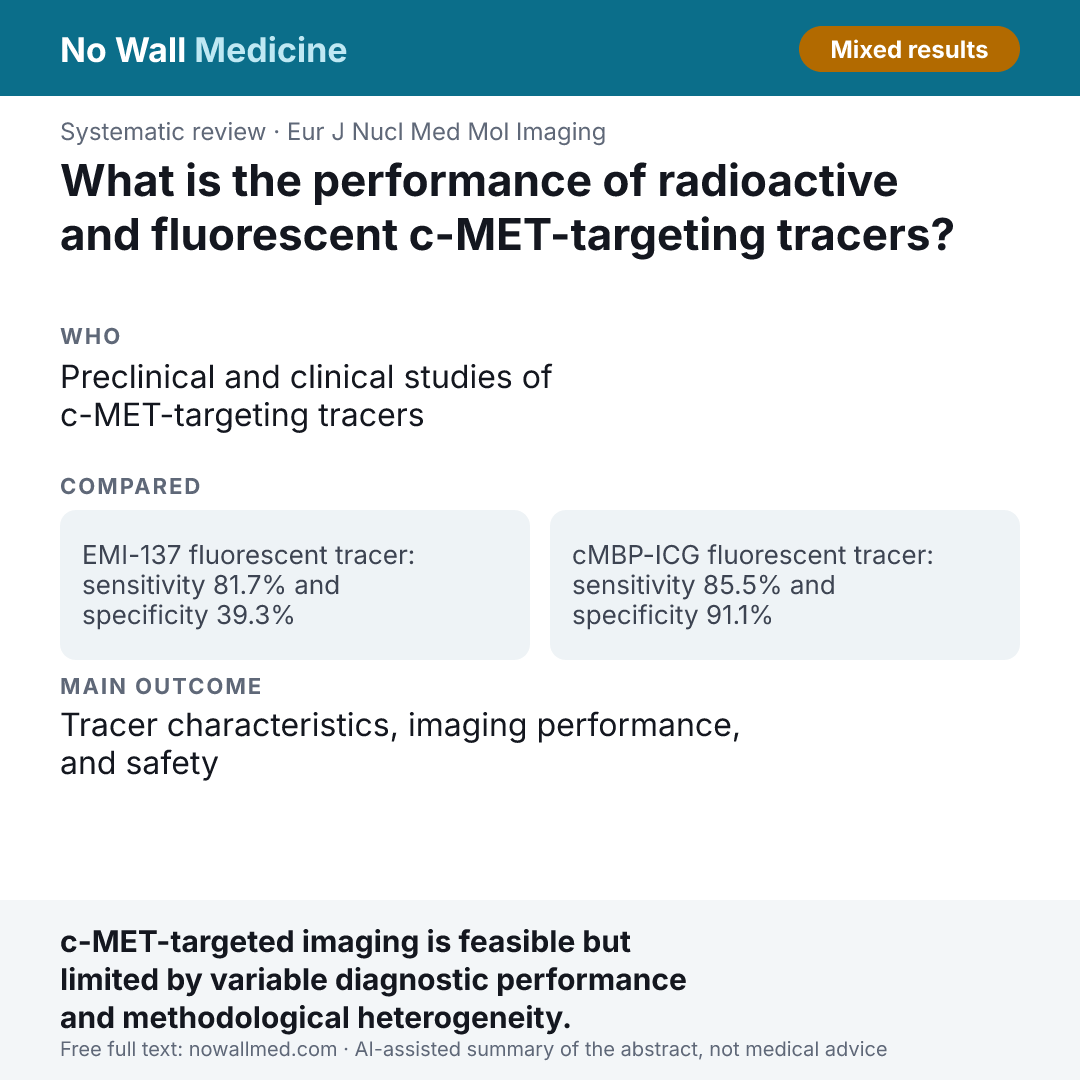
- Four peptide-based tracers reached clinical evaluation, including the fluorescent tracers EMI-137 and cMBP-ICG and the positron emission tomography tracers ⁶⁸Ga-EMP-100 and ⁶⁸Ga-MetP.
- The fluorescent tracer cMBP-ICG showed a weighted average sensitivity of 85.5% and specificity of 91.1% in oral cavity cancer studies.
Why it matters: The mesenchymal-epithelial transition factor is overexpressed in many cancers, but there is limited clinical evidence regarding the performance of tracers targeting this protein.
Limitation the authors note: The authors state that clinical evidence is limited by methodological heterogeneity, small sample sizes, limited biological validation, and variable diagnostic performance.
Discussion prompts
- Would these patients look like yours? Who was left out?
- Is the main outcome one that matters to patients?
- Is the difference large enough to change what you do?
Cite: Verdijk RWA, van der Mierde SM, Berehova N, et al. Molecular imaging tracers targeting c-MET: a systematic review of preclinical evidence and clinical translation. Eur J Nucl Med Mol Imaging. 2026;53(13):8739-8760. doi:10.1007/s00259-026-08174-w
Free full text: PubMed Central · Summary and visual abstract: nowallmed.com/a/molecular-imaging-tracers-targeting-c-met-a-systematic-review-of-1d86jfw/ (AI-assisted from the abstract; check the paper before relying on it).