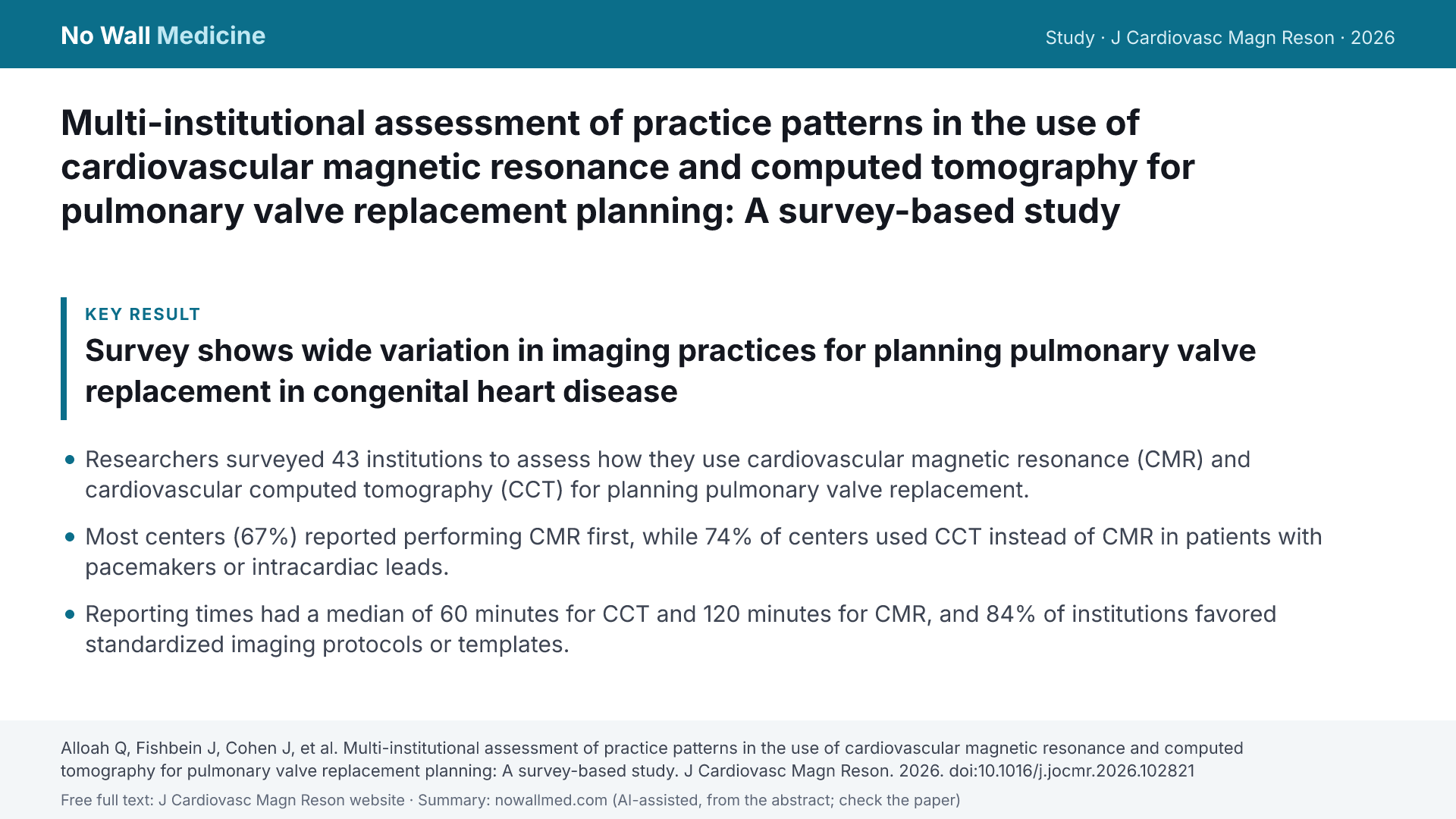
Multi-institutional assessment of practice patterns in the use of cardiovascular magnetic resonance and computed tomography for pulmonary valve replacement planning: A survey-based study
Key result: Survey shows wide variation in imaging practices for planning pulmonary valve replacement in congenital heart disease
Key points
- Researchers surveyed 43 institutions to assess how they use cardiovascular magnetic resonance (CMR) and cardiovascular computed tomography (CCT) for planning pulmonary valve replacement.
- Most centers (67%) reported performing CMR first, while 74% of centers used CCT instead of CMR in patients with pacemakers or intracardiac leads.
- Reporting times had a median of 60 minutes for CCT and 120 minutes for CMR, and 84% of institutions favored standardized imaging protocols or templates.
Why it matters: Clinical practice patterns for using magnetic resonance and computed tomography in pulmonary valve replacement planning remain unclear despite existing consensus recommendations.
Discussion prompts
- Would these patients look like yours? Who was left out?
- Is the main outcome one that matters to patients?
- Is the difference large enough to change what you do?
Cite: Alloah Q, Fishbein J, Cohen J, et al. Multi-institutional assessment of practice patterns in the use of cardiovascular magnetic resonance and computed tomography for pulmonary valve replacement planning: A survey-based study. J Cardiovasc Magn Reson. 2026. doi:10.1016/j.jocmr.2026.102821
Free full text: J Cardiovasc Magn Reson website · Summary and visual abstract: nowallmed.com/a/multi-institutional-assessment-of-practice-patterns-in-the-use-of-acdvtw/ (AI-assisted from the abstract; check the paper before relying on it).