Decentralized molecular testing increased the number of patients treated for tuberculosis within 14 days
Multicomponent Strategy with Decentralized Molecular Testing for Tuberculosis
Cluster-randomized trialBenefit found
Does a multicomponent strategy with decentralized molecular testing improve tuberculosis diagnosis and treatment?
Who
10644
10,644 eligible adults in Ugandan community health centers · Uganda, 20 health centers
Compared
Multicomponent diagnostic strategy: 342 patients
Routine care: 220 patients
Main outcome
Number of adults treated for confirmed tuberculosis within 14 days
Result: adjusted rate ratio, 1.56 (95% CI, 1.21 to 2.01)
Bottom line: A multicomponent strategy with on-site molecular testing increased patients treated for confirmed tuberculosis within 14 days.
Funded by: National Heart, Lung, and Blood Institute
NEJM · 2021-12-22Download image
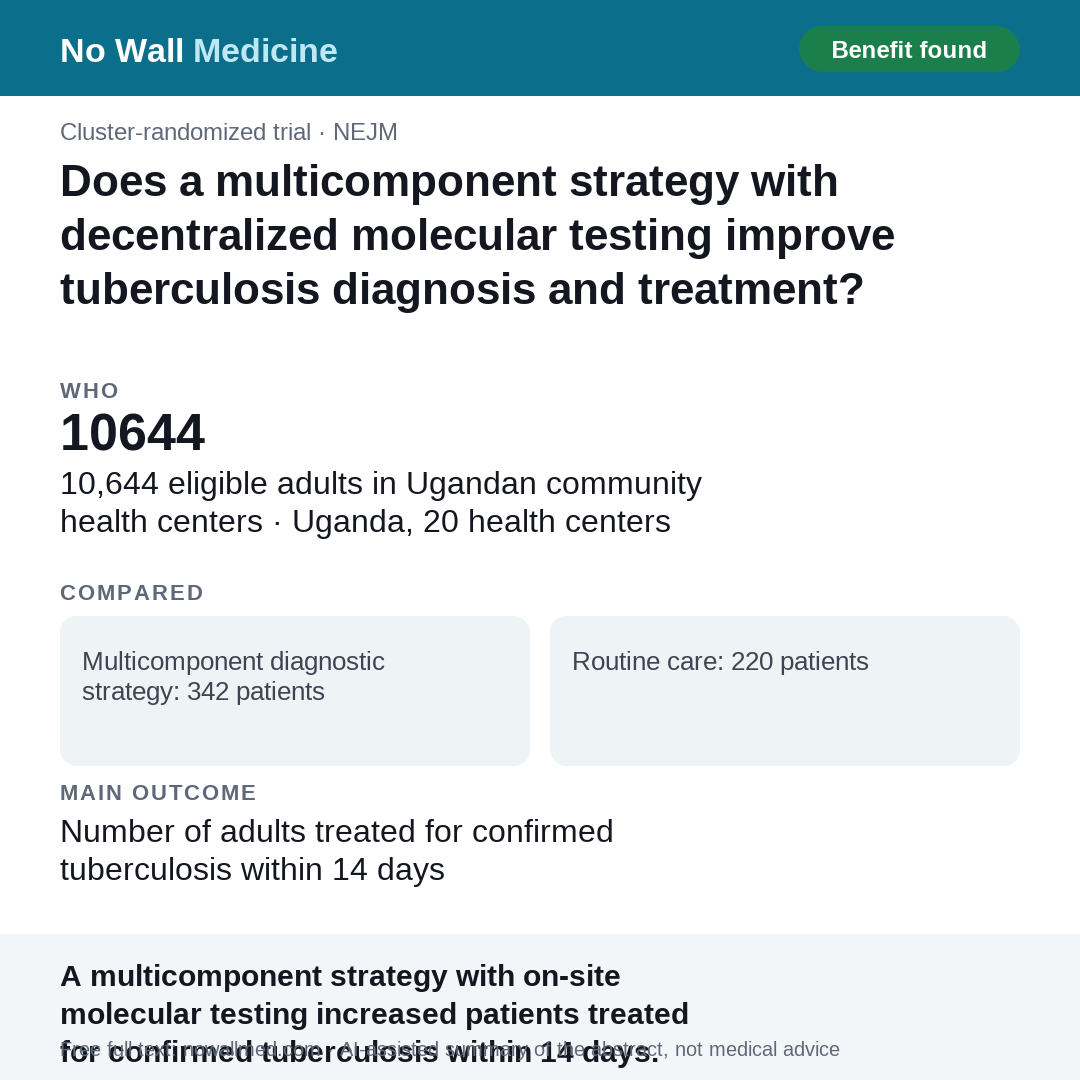
Clinical question: Does a multicomponent strategy with decentralized molecular testing improve tuberculosis diagnosis and treatment?
Why it matters: Effective strategies are needed to facilitate the prompt diagnosis and treatment of tuberculosis in countries with a high burden of the disease.
Key points
- Researchers conducted a cluster-randomized trial of 20 Ugandan health centers involving 10,644 eligible adults to compare a multicomponent strategy against routine care.
- The intervention strategy resulted in 342 patients being treated for confirmed tuberculosis within 14 days compared to 220 patients in the control group.
- Patients in the intervention group had higher rates of completing testing, receiving same-day diagnosis, and receiving same-day treatment for confirmed tuberculosis.
Headline and key points written with AI from the paper’s abstract, with every number checked against it. Read the paper before relying on them.
Was this summary helpful?
Subject terms
Cite this article
Cattamanchi A, Reza TF, Nalugwa T, Adams K, Nantale M, Oyuku D. Multicomponent Strategy with Decentralized Molecular Testing for Tuberculosis. NEJM. 2021. doi:10.1056/NEJMoa2105470
Spotted a mistake? Suggest a correction
Top studies every Monday
The week’s key trials and guidelines in your specialties, plus any topics you follow. By email, free.
Get the weekly digest