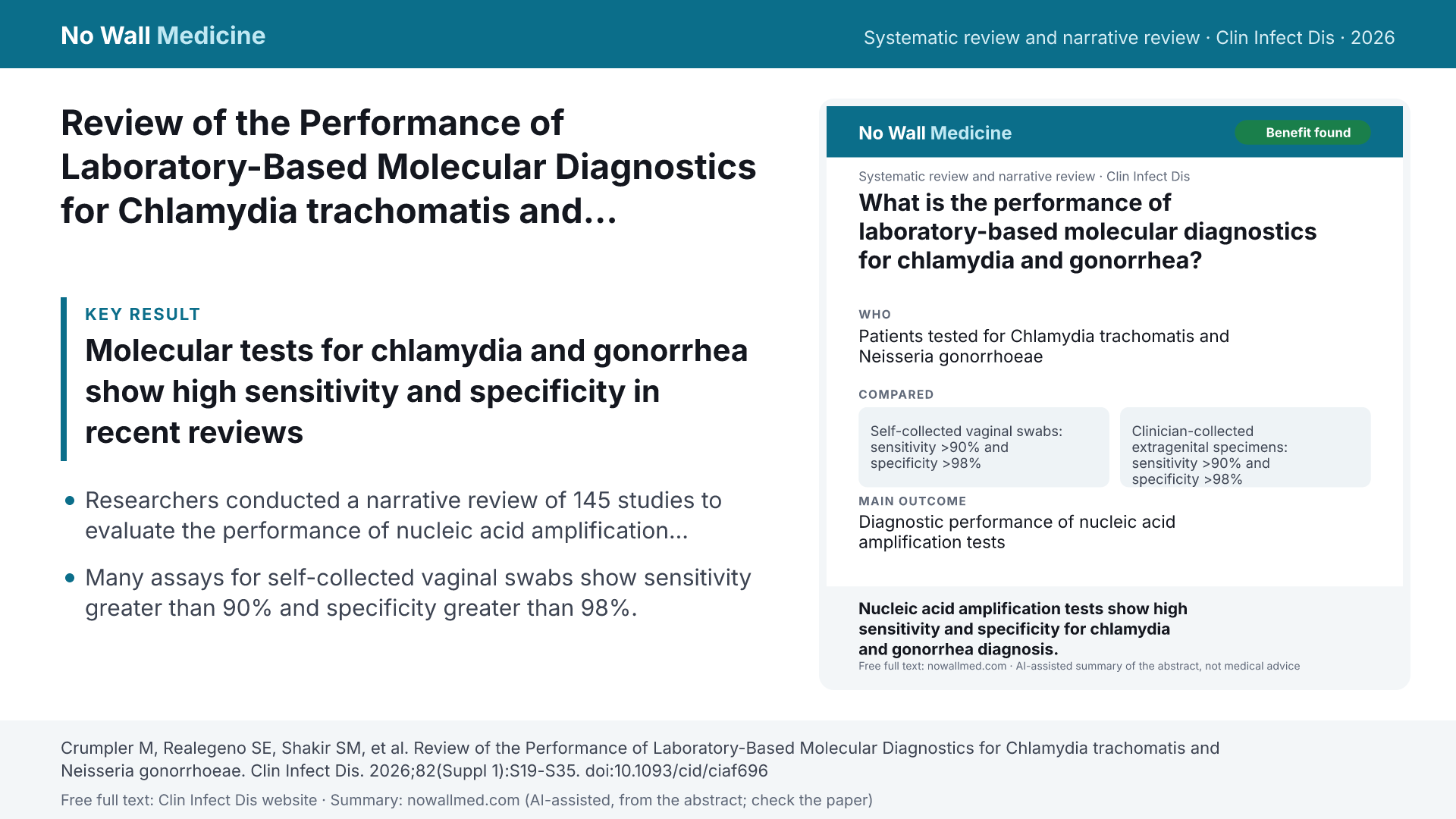
Molecular tests for chlamydia and gonorrhea show high sensitivity and specificity in recent reviews
Review of the Performance of Laboratory-Based Molecular Diagnostics for Chlamydia trachomatis and Neisseria gonorrhoeae
Systematic review and narrative reviewBenefit found
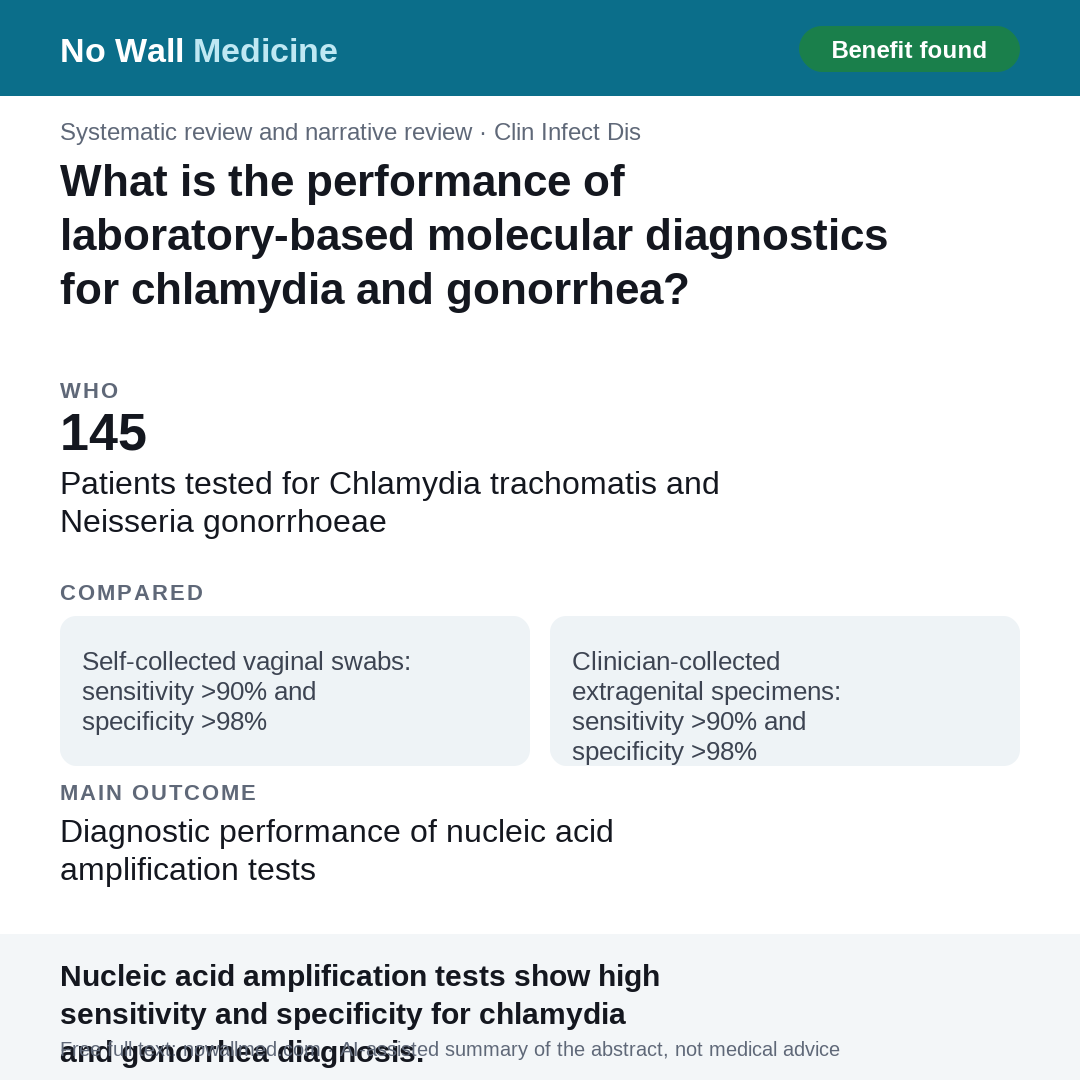
What is the performance of laboratory-based molecular diagnostics for chlamydia and gonorrhea?
Who
Patients tested for Chlamydia trachomatis and Neisseria gonorrhoeae
Compared
Self-collected vaginal swabs: sensitivity >90% and specificity >98%
Clinician-collected extragenital specimens: sensitivity >90% and specificity >98%
Main outcome
Diagnostic performance of nucleic acid amplification tests
Bottom line: Nucleic acid amplification tests show high sensitivity and specificity for chlamydia and gonorrhea diagnosis.
Limitation: No nucleic acid amplification tests currently have claims for patient-collected extragenital specimens.
Clin Infect Dis · 2026-02-24Download image
Clinical question: What is the performance of laboratory-based molecular diagnostics for chlamydia and gonorrhea?
Key points
- Researchers conducted a narrative review of 145 studies to evaluate the performance of nucleic acid amplification tests, which are molecular diagnostic tools used to detect infection.
- Many assays for self-collected vaginal swabs show sensitivity greater than 90% and specificity greater than 98%.
- No nucleic acid amplification tests currently have claims for patient-collected extragenital specimens, such as samples taken from areas other than the genitals.
Headline and key points written with AI from the paper’s abstract, with every number checked against it. Read the paper before relying on them.
Was this summary helpful?
Subject terms
Headline, design, result, key points, caveat and citation as plain text.
Cite this article
Crumpler M, Realegeno SE, Shakir SM, et al. Review of the Performance of Laboratory-Based Molecular Diagnostics for Chlamydia trachomatis and Neisseria gonorrhoeae. Clin Infect Dis. 2026. doi:10.1093/cid/ciaf696
Spotted a mistake? Suggest a correction