Multilevel interventions increased dental attendance among preschoolers during well-child visits
Multilevel Interventions and Dental Attendance in Pediatric Primary Care: A Cluster Randomized Clinical Trial
Cluster randomized clinical trialBenefit found
Do multilevel interventions increase dental attendance and reduce untreated decay among young children?
Who
1023
Medicaid-enrolled preschoolers aged 3 to 6 years · 18 pediatric primary care practices in northeast Ohio
Compared
52.0%Intervention group
43.1%Control group
Main outcome
Dental attendance from clinical examinations
Result: adjusted odds ratio, 1.34 (95% CI, 1.07 to 1.69)
Bottom line: Multilevel interventions increased dental attendance and showed a clinically significant reduction in untreated decay among preschoolers.
Limitation: reduction in mean number of untreated decay was clinically but not statistically significant
JAMA Netw Open · 2024-07-01Download image
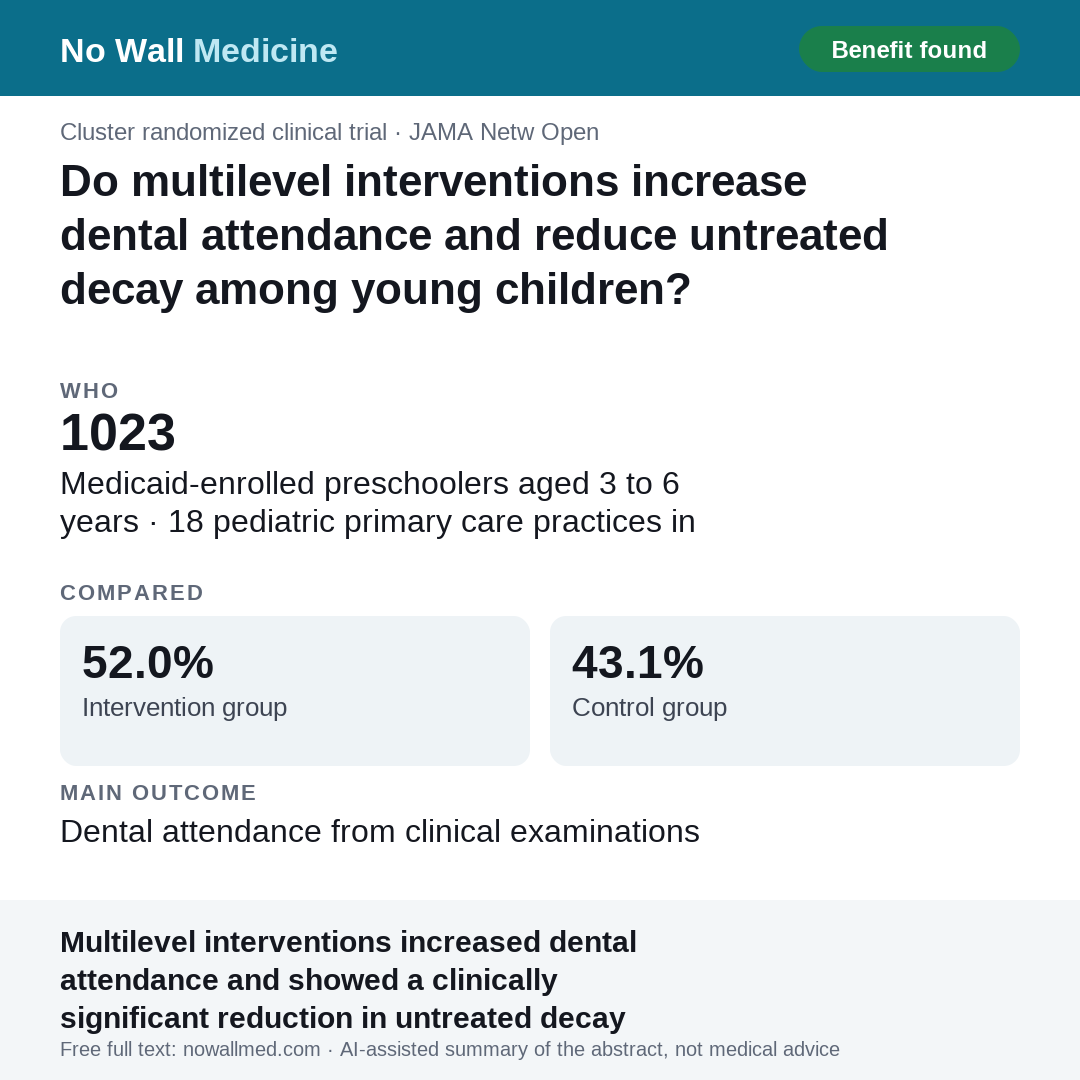
Clinical question: Do multilevel interventions increase dental attendance and reduce untreated decay among young children?
Why it matters: The effectiveness of oral health interventions in pediatric primary care has been inconclusive despite guidelines requiring clinicians to implement them.
In absolute numbers
Intervention group: 52% · Control group: 43.1% → a difference of 8.9 percentage points, so about 12 people would need the treatment for 1 more to benefit (number needed to treat) over the trial’s follow-up.
Worked out by us from the two group results above, not reported by the authors. Check the paper for the exact outcome and timing.
Key points
- Researchers studied 1023 parent-child dyads and 63 clinicians across 18 pediatric practices to compare multilevel interventions against standard oral health education.
- Clinical examinations showed dental attendance was 52.0% in the intervention group compared to 43.1% in the control group, a difference of 8.9%.
- The intervention group showed a clinically but not statistically significant reduction in the mean number of untreated tooth decay compared to controls.
Headline and key points written with AI from the paper’s abstract, with every number checked against it. Read the paper before relying on them.
Was this summary helpful?
Subject terms
Cite this article
Nelson S, Albert JM, Selvaraj D, Curtan S, Momotaz H, Bales G. Multilevel Interventions and Dental Attendance in Pediatric Primary Care: A Cluster Randomized Clinical Trial. JAMA Netw Open. 2024. doi:10.1001/jamanetworkopen.2024.18217
Spotted a mistake? Suggest a correction
Top studies every Monday
The week’s key trials and guidelines in your specialties, plus any topics you follow. By email, free.
Get the weekly digest