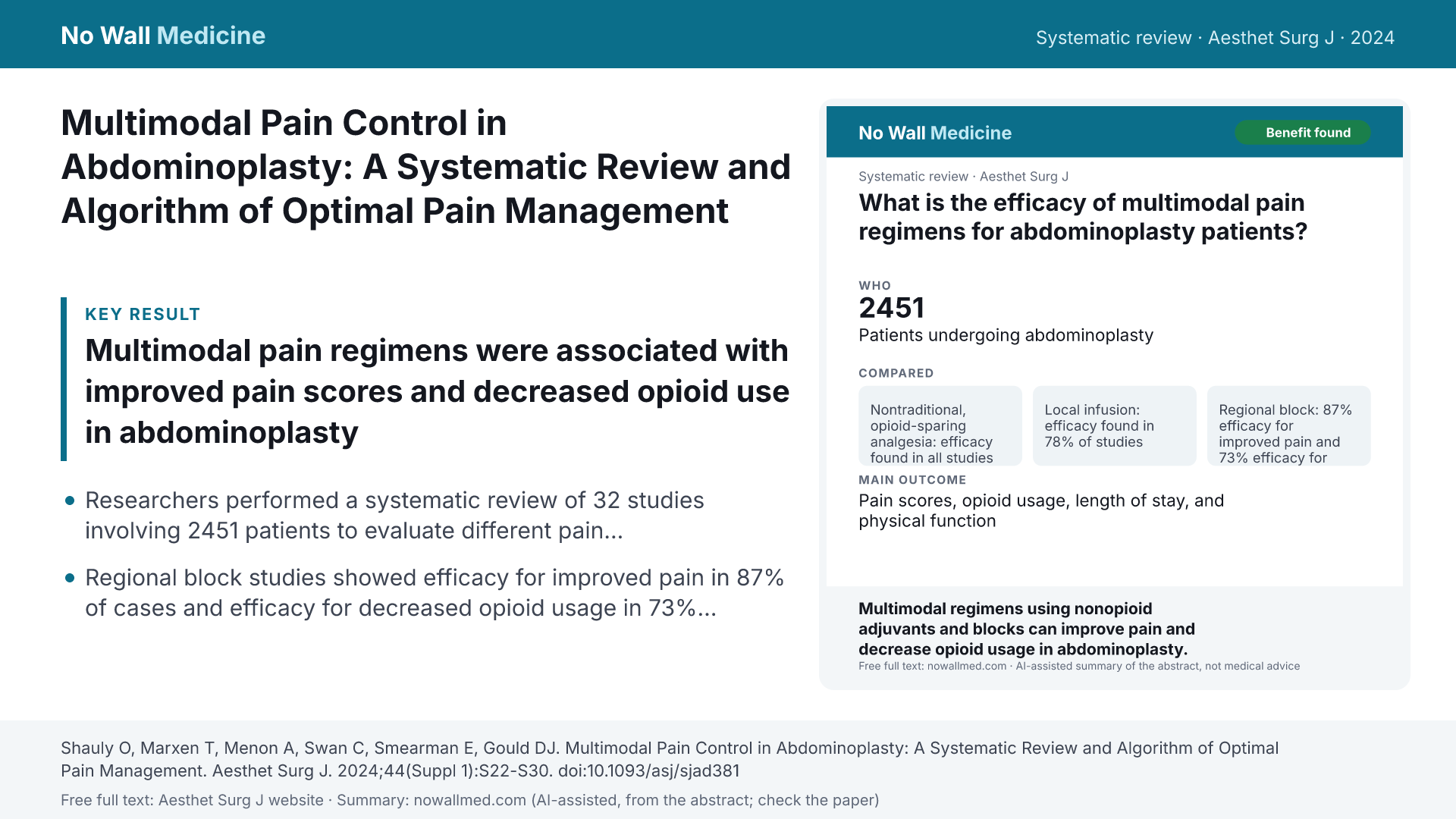
Multimodal pain regimens were associated with improved pain scores and decreased opioid use in abdominoplasty
Multimodal Pain Control in Abdominoplasty: A Systematic Review and Algorithm of Optimal Pain Management
Systematic reviewBenefit found
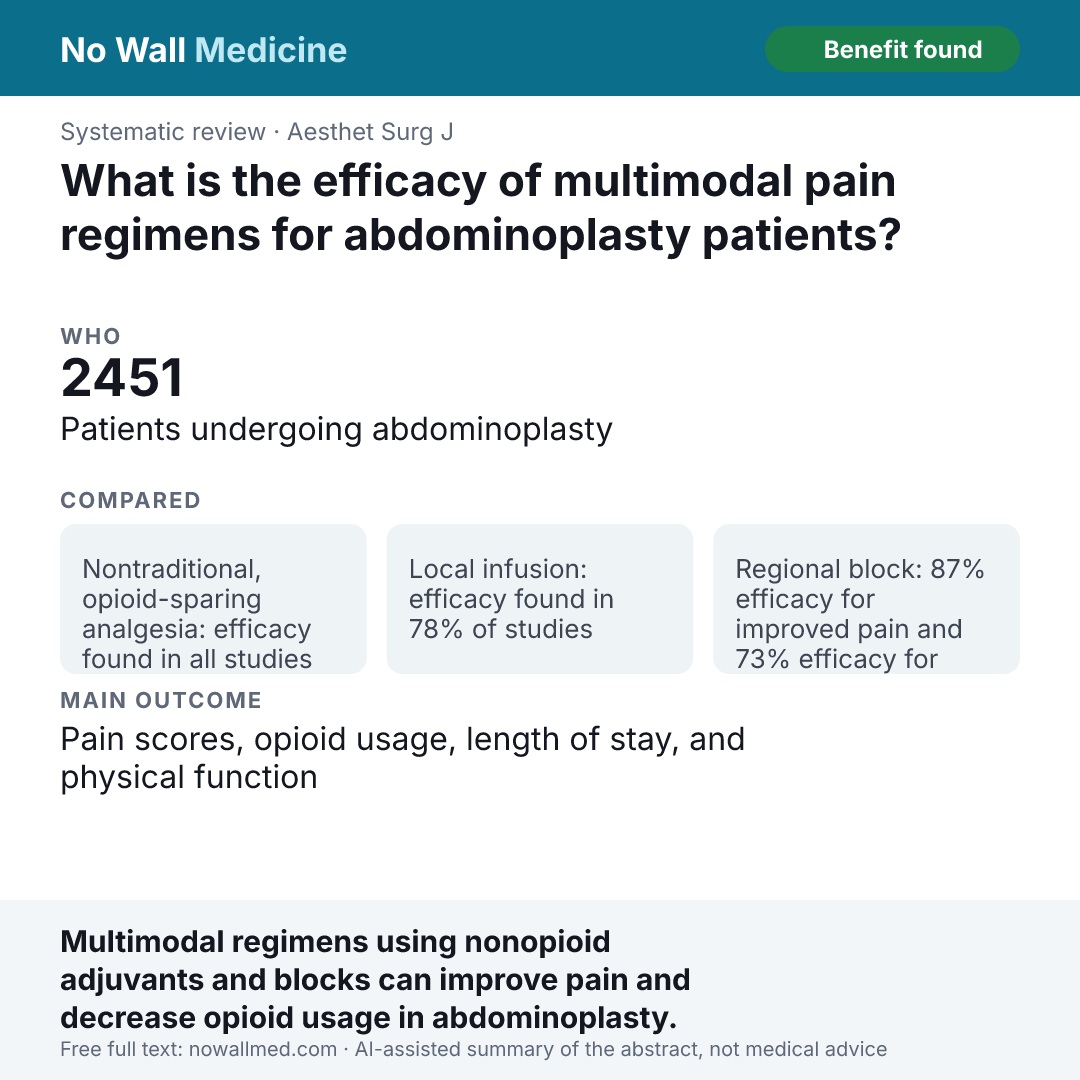
What is the efficacy of multimodal pain regimens for abdominoplasty patients?
Who
2451
Patients undergoing abdominoplasty
Compared
Nontraditional, opioid-sparing analgesia: efficacy found in all studies
Local infusion: efficacy found in 78% of studies
Regional block: 87% efficacy for improved pain and 73% efficacy for decreased opioid usage
Main outcome
Pain scores, opioid usage, length of stay, and physical function
Bottom line: Multimodal regimens using nonopioid adjuvants and blocks can improve pain and decrease opioid usage in abdominoplasty.
Aesthet Surg J · 2024-08-16
Why it matters: Plastic surgery patients undergoing abdominoplasty face an elevated risk of becoming opioid-dependent due to high rates of opioid prescriptions.
Headline and visual abstract written with AI from the paper’s abstract, with every number checked against it. Read the paper before relying on them.
Was this summary helpful?
Subject terms
Cite this article
Shauly O, Marxen T, Menon A, Swan C, Smearman E, Gould DJ. Multimodal Pain Control in Abdominoplasty: A Systematic Review and Algorithm of Optimal Pain Management. Aesthet Surg J. 2024;44(Suppl 1):S22-S30. doi:10.1093/asj/sjad381
Spotted a mistake? Suggest a correction