Needle-free pharmacological sedation techniques in paediatric patients for imaging procedures: a systematic review and meta-analysis
Systematic review and meta-analysisMixed results
What are the success rates of needle-free pharmacological sedation in children for MRI?
Who
22 380
Children aged 0-8 years undergoing magnetic resonance imaging
Compared
94%Oral chloral hydrate (95% confidence interval [CI]: 0.91-0.96)
95%Oral chloral hydrate and intranasal dexmedetomidine (95% CI: 0.92-0.97)
36%Rectal, oral, or intranasal midazolam (95% CI: 0.14-0.65)
99%Oral pentobarbital (95% CI: 0.90-1.00)
Main outcome
Sedation success rate
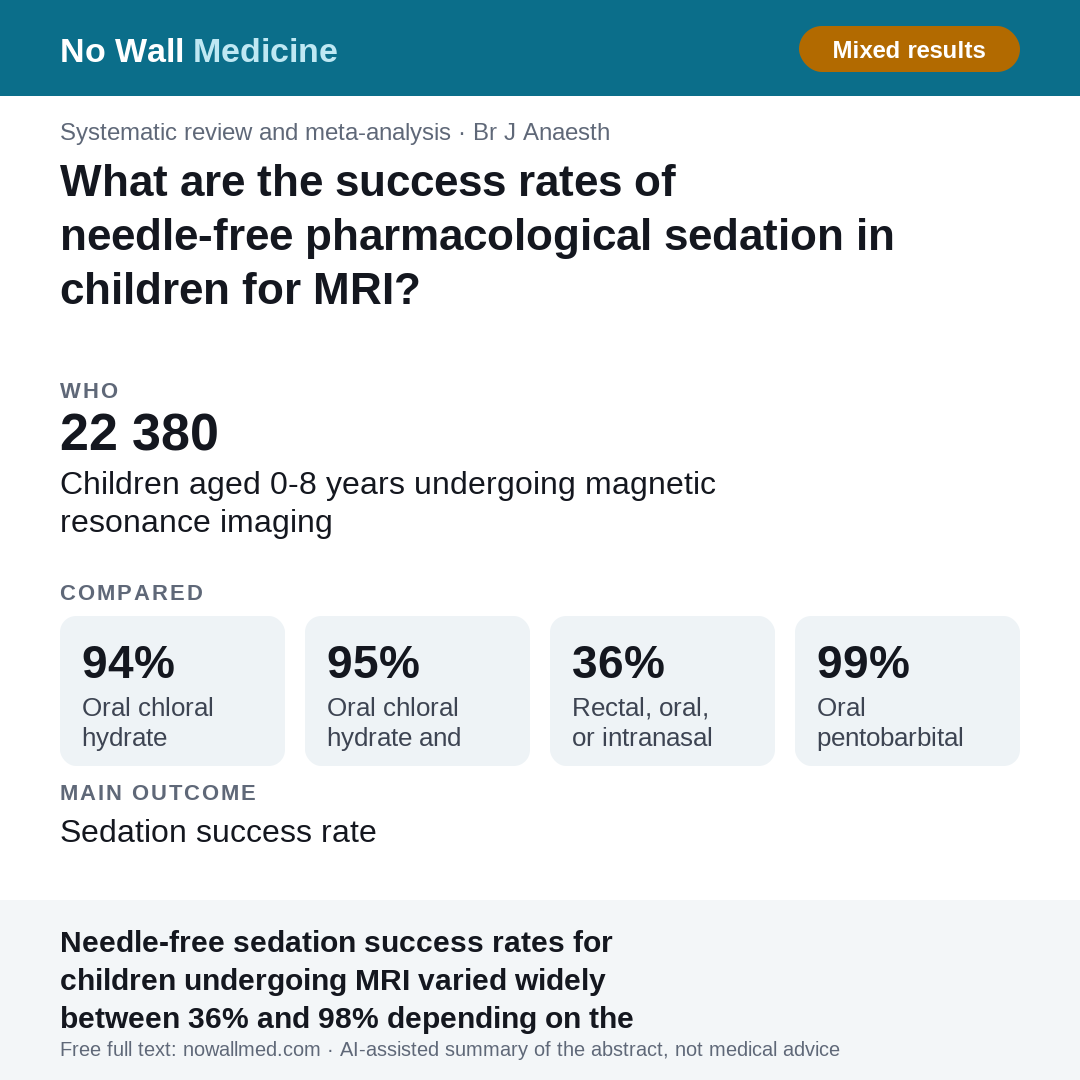
Bottom line: Needle-free sedation success rates for children undergoing MRI varied widely between 36% and 98% depending on the medication used.
Br J Anaesth · 2022-10-22Download image
Clinical question: What are the success rates of needle-free pharmacological sedation in children for MRI?
Abstract
Background
Sedation techniques and drugs are increasingly used in children undergoing imaging procedures. In this systematic review and meta-analysis, we present an overview of literature concerning sedation of children aged 0-8 yr for magnetic resonance imaging (MRI) procedures using needle-free pharmacological techniques. Methods
Embase, MEDLINE, Web of Science, and Cochrane databases were systematically searched for studies on the use of needle-free pharmacological sedation techniques for MRI procedures in children aged 0-8 yr. Studies using i.v. or i.m. medication or advanced airway devices were excluded. We performed a meta-analysis on sedation success rate. Secondary outcomes were onset time, duration, recovery, and adverse events. Results
Sixty-seven studies were included, with 22 380 participants. The pooled success rate for oral chloral hydrate was 94% (95% confidence interval [CI]: 0.91-0.96); for oral chloral hydrate and intranasal dexmedetomidine 95% (95% CI: 0.92-0.97); for rectal, oral, or intranasal midazolam 36% (95% CI: 0.14-0.65); for oral pentobarbital 99% (95% CI: 0.90-1.00); for rectal thiopental 92% (95% CI: 0.85-0.96); for oral melatonin 75% (95% CI: 0.54-0.89); for intranasal dexmedetomidine 62% (95% CI: 0.38-0.82); for intranasal dexmedetomidine and midazolam 94% (95% CI: 0.78-0.99); and for inhaled sevoflurane 98% (95% CI: 0.97-0.99). Conclusions
We found a large variation in medication, dosage, and route of administration for needle-free sedation. Success rates for sedation techniques varied between 36% and 98%.
Subject terms
Cite this article
de Rover I, Wylleman J, Dogger JJ, Bramer WM, Hoeks SE, de Graaff JC. Needle-free pharmacological sedation techniques in paediatric patients for imaging procedures: a systematic review and meta-analysis. Br J Anaesth. 2022. doi:10.1016/j.bja.2022.09.007
Spotted a mistake? Suggest a correction
Top studies every Monday
The week’s key trials and guidelines in your specialties, plus any topics you follow. By email, free.
Get the weekly digest