Negative pressure wound therapy was not found to be cost-effective for surgical wounds healing by secondary intention
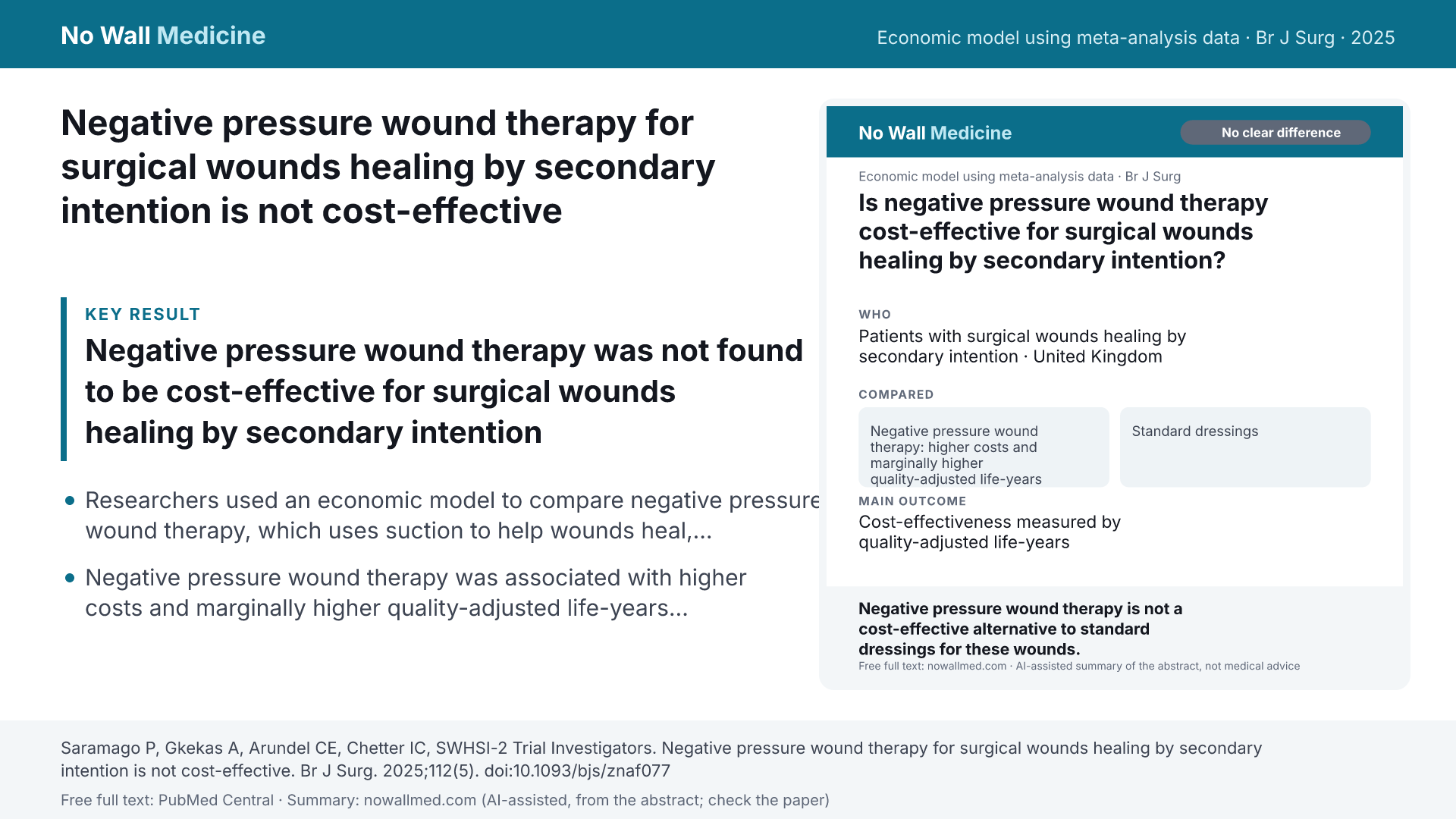
Negative pressure wound therapy for surgical wounds healing by secondary intention is not cost-effective
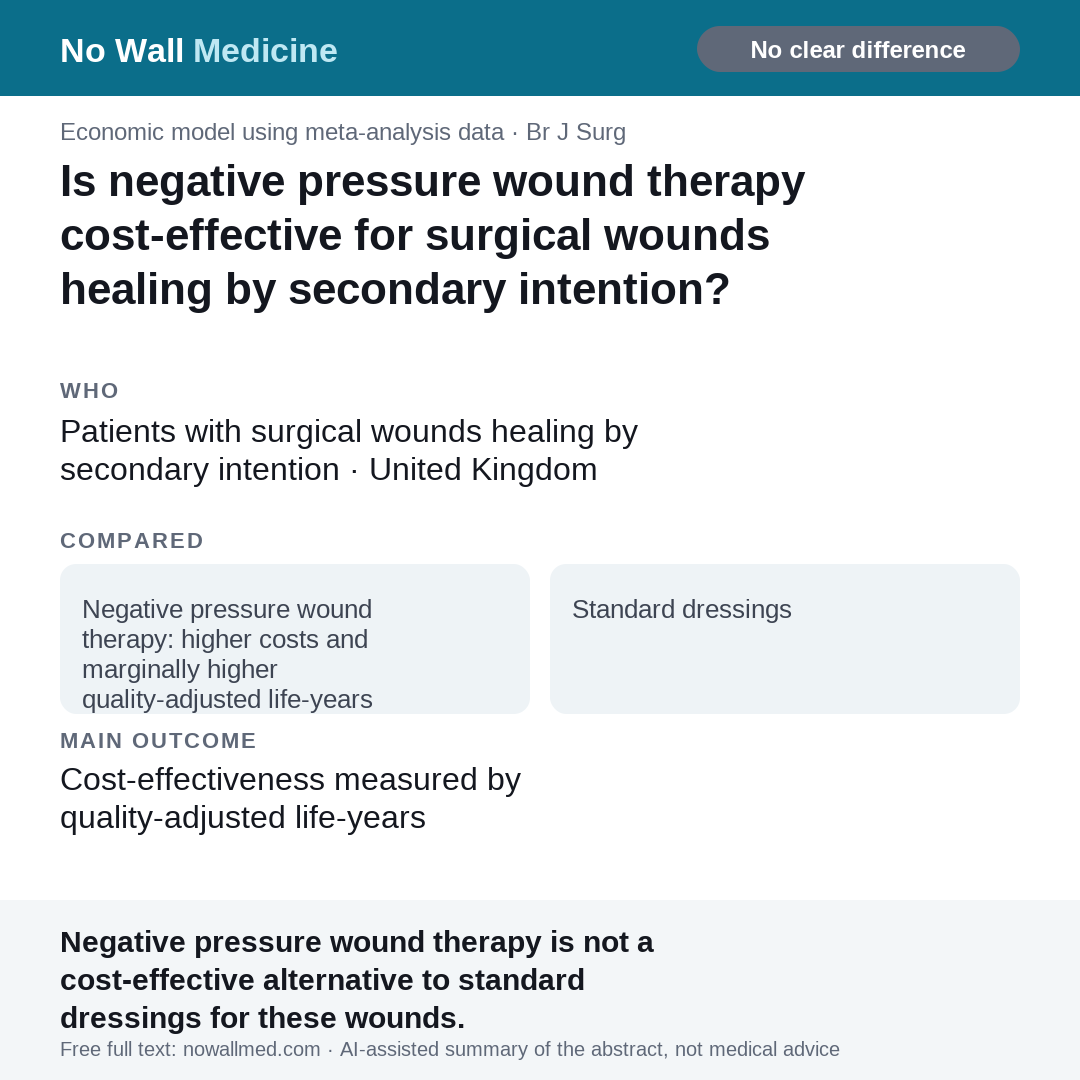
Economic model using meta-analysis dataNo clear difference
Is negative pressure wound therapy cost-effective for surgical wounds healing by secondary intention?
Who
Patients with surgical wounds healing by secondary intention · United Kingdom healthcare system
Compared
Negative pressure wound therapy: higher costs and marginally higher quality-adjusted life-years
Standard dressings
Main outcome
Cost-effectiveness measured by quality-adjusted life-years
Bottom line: Negative pressure wound therapy is not a cost-effective alternative to standard dressings for these wounds.
Limitation: Considerable uncertainty driven by uncertainty in the estimated pooled relative effect
Br J Surg · 2025-05-06Download image
Clinical question: Is negative pressure wound therapy cost-effective for surgical wounds healing by secondary intention?
Why it matters: There is limited evidence regarding the clinical effectiveness and cost-effectiveness of negative pressure wound therapy for surgical wounds healing by secondary intention.
Key points
- Researchers used an economic model to compare negative pressure wound therapy, which uses suction to help wounds heal, against standard dressings for surgical wounds.
- Negative pressure wound therapy was associated with higher costs and marginally higher quality-adjusted life-years than standard dressings.
- The estimated probability of negative pressure wound therapy being cost-effective was <30%.
Limitation the authors note: The findings were driven by considerable uncertainty in the estimated pooled relative effect from the meta-analysis.
Headline and key points written with AI from the paper’s abstract, with every number checked against it. Read the paper before relying on them.
Was this summary helpful?
Subject terms
Cite this article
Saramago P, Gkekas A, Arundel CE, Chetter IC, SWHSI-2 Trial Investigators. Negative pressure wound therapy for surgical wounds healing by secondary intention is not cost-effective. Br J Surg. 2025. doi:10.1093/bjs/znaf077
Spotted a mistake? Suggest a correction
Top studies every Monday
The week’s key trials and guidelines in your specialties, plus any topics you follow. By email, free.
Get the weekly digest