Negative-pressure wound therapy reduced surgical site infections and hospital stays after abdominal surgery
Negative-pressure wound therapy in thoracic and abdominal surgery: meta-analysis of randomized trials
Meta-analysis of 45 randomized trialsBenefit found
Does negative-pressure wound therapy reduce surgical site infection in thoracic and abdominal surgery?
Who
12 427
Adult patients undergoing open thoracic or abdominal surgery
Compared
Negative-pressure wound therapy
Standard dressings
Main outcome
Surgical site infection
Result: odds ratio 0.53 (95% confidence interval 0.42 to 0.66)
Bottom line: Negative-pressure wound therapy significantly reduced surgical site infection and shortened hospital stay after open abdominal surgery.
Limitation: Publication bias was detected and effect size may be overestimated.
BJS Open · 2026-05-20Download image
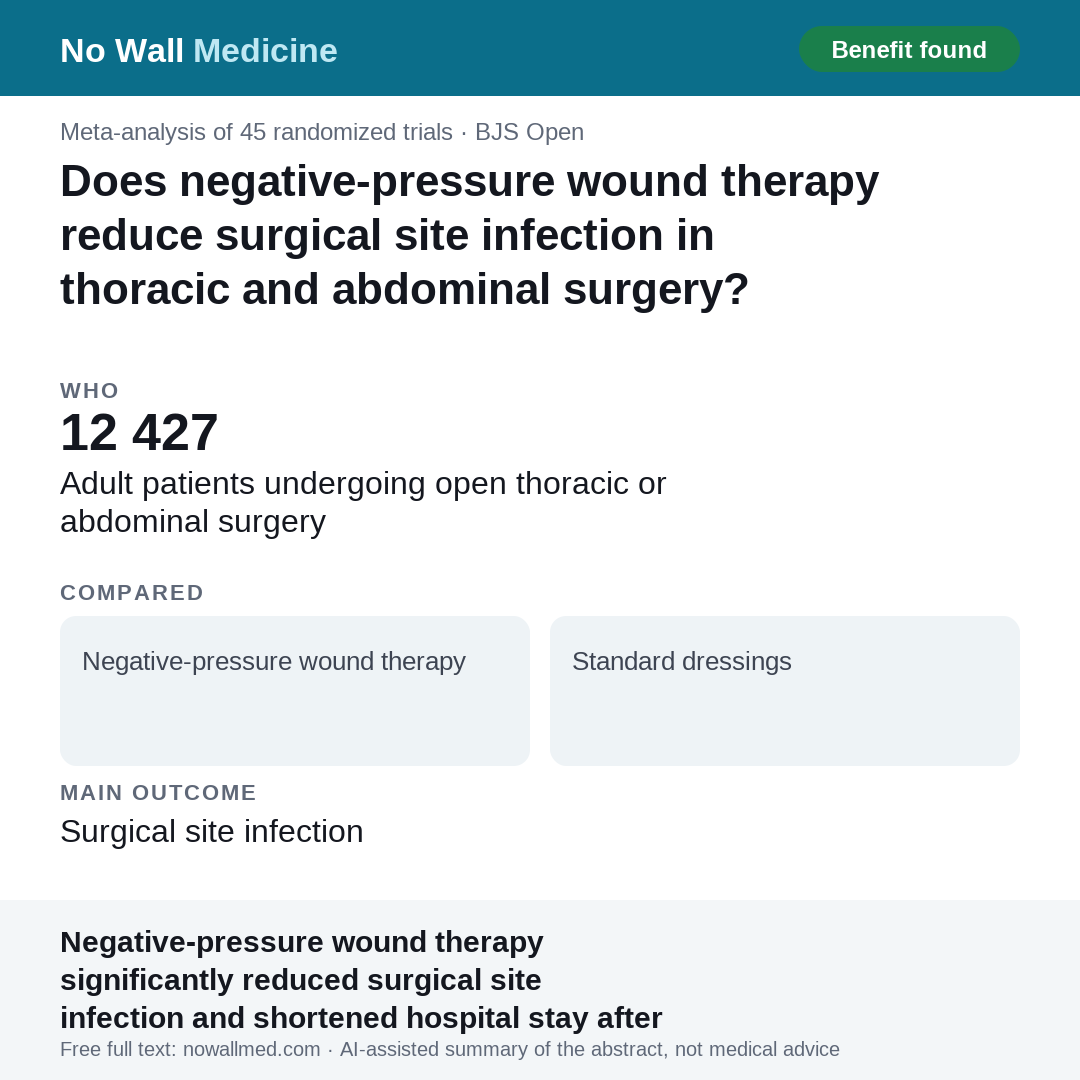
Clinical question: Does negative-pressure wound therapy reduce surgical site infection in thoracic and abdominal surgery?
Why it matters: Trial evidence has been inconsistent regarding whether negative-pressure wound therapy can reduce wound complications after thoracic and abdominal surgery.
Key points
- Researchers analyzed 12,427 patients across 45 randomized trials involving adult patients undergoing open thoracic or abdominal surgery.
- Negative-pressure wound therapy reduced surgical site infection compared to standard dressings with an odds ratio of 0.53 and shortened hospital stays by a mean difference of -1.67 days.
- The therapy did not show a significant difference in risks for organ or space infection, wound dehiscence, or the need for reoperation.
Limitation the authors note: The authors noted that publication bias was detected and that limited long-term and patient-reported outcome data suggest the effect size may be overestimated.
Headline and key points written with AI from the paper’s abstract, with every number checked against it. Read the paper before relying on them.
Topics
Cite this article
Lakha AS, Neves S, Alemour Y, McGivern H, Gordon-Weeks A. Negative-pressure wound therapy in thoracic and abdominal surgery: meta-analysis of randomized trials. BJS Open. 2026. doi:10.1093/bjsopen/zrag027
Spotted a mistake? Suggest a correction