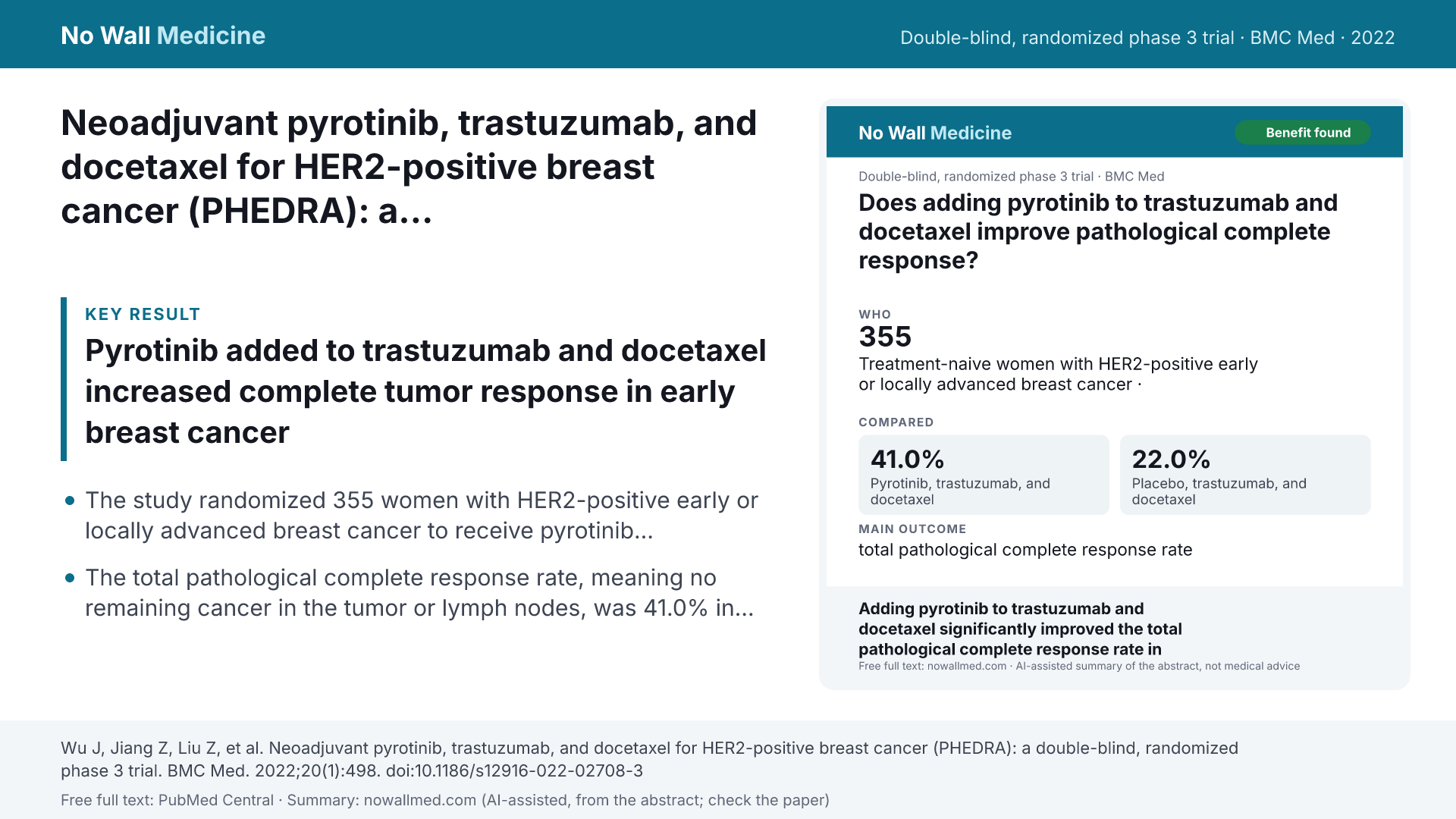
Neoadjuvant pyrotinib, trastuzumab, and docetaxel for HER2-positive breast cancer (PHEDRA): a double-blind, randomized phase 3 trial
Key result: Pyrotinib added to trastuzumab and docetaxel increased complete tumor response in early breast cancer
Key points
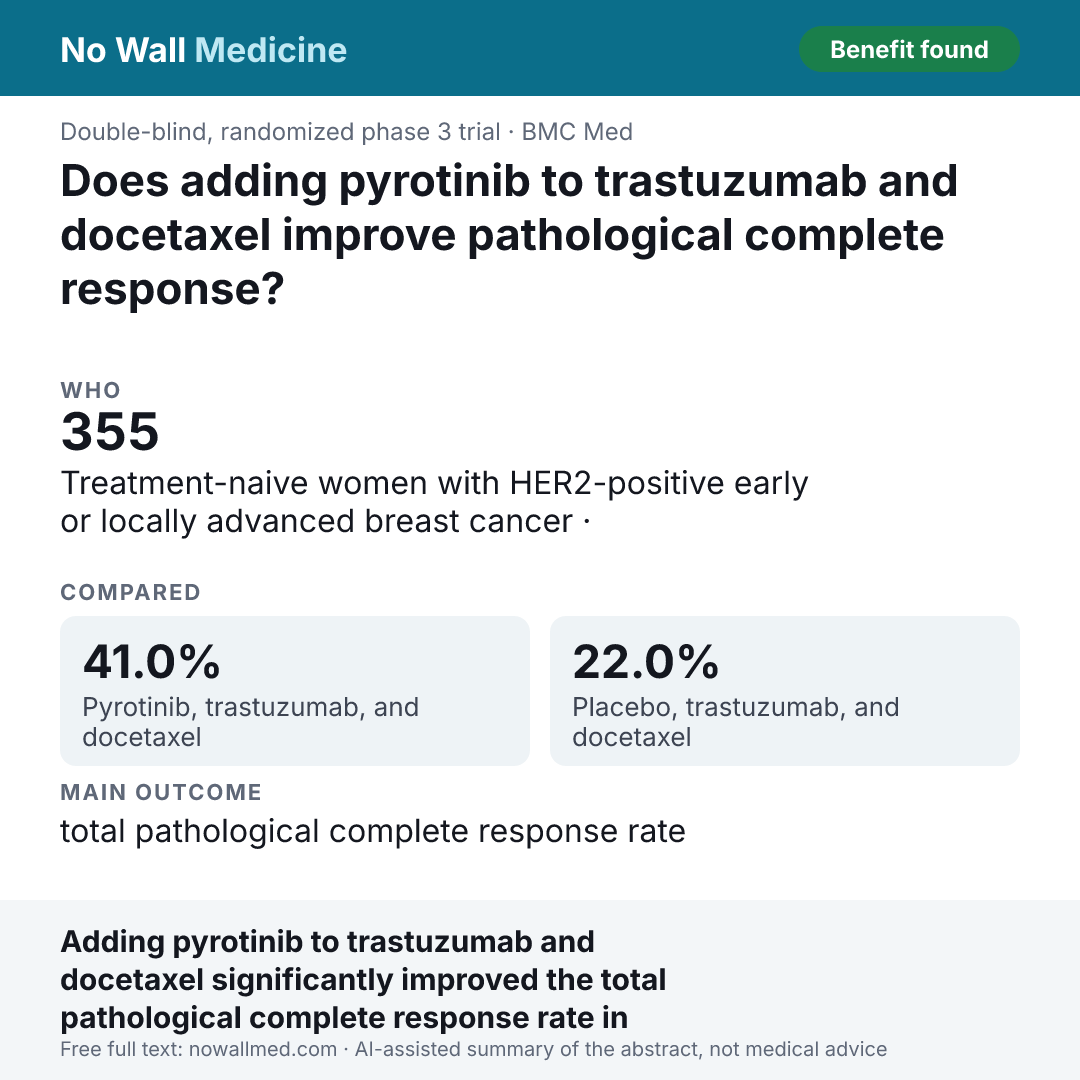
- The study randomized 355 women with HER2-positive early or locally advanced breast cancer to receive pyrotinib plus trastuzumab and docetaxel or a placebo plus trastuzumab and docetaxel.
- The total pathological complete response rate, meaning no remaining cancer in the tumor or lymph nodes, was 41.0% in the pyrotinib group compared to 22.0% in the placebo group.
- Grade 3 or worse diarrhea occurred in 44.4% of the pyrotinib group compared to 5.1% in the placebo group.
In absolute numbers: Pyrotinib, trastuzumab, and docetaxel 41% vs Placebo, trastuzumab, and docetaxel 22%, a difference of 19 percentage points (about 6 people treated for one more to benefit).
Discussion prompts
- Would these patients look like yours? Who was left out?
- Is the main outcome one that matters to patients?
- Is the difference large enough to change what you do?
Cite: Wu J, Jiang Z, Liu Z, et al. Neoadjuvant pyrotinib, trastuzumab, and docetaxel for HER2-positive breast cancer (PHEDRA): a double-blind, randomized phase 3 trial. BMC Med. 2022;20(1):498. doi:10.1186/s12916-022-02708-3
Free full text: PubMed Central · Summary and visual abstract: nowallmed.com/a/neoadjuvant-pyrotinib-trastuzumab-and-docetaxel-for-her2-positive-16rop7i/ (AI-assisted from the abstract; check the paper before relying on it).