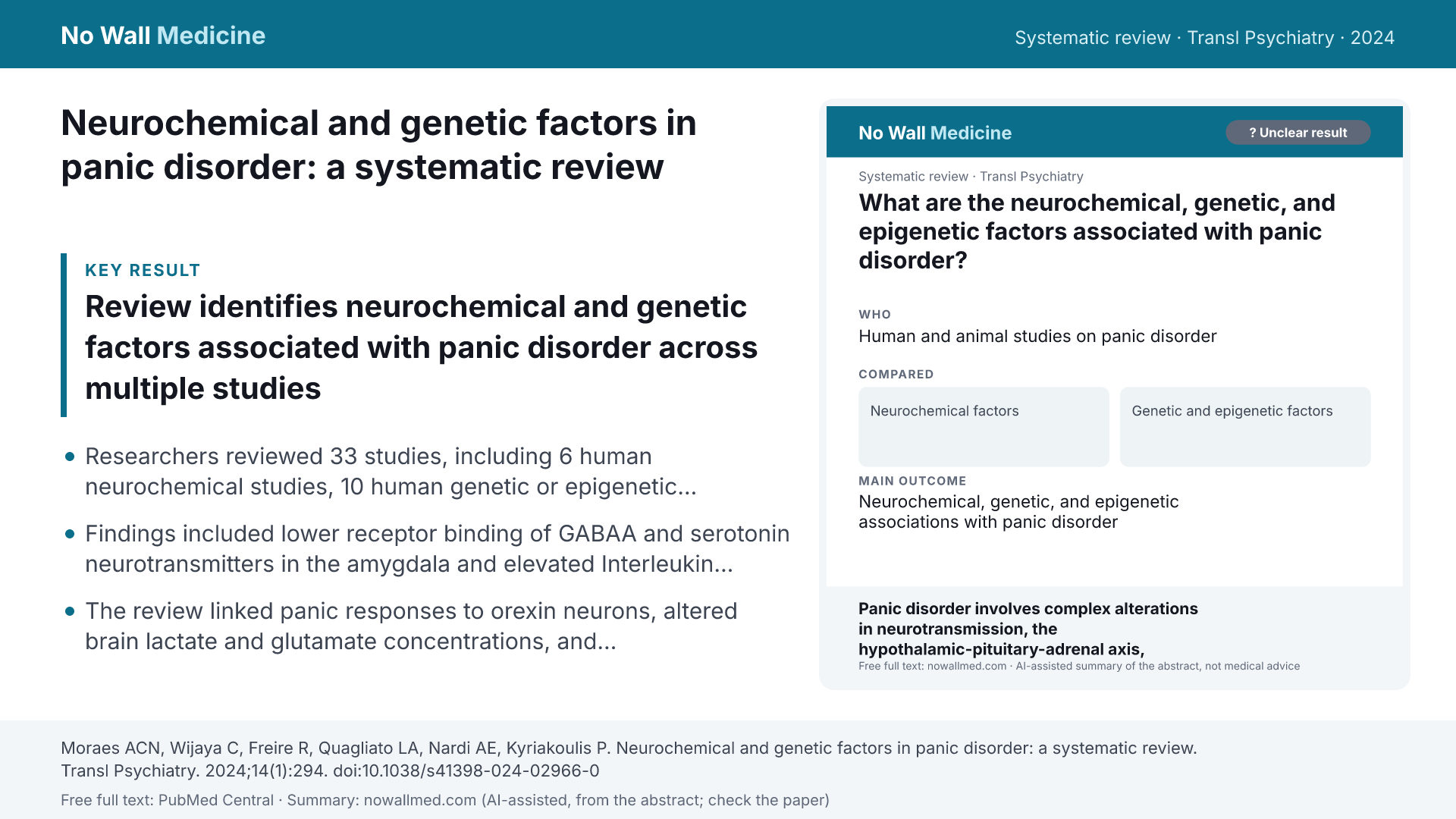
Review identifies neurochemical and genetic factors associated with panic disorder across multiple studies
Neurochemical and genetic factors in panic disorder: a systematic review
Systematic reviewUnclear result
What are the neurochemical, genetic, and epigenetic factors associated with panic disorder?
Who
Human and animal studies on panic disorder
Compared
Neurochemical factors
Genetic and epigenetic factors
Main outcome
Neurochemical, genetic, and epigenetic associations with panic disorder
Bottom line: Panic disorder involves complex alterations in neurotransmission, the hypothalamic-pituitary-adrenal axis, neuroplasticity, and genetic factors.
Transl Psychiatry · 2024-07-18Download image
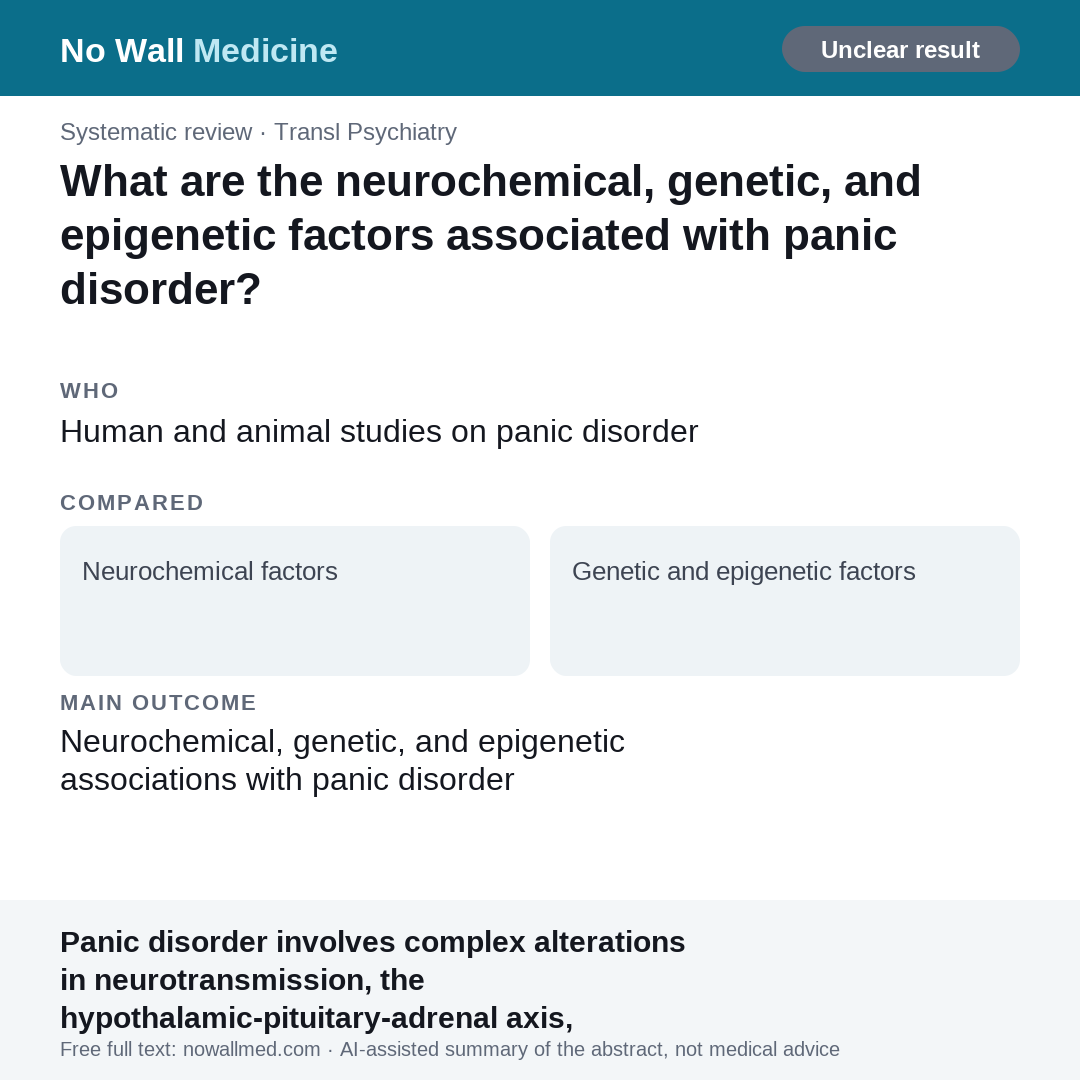
Clinical question: What are the neurochemical, genetic, and epigenetic factors associated with panic disorder?
Why it matters: The complex neurochemical, genetic, and epigenetic factors that contribute to the development and expression of panic disorder were not fully consolidated.
Key points
- Researchers reviewed 33 studies, including 6 human neurochemical studies, 10 human genetic or epigenetic studies, and 17 animal studies.
- Findings included lower receptor binding of GABAA and serotonin neurotransmitters in the amygdala and elevated Interleukin 6 and leptin levels in patients.
- The review linked panic responses to orexin neurons, altered brain lactate and glutamate concentrations, and specific genetic polymorphisms.
Headline and key points written with AI from the paper’s abstract, with every number checked against it. Read the paper before relying on them.
Was this summary helpful?
Subject terms
Cite this article
Moraes ACN, Wijaya C, Freire R, Quagliato LA, Nardi AE, Kyriakoulis P. Neurochemical and genetic factors in panic disorder: a systematic review. Transl Psychiatry. 2024. doi:10.1038/s41398-024-02966-0
Spotted a mistake? Suggest a correction
Top studies every Monday
The week’s key trials and guidelines in your specialties, plus any topics you follow. By email, free.
Get the weekly digest