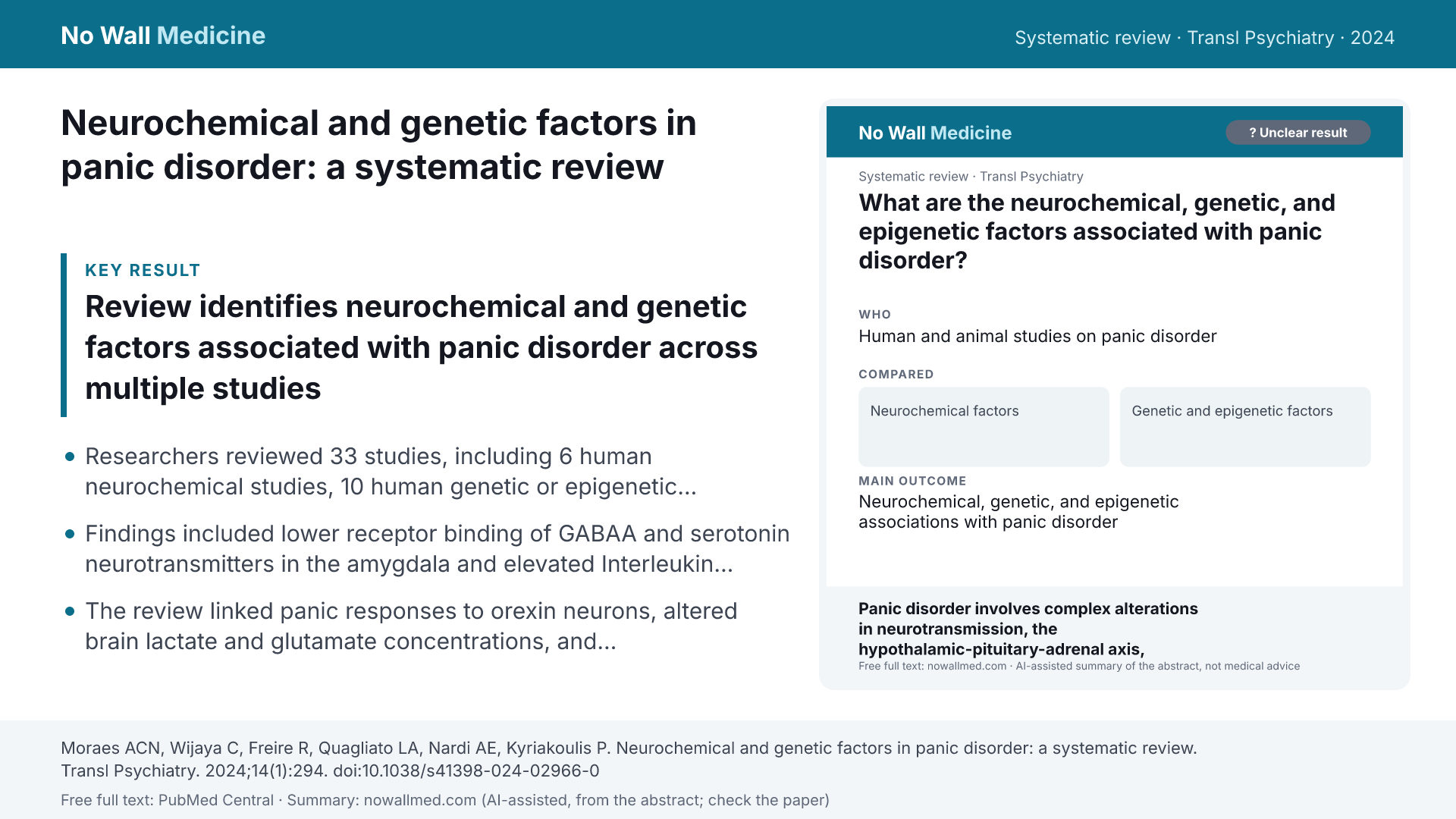
Neurochemical and genetic factors in panic disorder: a systematic review
Key result: Review identifies neurochemical and genetic factors associated with panic disorder across multiple studies
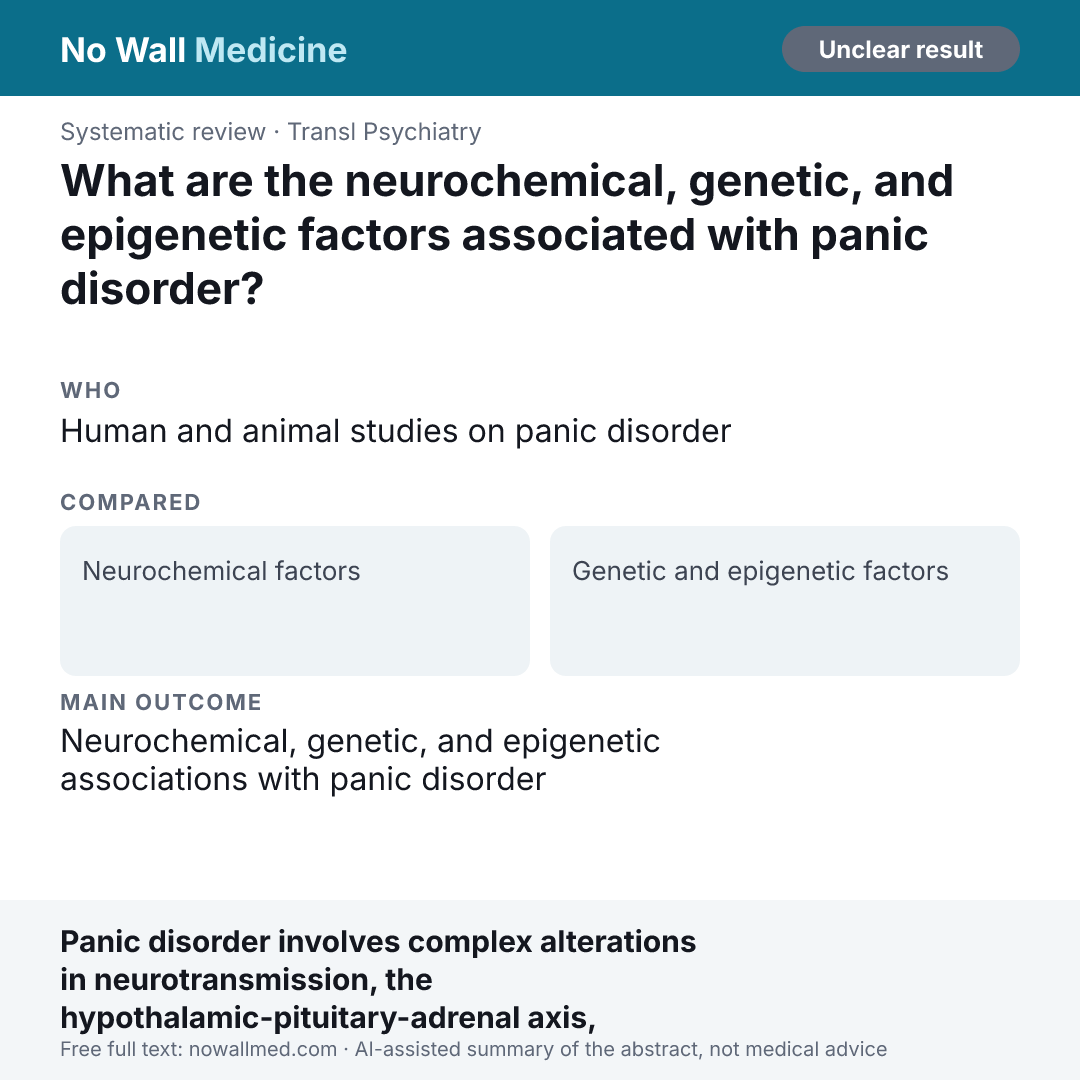
Systematic reviewUnclear result
What are the neurochemical, genetic, and epigenetic factors associated with panic disorder?
Who
Human and animal studies on panic disorder
Compared
Neurochemical factors
Genetic and epigenetic factors
Main outcome
Neurochemical, genetic, and epigenetic associations with panic disorder
Bottom line: Panic disorder involves complex alterations in neurotransmission, the hypothalamic-pituitary-adrenal axis, neuroplasticity, and genetic factors.
Transl Psychiatry · 2024-07-18 · Save PNG
Key points
- Researchers reviewed 33 studies, including 6 human neurochemical studies, 10 human genetic or epigenetic studies, and 17 animal studies.
- Findings included lower receptor binding of GABAA and serotonin neurotransmitters in the amygdala and elevated Interleukin 6 and leptin levels in patients.
- The review linked panic responses to orexin neurons, altered brain lactate and glutamate concentrations, and specific genetic polymorphisms.
Why it matters: The complex neurochemical, genetic, and epigenetic factors that contribute to the development and expression of panic disorder were not fully consolidated.
Discussion prompts
- Would these patients look like yours? Who was left out?
- Is the main outcome one that matters to patients?
- Is the difference large enough to change what you do?
Cite: Moraes ACN, Wijaya C, Freire R, Quagliato LA, Nardi AE, Kyriakoulis P. Neurochemical and genetic factors in panic disorder: a systematic review. Transl Psychiatry. 2024;14(1):294. doi:10.1038/s41398-024-02966-0
Free full text: PubMed Central · Summary and visual abstract: nowallmed.com/a/neurochemical-and-genetic-factors-in-panic-disorder-a-systematic-10e2jit/ (AI-assisted from the abstract; check the paper before relying on it).