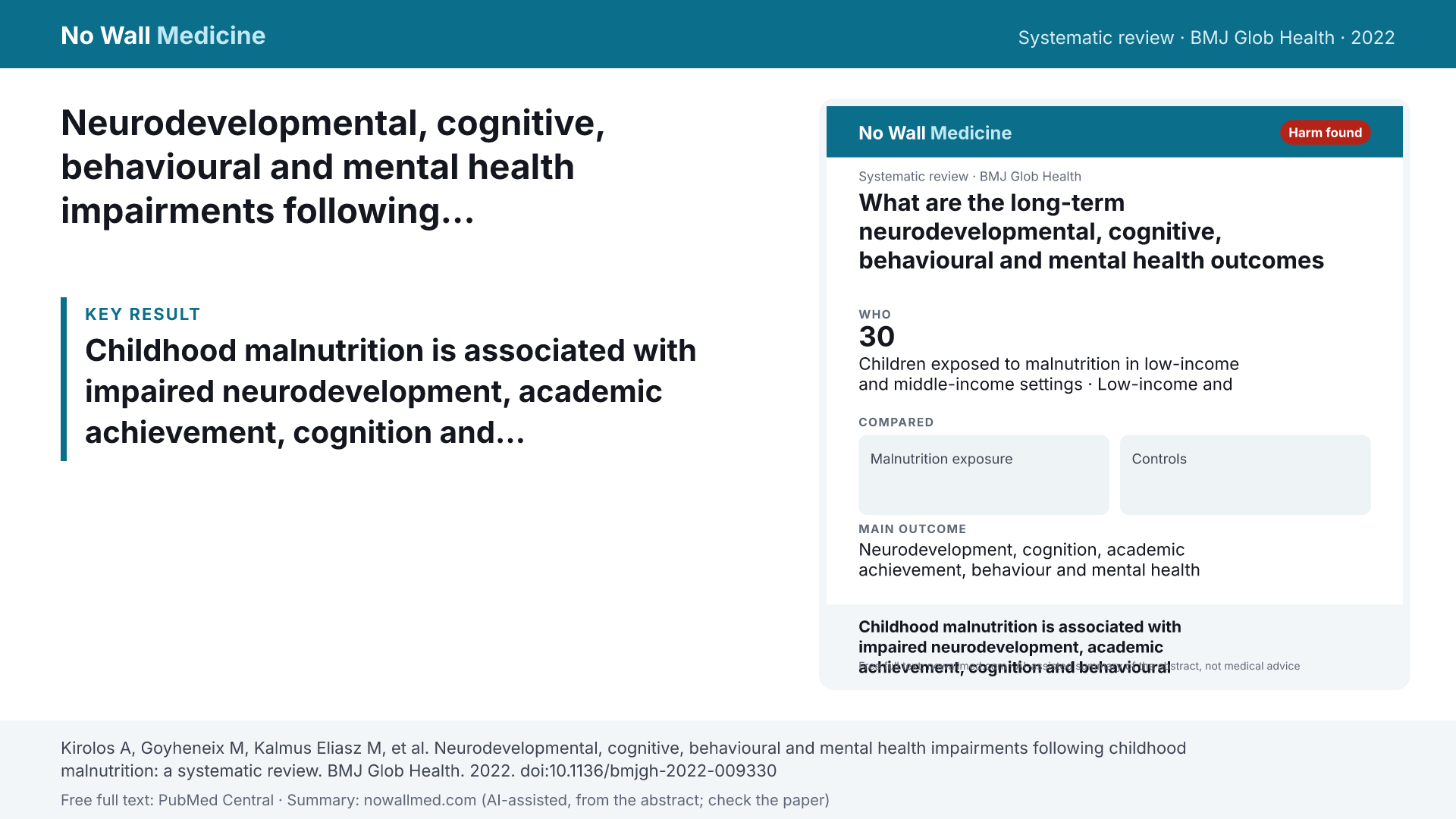
Neurodevelopmental, cognitive, behavioural and mental health impairments following childhood malnutrition: a systematic review
Systematic reviewHarm found
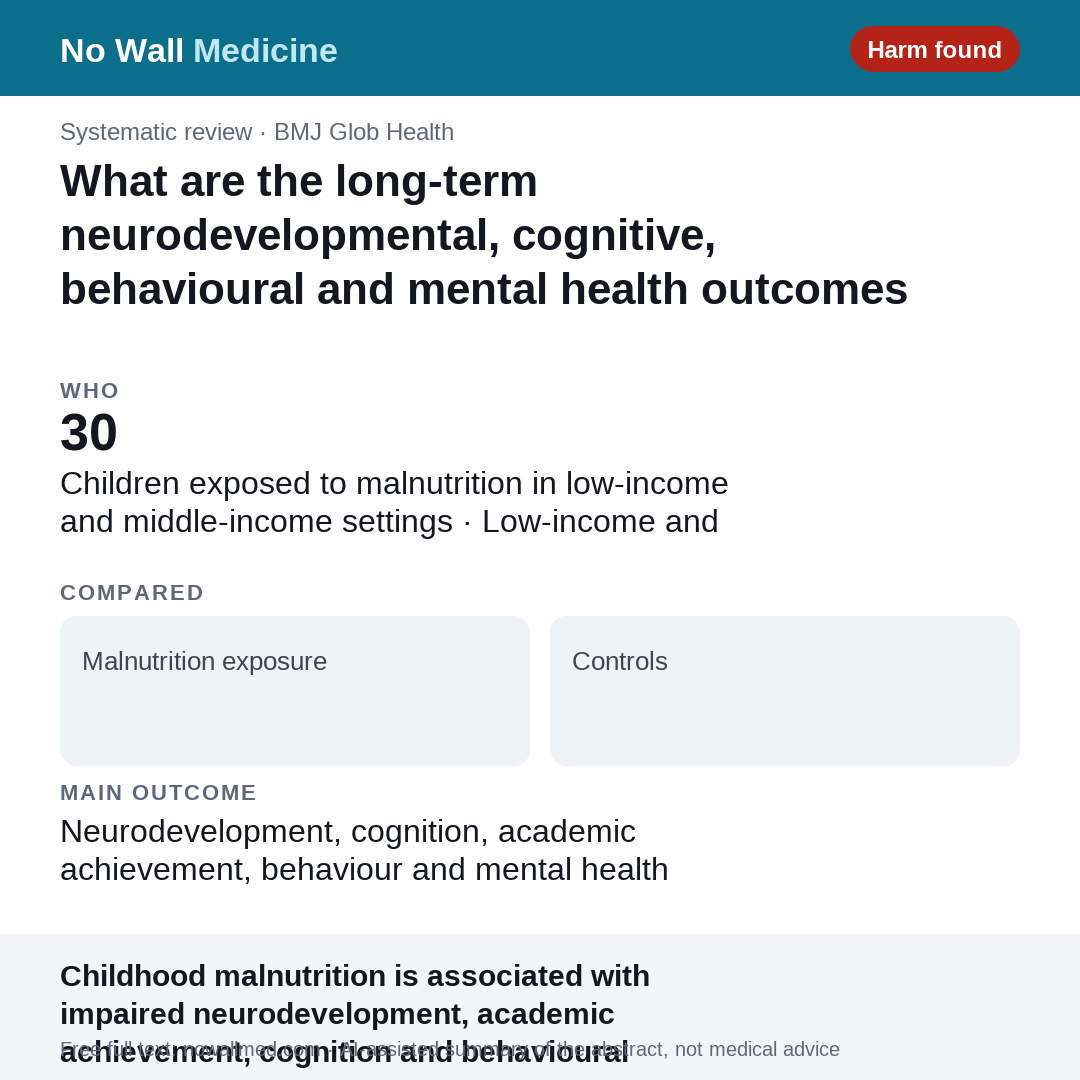
What are the long-term neurodevelopmental, cognitive, behavioural and mental health outcomes of childhood malnutrition?
Who
30
Children exposed to malnutrition in low-income and middle-income settings · Low-income and middle-income settings
Compared
Malnutrition exposure
Controls
Main outcome
Neurodevelopment, cognition, academic achievement, behaviour and mental health
Bottom line: Childhood malnutrition is associated with impaired neurodevelopment, academic achievement, cognition and behavioural problems.
Limitation: Some studies failed to measure important confounders such as socioeconomic status.
BMJ Glob Health · 2022-07-06Download image
Clinical question: What are the long-term neurodevelopmental, cognitive, behavioural and mental health outcomes of childhood malnutrition?
Abstract
Background
Severe childhood malnutrition impairs growth and development short-term, but current understanding of long-term outcomes is limited. We aimed to identify studies assessing neurodevelopmental, cognitive, behavioural and mental health outcomes following childhood malnutrition. Methods
We systematically searched MEDLINE, EMBASE, Global Health and PsycINFO for studies assessing these outcomes in those exposed to childhood malnutrition in low-income and middle-income settings. We included studies assessing undernutrition measured by low mid-upper arm circumference, weight-for-height, weight-for-age or nutritional oedema. We used guidelines for synthesis of results without meta-analysis to analyse three outcome areas: neurodevelopment, cognition/academic achievement, behaviour/mental health. Results
We identified 30 studies, including some long-term cohorts reporting outcomes through to adulthood. There is strong evidence that malnutrition in childhood negatively impacts neurodevelopment based on high-quality studies using validated neurodevelopmental assessment tools. There is also strong evidence that malnutrition impairs academic achievement with agreement across seven studies investigating this outcome. Eight of 11 studies showed an association between childhood malnutrition and impaired cognition. This moderate evidence is limited by some studies failing to measure important confounders such as socioeconomic status. Five of 7 studies found a difference in behavioural assessment scores in those exposed to childhood malnutrition compared with controls but this moderate evidence is similarly limited by unmeasured confounders. Mental health impacts were difficult to ascertain due to few studies with mixed results. Conclusions
Childhood malnutrition is associated with impaired neurodevelopment, academic achievement, cognition and behavioural problems but evidence regarding possible mental health impacts is inconclusive. Future research should explore the interplay of childhood and later-life adversities on these outcomes. While evidence on improving nutritional and clinical therapies to reduce long-term risks is also needed, preventing and eliminating child malnutrition is likely to be the best way of preventing long-term neurocognitive harms. Prospero registration number
CRD42021260498.
Abstract reproduced under the article’s CC BY licence.
Subject terms
Cite this article
Kirolos A, Goyheneix M, Kalmus Eliasz M, Chisala M, Lissauer S, Gladstone M. Neurodevelopmental, cognitive, behavioural and mental health impairments following childhood malnutrition: a systematic review. BMJ Glob Health. 2022. doi:10.1136/bmjgh-2022-009330
Spotted a mistake? Suggest a correction