Neuromuscular electrical stimulation for early rehabilitation in critically ill patients: a systematic review of applied protocols
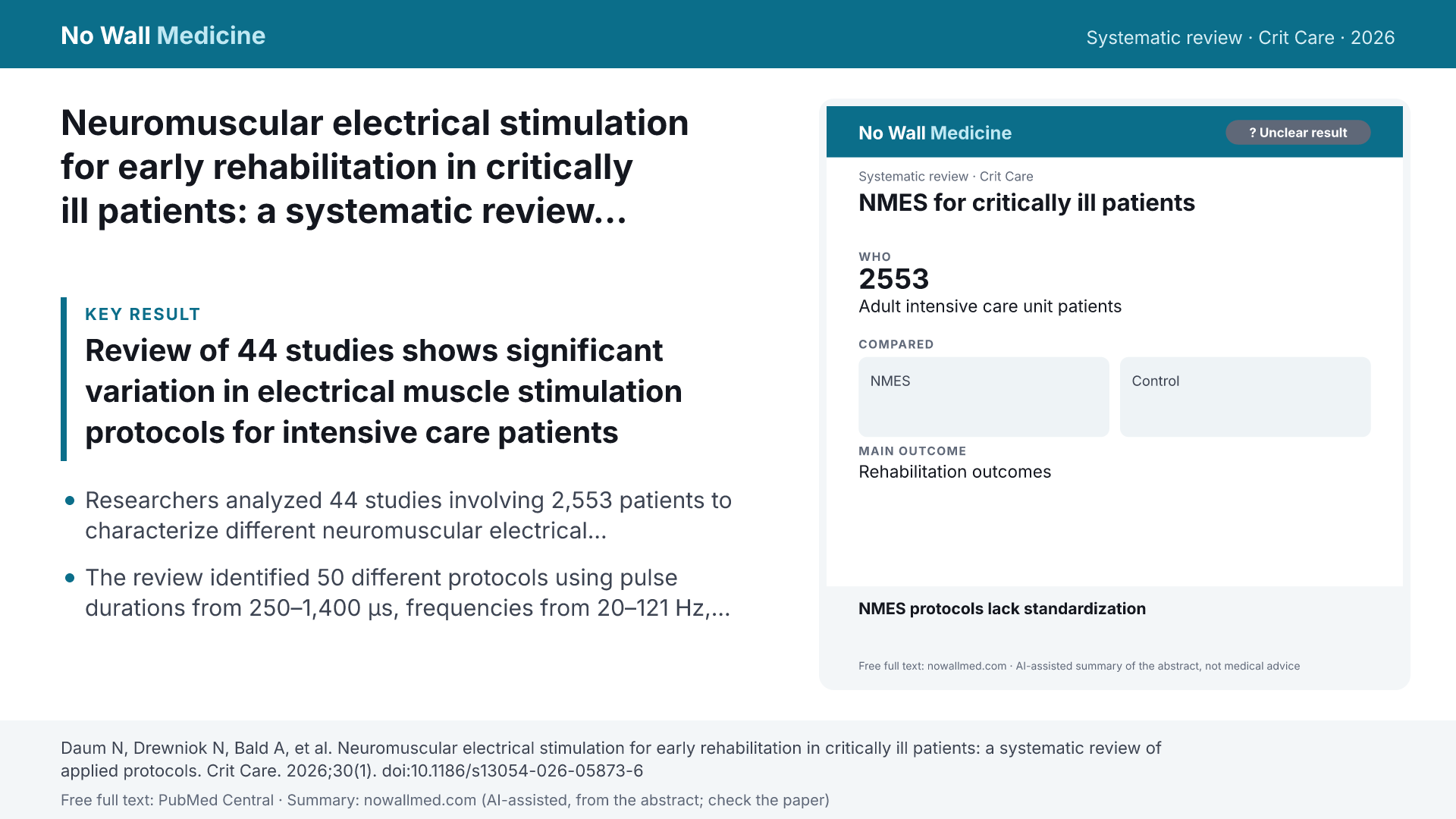
Key result: Review of 44 studies shows significant variation in electrical muscle stimulation protocols for intensive care patients
Key points
- Researchers analyzed 44 studies involving 2,553 patients to characterize different neuromuscular electrical stimulation protocols used during early rehabilitation in intensive care units.
- The review identified 50 different protocols using pulse durations from 250–1,400 µs, frequencies from 20–121 Hz, and intensities ranging from 2–250 mA or 20–250 V.
- The analysis found considerable heterogeneity in stimulation settings, how protocols were reported, and the transparency of the methods used.
Why it matters: Existing studies on neuromuscular electrical stimulation for critically ill patients show inconsistent outcomes, potentially due to the lack of standardized stimulation protocols.
Discussion prompts
- Would these patients look like yours? Who was left out?
- Is the main outcome one that matters to patients?
- Is the difference large enough to change what you do?
Cite: Daum N, Drewniok N, Bald A, et al. Neuromuscular electrical stimulation for early rehabilitation in critically ill patients: a systematic review of applied protocols. Crit Care. 2026;30(1). doi:10.1186/s13054-026-05873-6
Free full text: PubMed Central · Summary and visual abstract: nowallmed.com/a/neuromuscular-electrical-stimulation-for-early-rehabilitation-in-jzmovx/ (AI-assisted from the abstract; check the paper before relying on it).