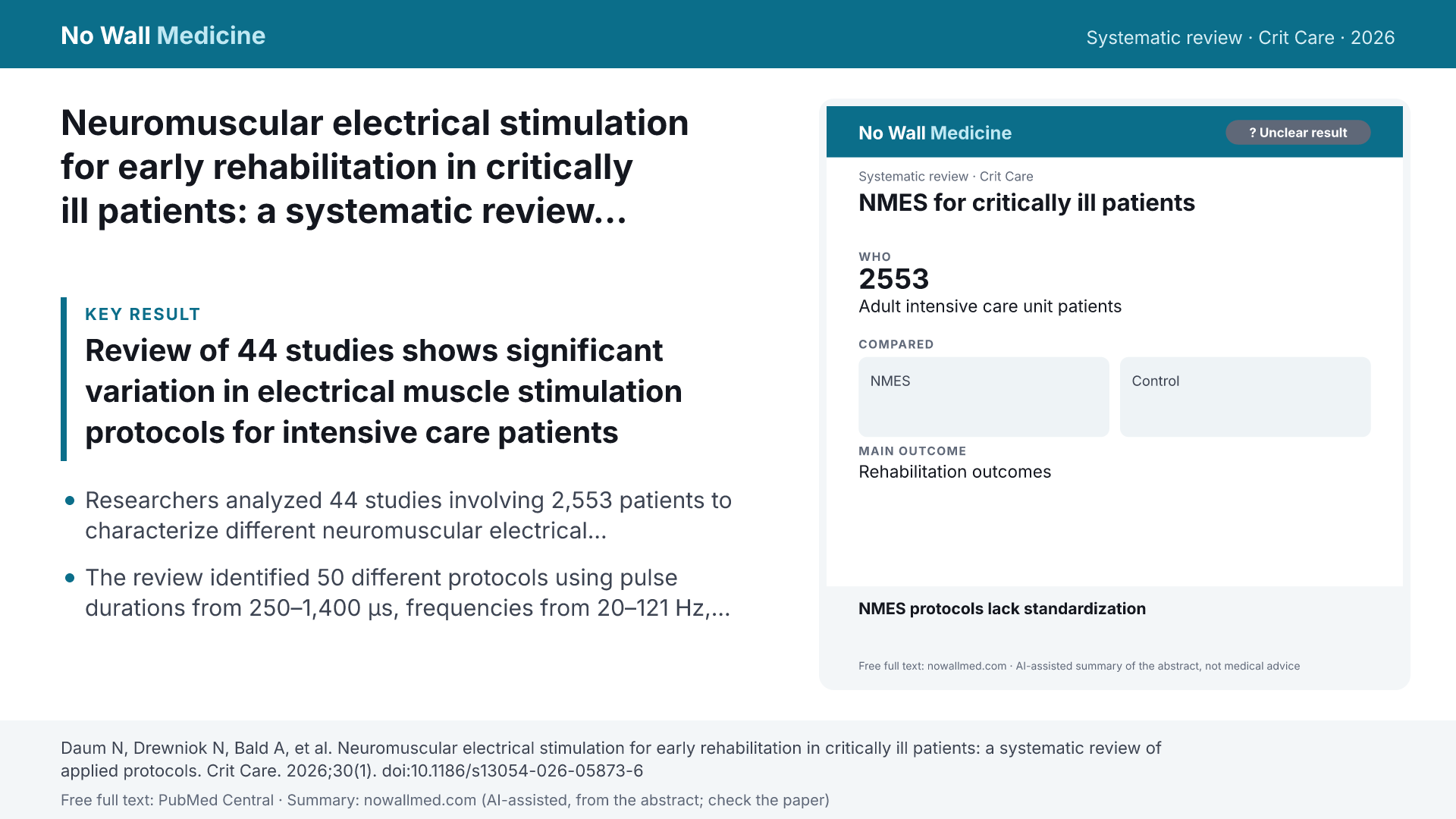
Review of 44 studies shows significant variation in electrical muscle stimulation protocols for intensive care patients
Neuromuscular electrical stimulation for early rehabilitation in critically ill patients: a systematic review of applied protocols
Systematic reviewUnclear result
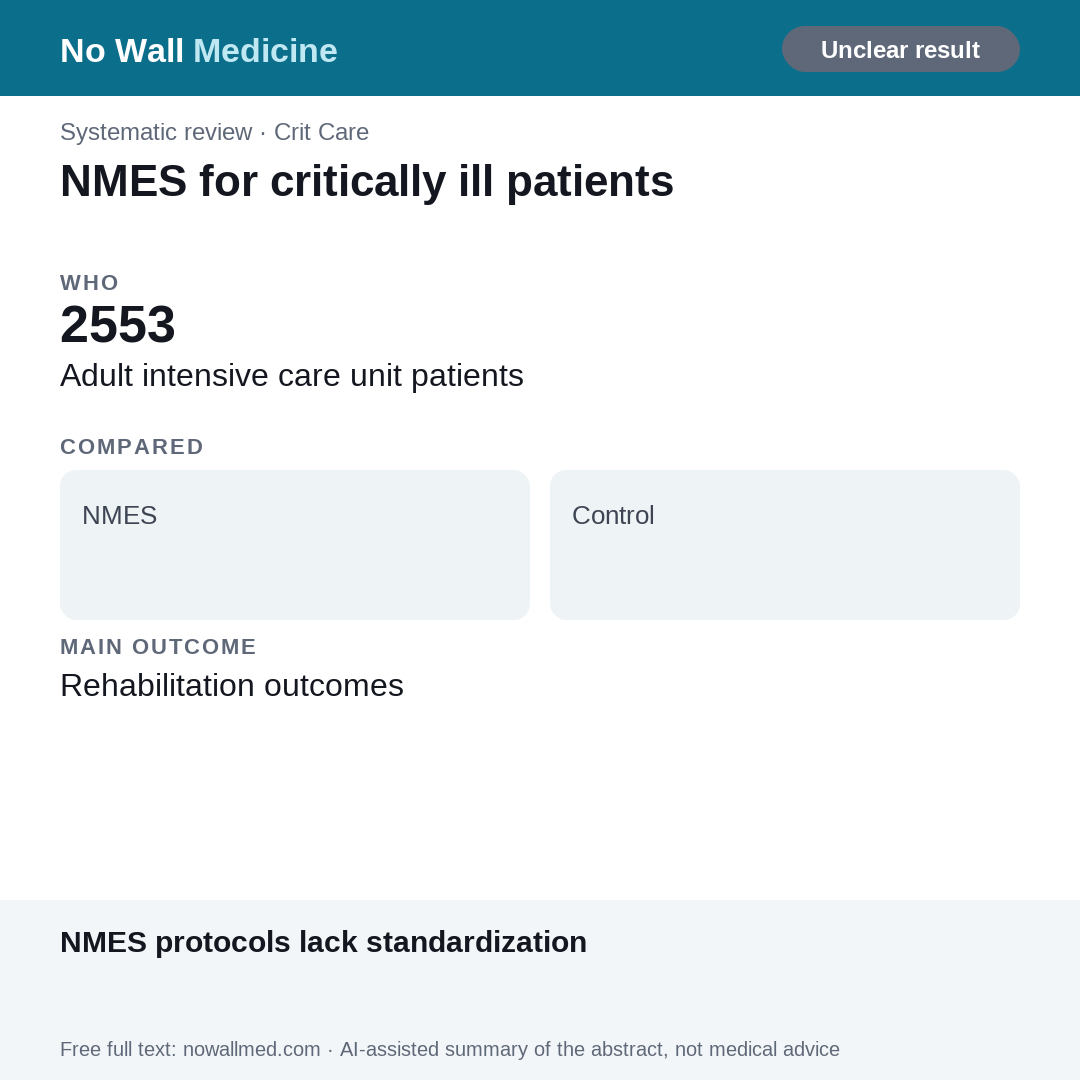
NMES for critically ill patients
Who
2553
Adult intensive care unit patients
Compared
NMES
Control
Main outcome
Rehabilitation outcomes
Bottom line: NMES protocols lack standardization
Limitation: Heterogeneous NMES protocols
Crit Care · 2026-02-10Download image
Why it matters: Existing studies on neuromuscular electrical stimulation for critically ill patients show inconsistent outcomes, potentially due to the lack of standardized stimulation protocols.
Key points
- Researchers analyzed 44 studies involving 2,553 patients to characterize different neuromuscular electrical stimulation protocols used during early rehabilitation in intensive care units.
- The review identified 50 different protocols using pulse durations from 250–1,400 µs, frequencies from 20–121 Hz, and intensities ranging from 2–250 mA or 20–250 V.
- The analysis found considerable heterogeneity in stimulation settings, how protocols were reported, and the transparency of the methods used.
Headline and key points written with AI from the paper’s abstract, with every number checked against it. Read the paper before relying on them.
Was this summary helpful?
Subject terms
Cite this article
Daum N, Drewniok N, Bald A, et al. Neuromuscular electrical stimulation for early rehabilitation in critically ill patients: a systematic review of applied protocols. Crit Care. 2026. doi:10.1186/s13054-026-05873-6
Spotted a mistake? Suggest a correction