Sapropterin dihydrochloride was associated with lower blood phenylalanine and improved attention in children with PKU
Neuropsychiatric Function Improvement in Pediatric Patients with Phenylketonuria
Randomized, double-blind trialBenefit found
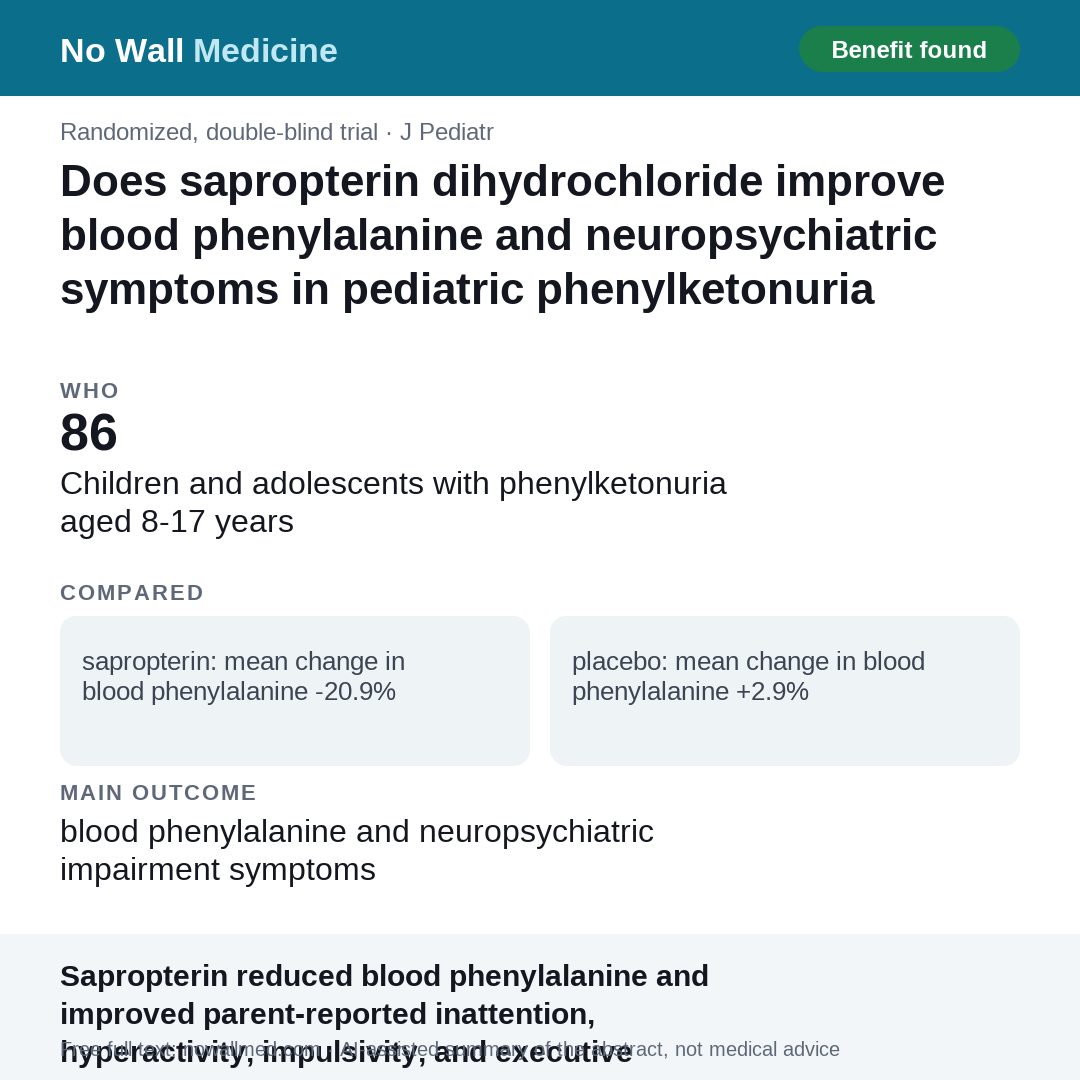
Does sapropterin dihydrochloride improve blood phenylalanine and neuropsychiatric symptoms in pediatric phenylketonuria patients?
Who
86
Children and adolescents with phenylketonuria aged 8-17 years
Compared
sapropterin: mean change in blood phenylalanine -20.9%
placebo: mean change in blood phenylalanine +2.9%
Main outcome
blood phenylalanine and neuropsychiatric impairment symptoms
Bottom line: Sapropterin reduced blood phenylalanine and improved parent-reported inattention, hyperactivity, impulsivity, and executive functioning symptoms.
J Pediatr · 2023-05-30Download image
Clinical question: Does sapropterin dihydrochloride improve blood phenylalanine and neuropsychiatric symptoms in pediatric phenylketonuria patients?
Why it matters: It was unknown if sapropterin dihydrochloride affects blood phenylalanine levels and neuropsychiatric symptoms in children and adolescents with phenylketonuria.
Key points
- Researchers studied 86 children and adolescents aged 8 to 17 years with phenylketonuria, comparing sapropterin to a placebo for 13 weeks.
- Sapropterin was associated with a -20.9% mean change in blood phenylalanine compared to a +2.9% change in the placebo group.
- Sapropterin was associated with significantly greater improvements in ADHD Rating Scale IV total scores (-3.2 points), inattention (-1.8 points), and hyperactivity/impulsivity (-1.6 points).
Headline and key points written with AI from the paper’s abstract, with every number checked against it. Read the paper before relying on them.
Topics
Cite this article
Grant ML, Jurecki ER, McCandless SE, Stahl SM, Bilder DA, Sanchez-Valle A. Neuropsychiatric Function Improvement in Pediatric Patients with Phenylketonuria. J Pediatr. 2023. doi:10.1016/j.jpeds.2023.113526
Spotted a mistake? Suggest a correction
Top studies every Monday
The week’s key trials and guidelines in your specialties, plus any topics you follow. By email, free.
Get the weekly digest