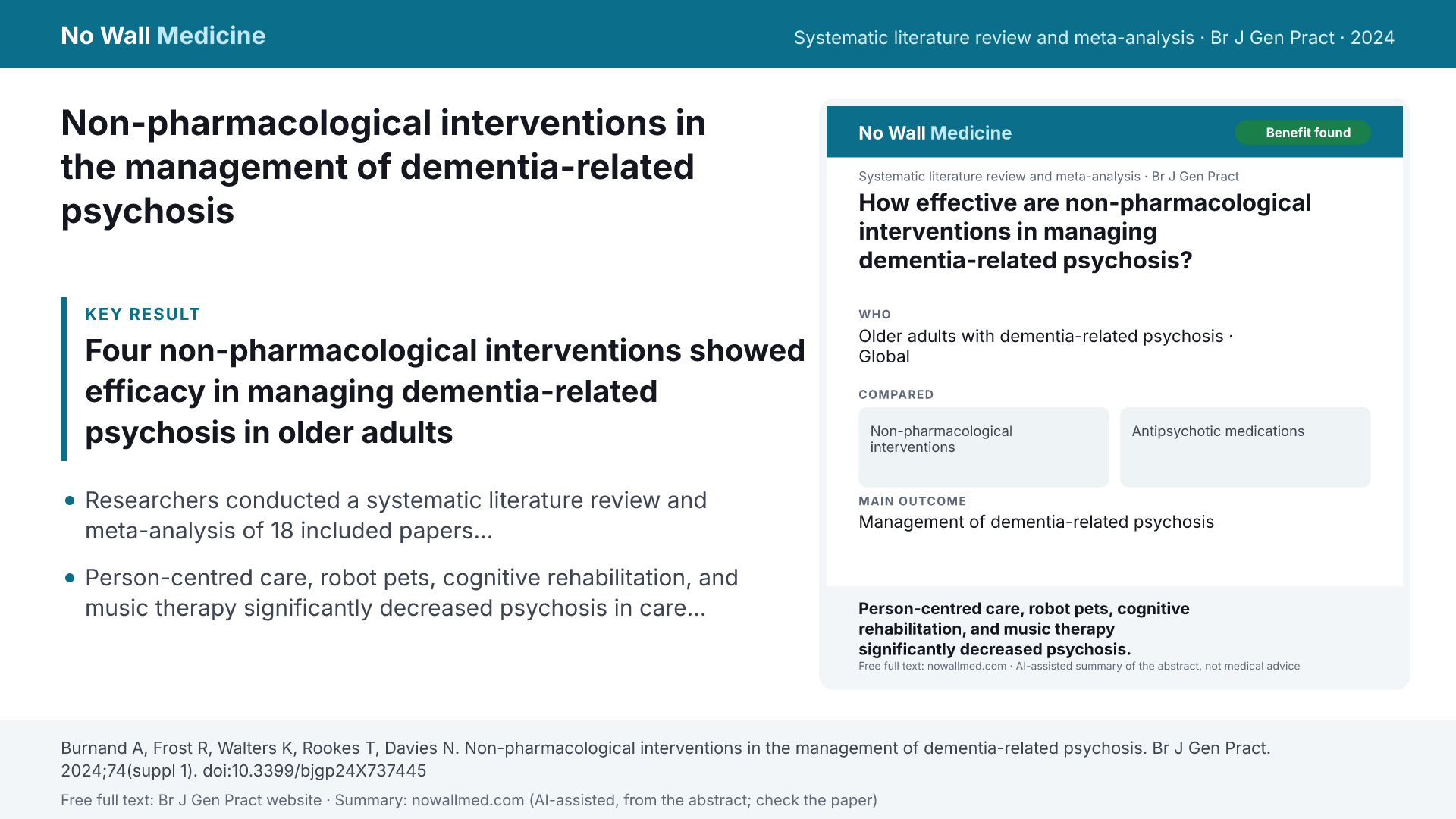
Four non-pharmacological interventions showed efficacy in managing dementia-related psychosis in older adults
Non-pharmacological interventions in the management of dementia-related psychosis
Systematic literature review and meta-analysisBenefit found
How effective are non-pharmacological interventions in managing dementia-related psychosis?
Who
Older adults with dementia-related psychosis · Global
Compared
Non-pharmacological interventions
Antipsychotic medications
Main outcome
Management of dementia-related psychosis
Bottom line: Person-centred care, robot pets, cognitive rehabilitation, and music therapy significantly decreased psychosis.
Br J Gen Pract · 2024-06-20Download image
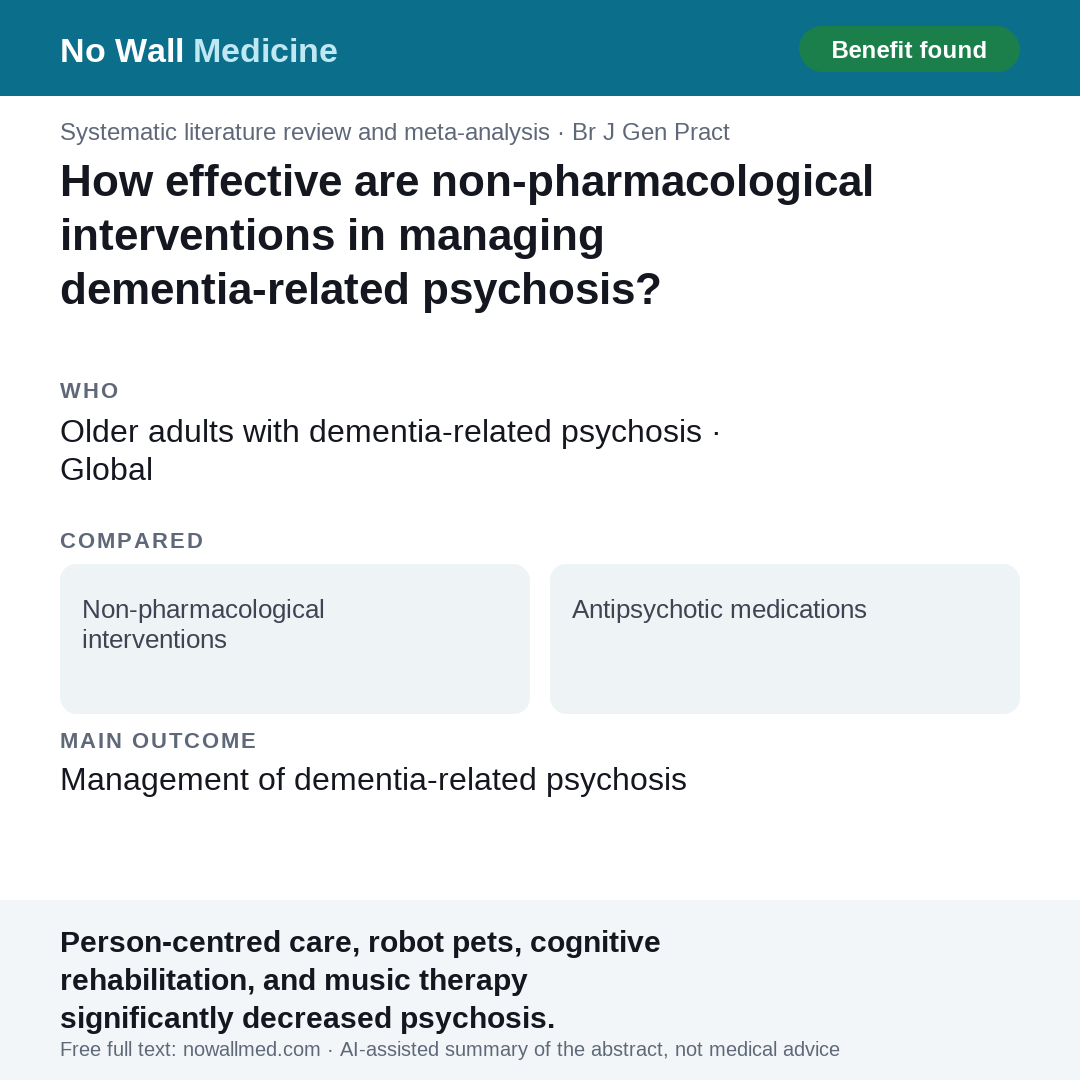
Clinical question: How effective are non-pharmacological interventions in managing dementia-related psychosis?
Why it matters: Antipsychotic medications used for dementia-related psychosis often have short-term efficacy and dangerous side effects.
Key points
- Researchers conducted a systematic literature review and meta-analysis of 18 included papers regarding non-pharmacological management of dementia-related psychosis.
- Person-centred care, robot pets, cognitive rehabilitation, and music therapy significantly decreased psychosis in care homes and for participants living at home.
- Dementia-related psychosis affects an estimated 20-70% of people living with a dementia diagnosis.
Limitation the authors note: Improving dementia-related psychosis was not the primary aim for many of the included interventions.
Headline and key points written with AI from the paper’s abstract, with every number checked against it. Read the paper before relying on them.
Was this summary helpful?
Subject terms
Cite this article
Burnand A, Frost R, Walters K, Rookes T, Davies N. Non-pharmacological interventions in the management of dementia-related psychosis. Br J Gen Pract. 2024. doi:10.3399/bjgp24X737445
Spotted a mistake? Suggest a correction