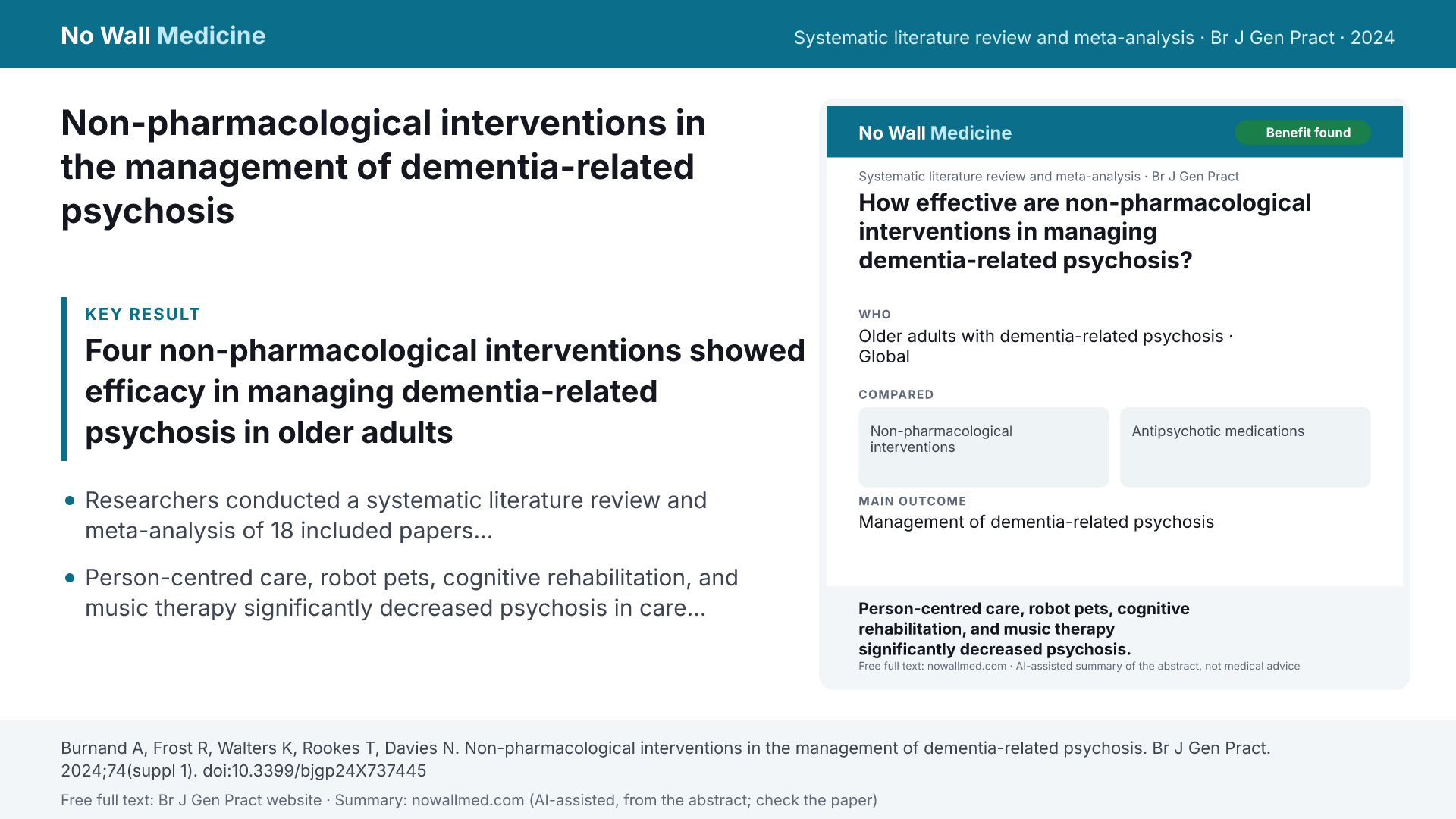
Non-pharmacological interventions in the management of dementia-related psychosis
Key result: Four non-pharmacological interventions showed efficacy in managing dementia-related psychosis in older adults
Key points
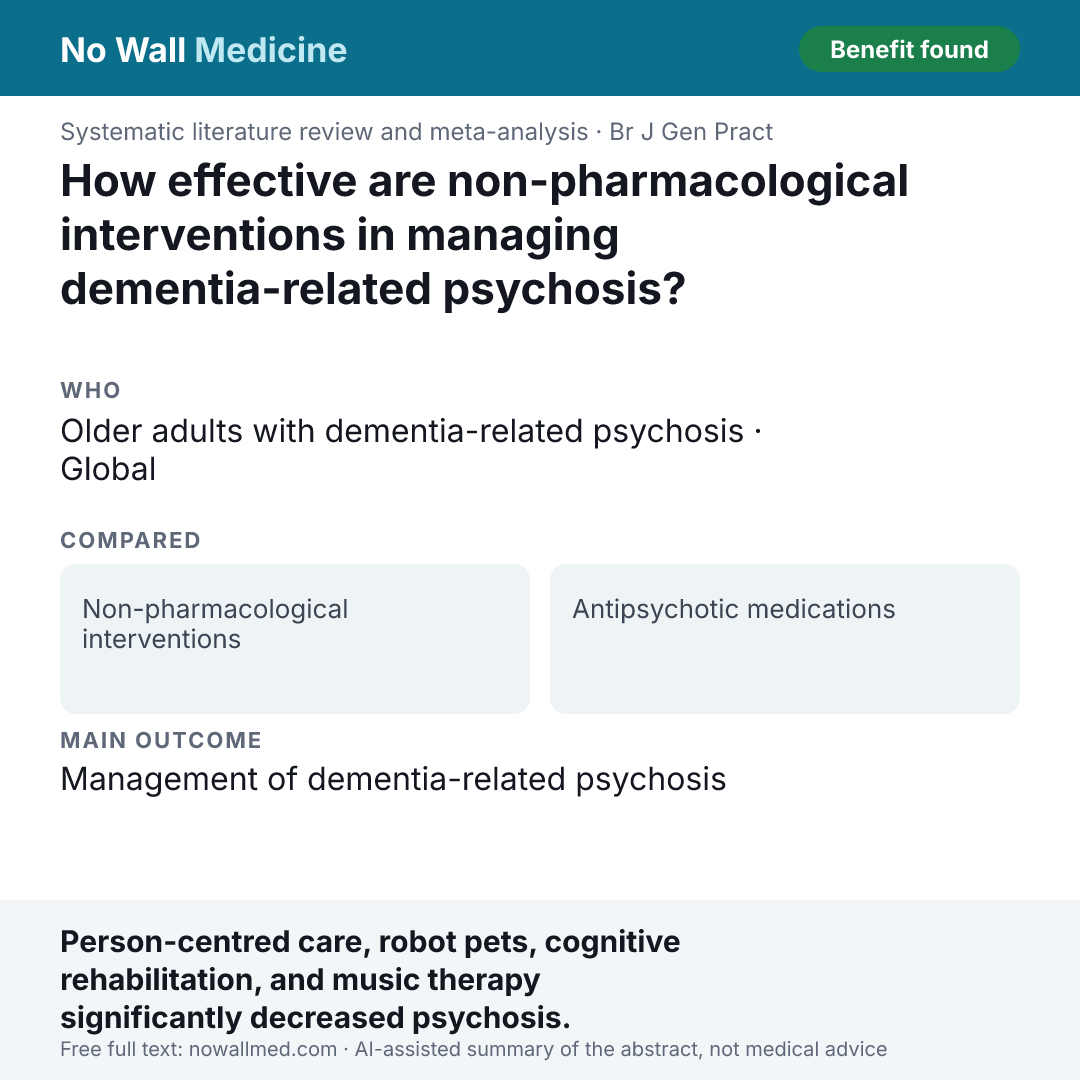
- Researchers conducted a systematic literature review and meta-analysis of 18 included papers regarding non-pharmacological management of dementia-related psychosis.
- Person-centred care, robot pets, cognitive rehabilitation, and music therapy significantly decreased psychosis in care homes and for participants living at home.
- Dementia-related psychosis affects an estimated 20-70% of people living with a dementia diagnosis.
Why it matters: Antipsychotic medications used for dementia-related psychosis often have short-term efficacy and dangerous side effects.
Limitation the authors note: Improving dementia-related psychosis was not the primary aim for many of the included interventions.
Discussion prompts
- Would these patients look like yours? Who was left out?
- Is the main outcome one that matters to patients?
- Is the difference large enough to change what you do?
Cite: Burnand A, Frost R, Walters K, Rookes T, Davies N. Non-pharmacological interventions in the management of dementia-related psychosis. Br J Gen Pract. 2024;74(suppl 1). doi:10.3399/bjgp24X737445
Free full text: Br J Gen Pract website · Summary and visual abstract: nowallmed.com/a/non-pharmacological-interventions-in-the-management-of-dementia-e54fic/ (AI-assisted from the abstract; check the paper before relying on it).