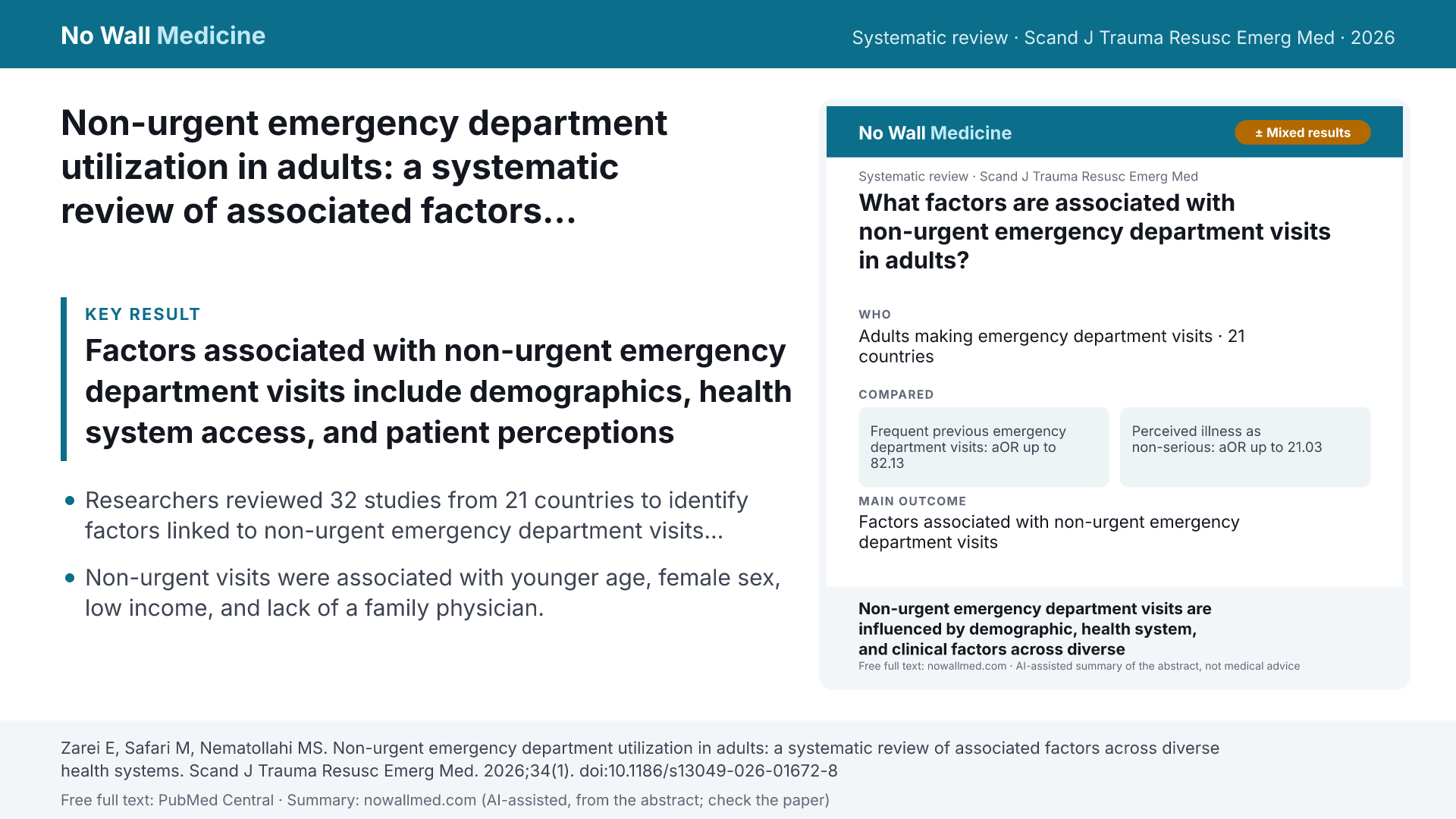
Factors associated with non-urgent emergency department visits include demographics, health system access, and patient perceptions
Non-urgent emergency department utilization in adults: a systematic review of associated factors across diverse health systems
Systematic reviewMixed results
What factors are associated with non-urgent emergency department visits in adults?
Who
Adults making emergency department visits · 21 countries
Compared
Frequent previous emergency department visits: aOR up to 82.13
Perceived illness as non-serious: aOR up to 21.03
Main outcome
Factors associated with non-urgent emergency department visits
Bottom line: Non-urgent emergency department visits are influenced by demographic, health system, and clinical factors across diverse settings.
Scand J Trauma Resusc Emerg Med · 2026-08-13Download image
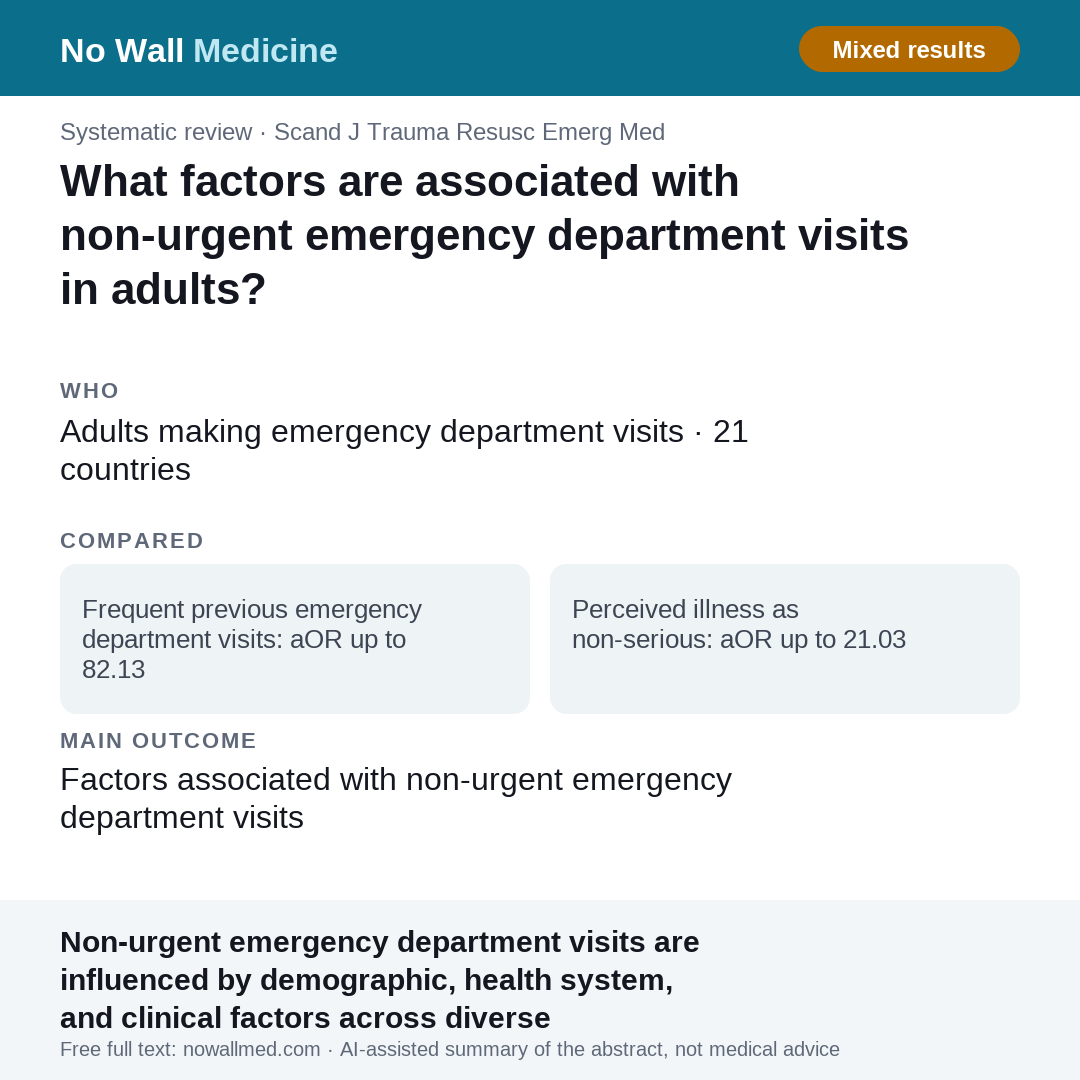
Clinical question: What factors are associated with non-urgent emergency department visits in adults?
Why it matters: It was unknown which patient, health system, and care context factors are associated with non-urgent emergency department visits when using diverse definitions.
Key points
- Researchers reviewed 32 studies from 21 countries to identify factors linked to non-urgent emergency department visits in adults.
- Non-urgent visits were associated with younger age, female sex, low income, and lack of a family physician.
- The strongest associations were linked to frequent previous emergency department visits (aOR up to 82.13) and patients perceiving their illness as non-serious (aOR up to 21.03).
Headline and key points written with AI from the paper’s abstract, with every number checked against it. Read the paper before relying on them.
Was this summary helpful?
Subject terms
Cite this article
Zarei E, Safari M, Nematollahi MS. Non-urgent emergency department utilization in adults: a systematic review of associated factors across diverse health systems. Scand J Trauma Resusc Emerg Med. 2026. doi:10.1186/s13049-026-01672-8
Spotted a mistake? Suggest a correction
Top studies every Monday
The week’s key trials and guidelines in your specialties, plus any topics you follow. By email, free.
Get the weekly digest