Low-intensity focused ultrasound was associated with greater pain reduction than sham stimulation in chronic pain patients
Noninvasive targeted modulation of pain circuits with focused ultrasonic waves
Randomized crossover trialBenefit found
Can low-intensity transcranial-focused ultrasound noninvasively modulate deep brain pain circuits?
Who
20
Twenty patients with chronic pain
Compared
active stimulation: 60.0% reduction immediately, 43.0% on day 1, 33.0% on day 7
sham stimulation: 14.4% immediately, 12.3% on day 1, 6.6% on day 7
Main outcome
reduction of pain severity
Bottom line: Low-intensity transcranial-focused ultrasound of the anterior cingulate cortex provides rapid and durable pain reduction.
Pain · 2024-07-30Download image
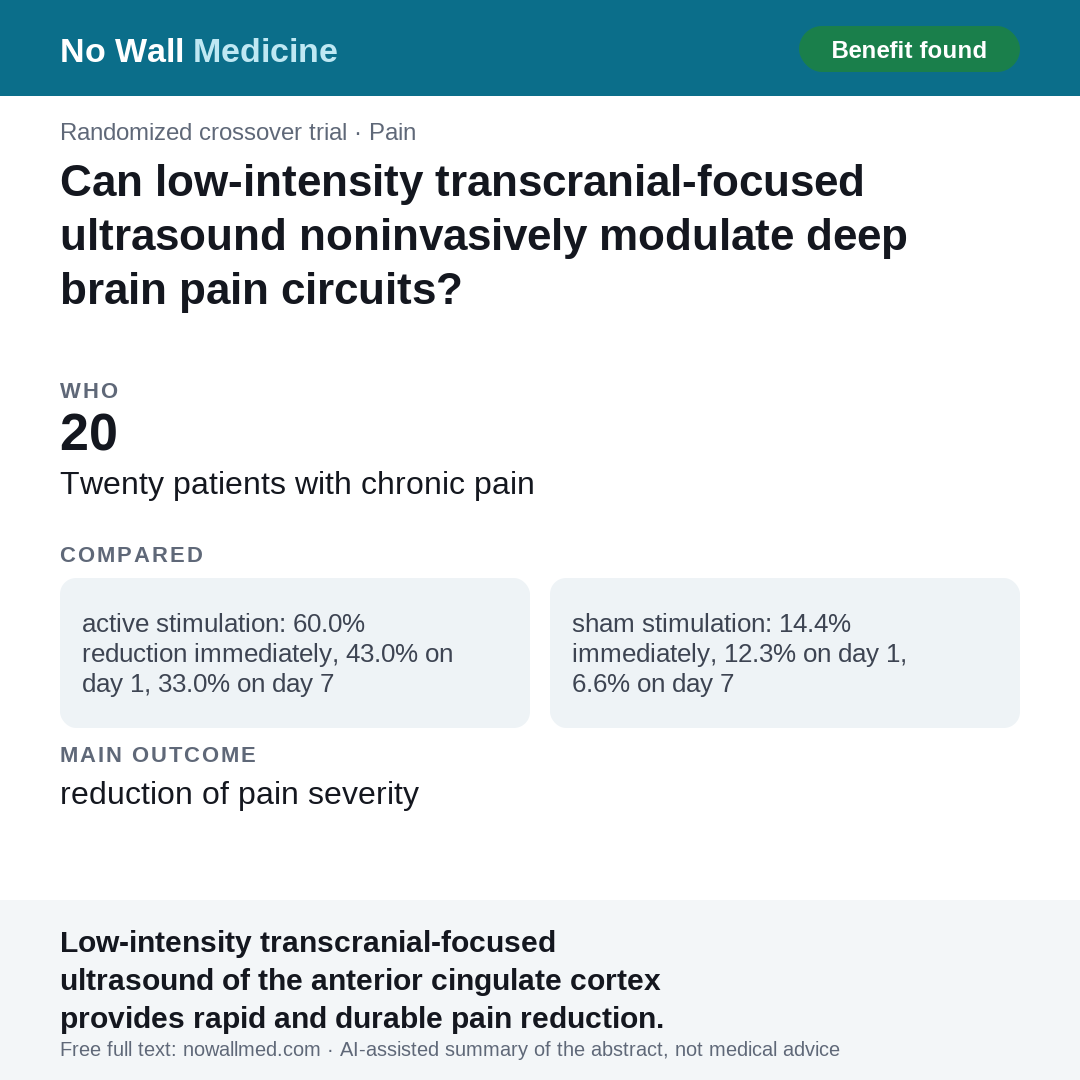
Clinical question: Can low-intensity transcranial-focused ultrasound noninvasively modulate deep brain pain circuits?
Why it matters: Deep brain interventions for chronic pain currently require invasive brain surgeries to target the anterior cingulate cortex.
Key points
- Twenty patients with chronic pain participated in a randomized crossover trial comparing 40-minute active ultrasound stimulation to sham stimulation.
- Active stimulation was associated with a 60.0% average pain reduction immediately after the procedure, compared to 14.4% for sham stimulation.
- Sixty percent of subjects experienced clinically meaningful pain reduction on day 1 and day 7 following active stimulation, compared to 15% and 20% for sham.
Headline and key points written with AI from the paper’s abstract, with every number checked against it. Read the paper before relying on them.
Was this summary helpful?
Subject terms
Cite this article
Riis TS, Feldman DA, Losser AJ, Okifuji A, Kubanek J. Noninvasive targeted modulation of pain circuits with focused ultrasonic waves. Pain. 2024. doi:10.1097/j.pain.0000000000003322
Spotted a mistake? Suggest a correction
Top studies every Monday
The week’s key trials and guidelines in your specialties, plus any topics you follow. By email, free.
Get the weekly digest