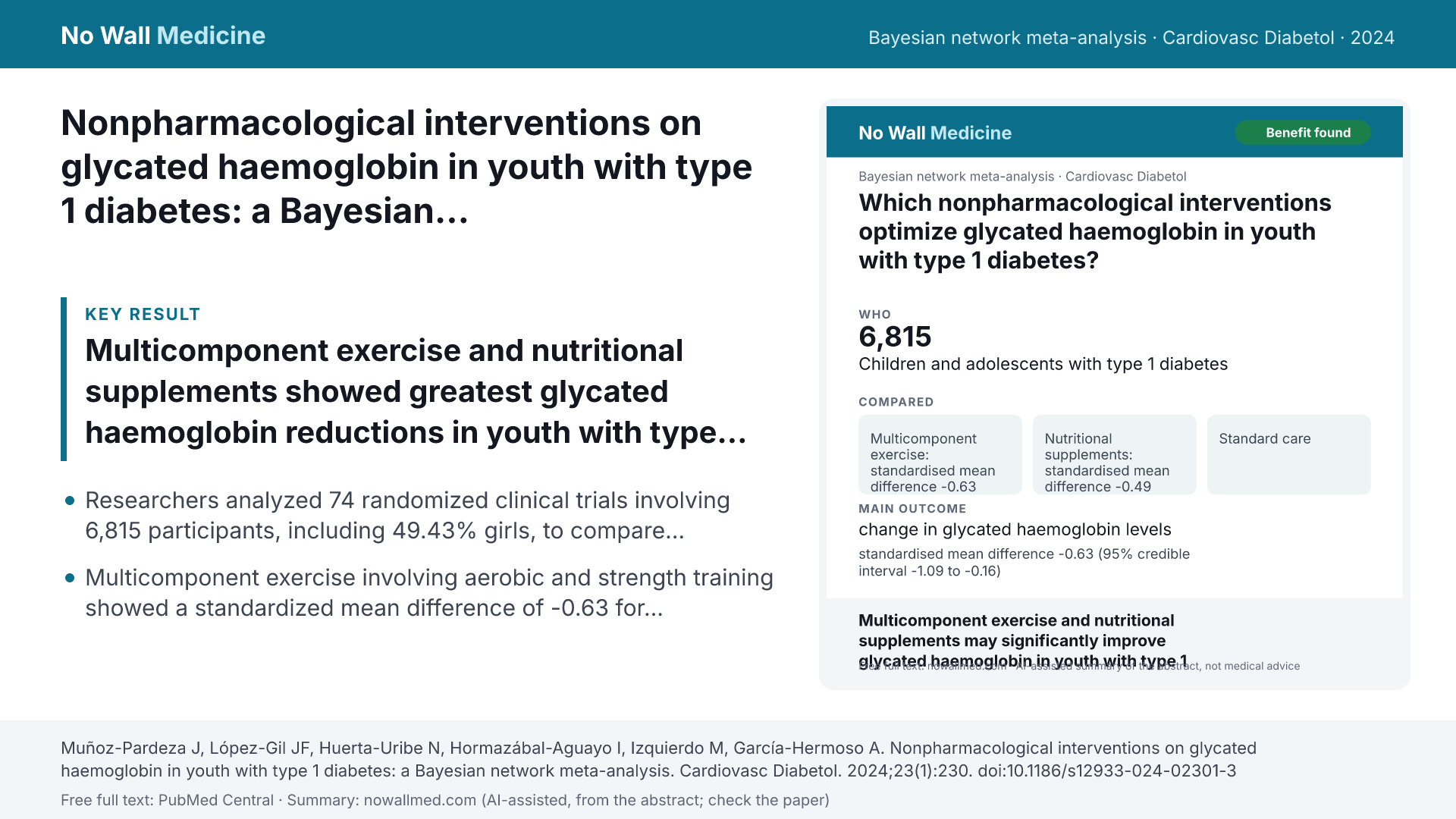
Multicomponent exercise and nutritional supplements showed greatest glycated haemoglobin reductions in youth with type 1 diabetes
Nonpharmacological interventions on glycated haemoglobin in youth with type 1 diabetes: a Bayesian network meta-analysis
Bayesian network meta-analysisBenefit found
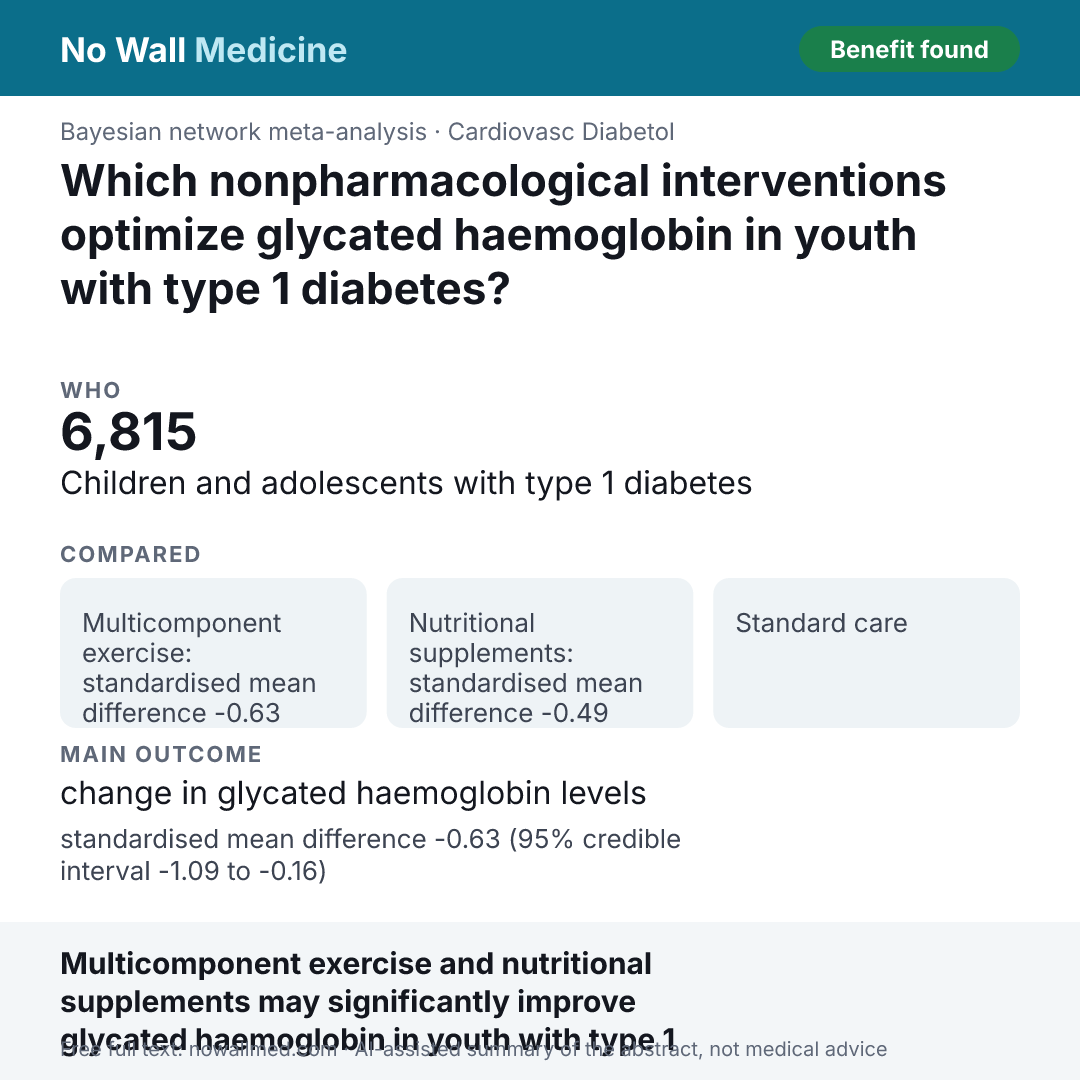
Which nonpharmacological interventions optimize glycated haemoglobin in youth with type 1 diabetes?
Who
6,815
Children and adolescents with type 1 diabetes
Compared
Multicomponent exercise: standardised mean difference -0.63
Nutritional supplements: standardised mean difference -0.49
Standard care
Main outcome
change in glycated haemoglobin levels
Result: standardised mean difference -0.63 (95% credible interval -1.09 to -0.16)
Bottom line: Multicomponent exercise and nutritional supplements may significantly improve glycated haemoglobin in youth with type 1 diabetes.
Limitation: additional research to confirm their efficacy is required
Cardiovasc Diabetol · 2024-07-01 · Save PNG
Clinical question: Which nonpharmacological interventions optimize glycated haemoglobin in youth with type 1 diabetes?
Key points
- Researchers analyzed 74 randomized clinical trials involving 6,815 participants, including 49.43% girls, to compare various non-drug interventions.
- Multicomponent exercise involving aerobic and strength training showed a standardized mean difference of -0.63 for glycated haemoglobin levels.
- Nutritional supplements were associated with a standardized mean difference of -0.49 for glycated haemoglobin and a -0.62 difference for daily insulin needs.
Limitation the authors note: Additional research is required to confirm the efficacy of these approaches.
Headline and key points written with AI from the paper’s abstract, with every number checked against it. Read the paper before relying on them.
Was this summary helpful?
Subject terms
Headline, design, result, key points, caveat and citation as plain text.
Cite this article
Muñoz-Pardeza J, López-Gil JF, Huerta-Uribe N, Hormazábal-Aguayo I, Izquierdo M, García-Hermoso A. Nonpharmacological interventions on glycated haemoglobin in youth with type 1 diabetes: a Bayesian network meta-analysis. Cardiovasc Diabetol. 2024;23(1):230. doi:10.1186/s12933-024-02301-3
Spotted a mistake? Suggest a correction