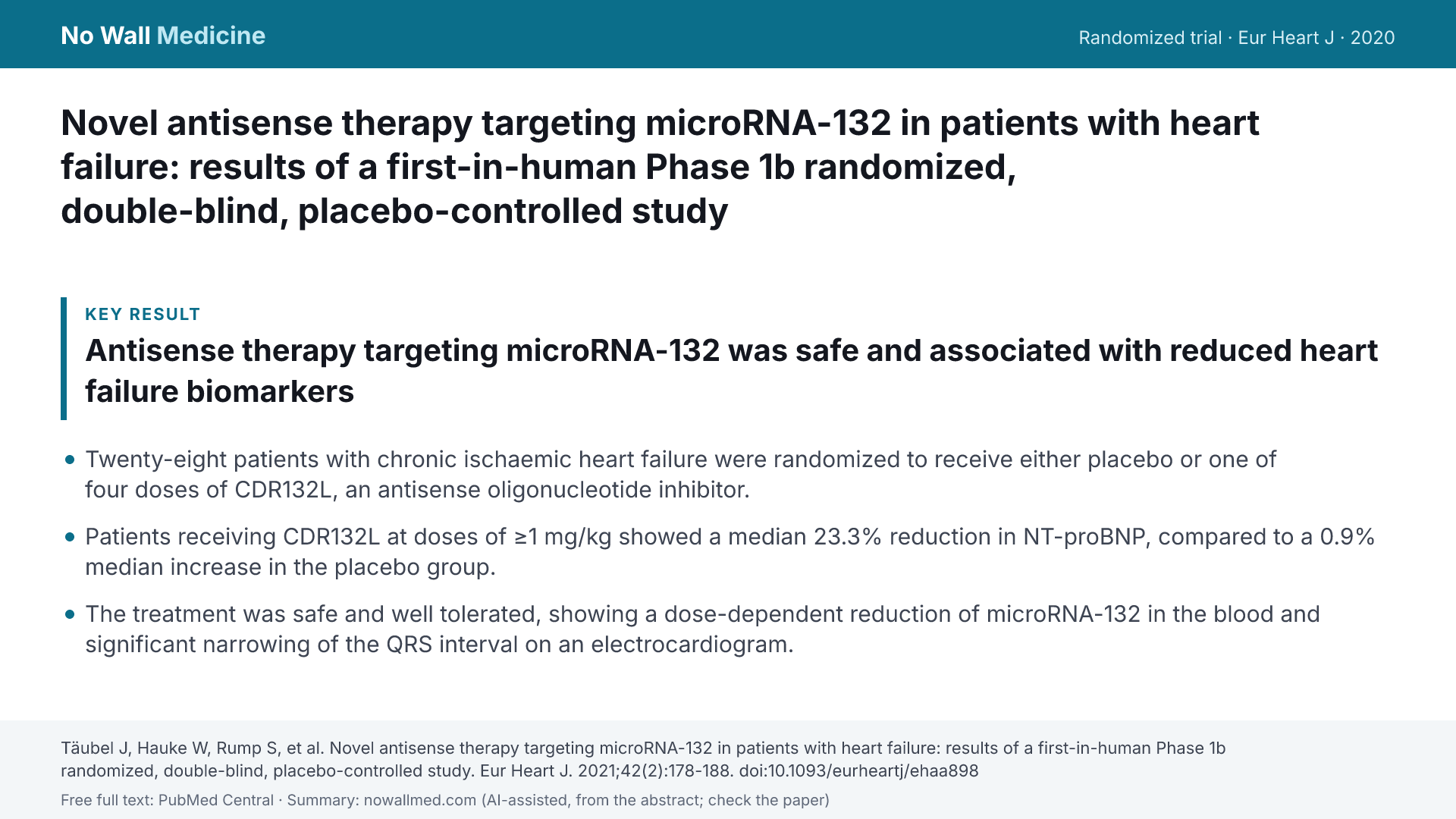
Antisense therapy targeting microRNA-132 was safe and associated with reduced heart failure biomarkers
Novel antisense therapy targeting microRNA-132 in patients with heart failure: results of a first-in-human Phase 1b randomized, double-blind, placebo-controlled study
Key points
- Twenty-eight patients with chronic ischaemic heart failure were randomized to receive either placebo or one of four doses of CDR132L, an antisense oligonucleotide inhibitor.
- Patients receiving CDR132L at doses of ≥1 mg/kg showed a median 23.3% reduction in NT-proBNP, compared to a 0.9% median increase in the placebo group.
- The treatment was safe and well tolerated, showing a dose-dependent reduction of microRNA-132 in the blood and significant narrowing of the QRS interval on an electrocardiogram.
Limitation the authors note: The study is limited by the small patient numbers.
Headline and key points written with AI from the paper’s abstract, with every number checked against it. Read the paper before relying on them.
Was this summary helpful?
Subject terms
Cite this article
Täubel J, Hauke W, Rump S, et al. Novel antisense therapy targeting microRNA-132 in patients with heart failure: results of a first-in-human Phase 1b randomized, double-blind, placebo-controlled study. Eur Heart J. 2021;42(2):178-188. doi:10.1093/eurheartj/ehaa898
Spotted a mistake? Suggest a correction