Nutritional intake and growth in very low birth weight infants: a comparison of standardized versus parent-led complementary feeding
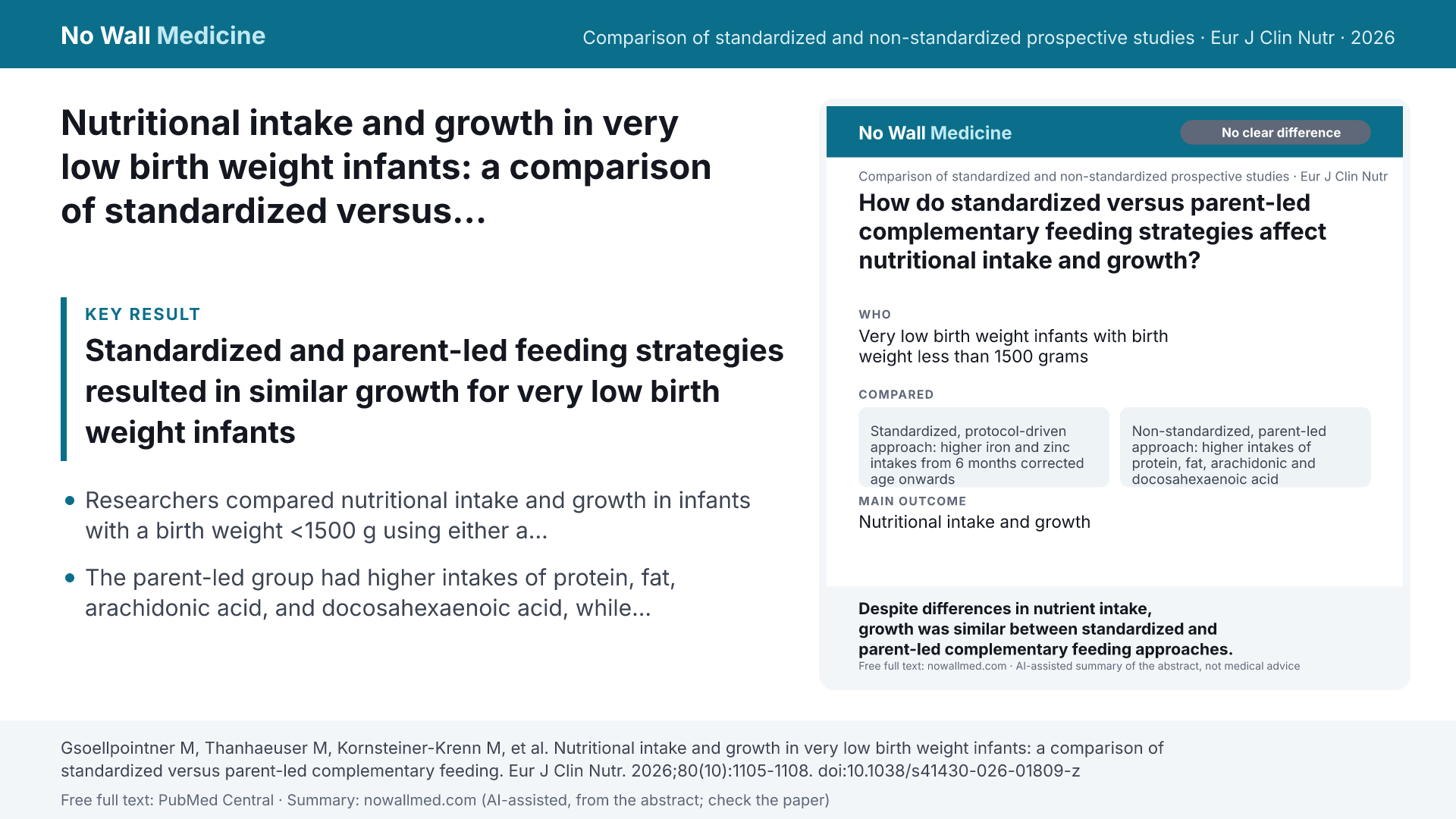
Key result: Standardized and parent-led feeding strategies resulted in similar growth for very low birth weight infants
Key points
- Researchers compared nutritional intake and growth in infants with a birth weight <1500 g using either a standardized protocol or a parent-led approach.
- The parent-led group had higher intakes of protein, fat, arachidonic acid, and docosahexaenoic acid, while the standardized group had higher iron and zinc intakes.
- Despite these differences in nutrient intake, growth was similar between the two cohorts.
Why it matters: The complementary feeding period is critical for ensuring adequate nutrient intake to support optimal growth in very low birth weight infants.
Discussion prompts
- Would these patients look like yours? Who was left out?
- Is the main outcome one that matters to patients?
- Is the difference large enough to change what you do?
Cite: Gsoellpointner M, Thanhaeuser M, Kornsteiner-Krenn M, et al. Nutritional intake and growth in very low birth weight infants: a comparison of standardized versus parent-led complementary feeding. Eur J Clin Nutr. 2026;80(10):1105-1108. doi:10.1038/s41430-026-01809-z
Free full text: PubMed Central · Summary and visual abstract: nowallmed.com/a/nutritional-intake-and-growth-in-very-low-birth-weight-infants-a-itndfx/ (AI-assisted from the abstract; check the paper before relying on it).