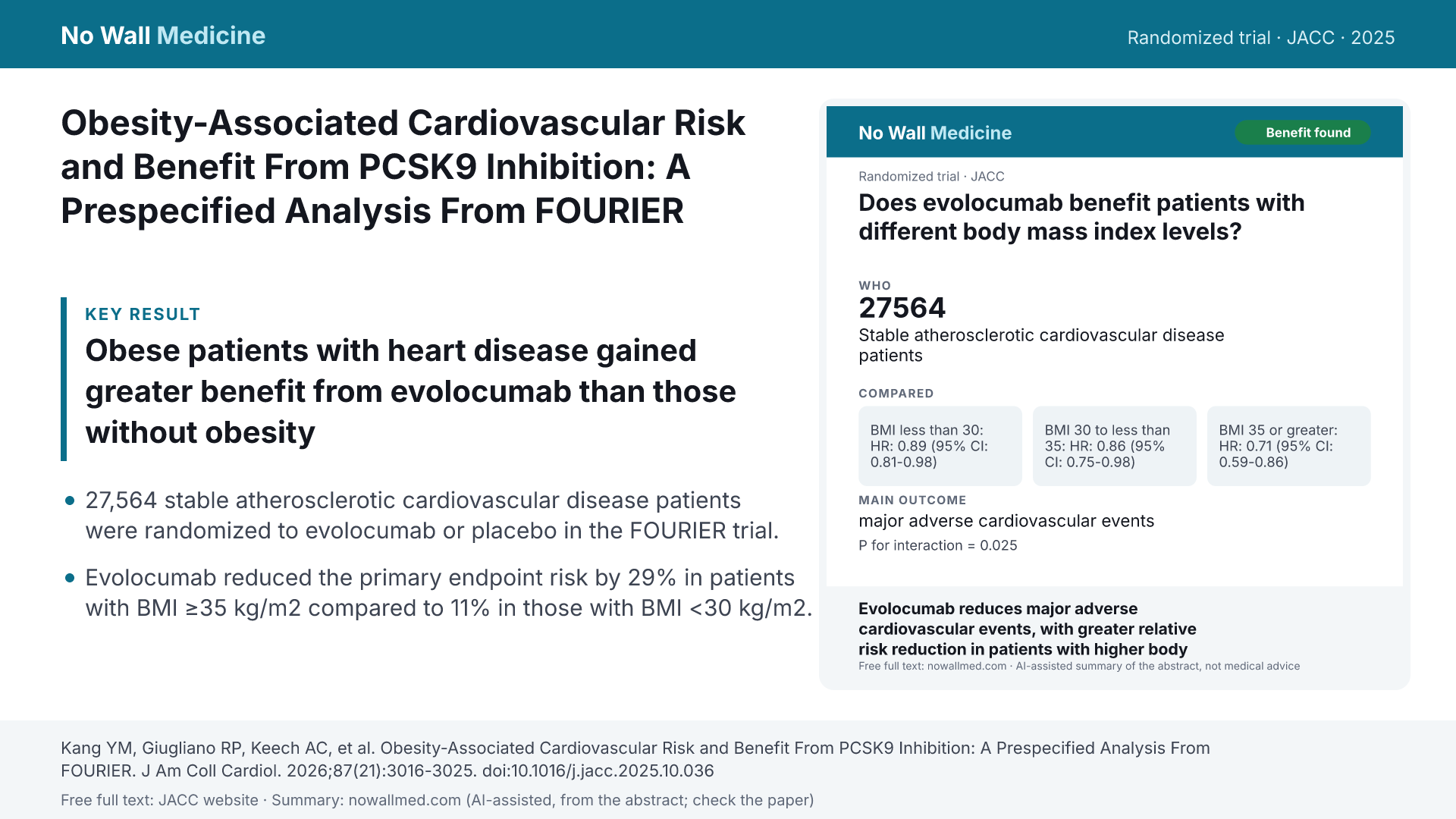
Obese patients with heart disease gained greater benefit from evolocumab than those without obesity
Obesity-Associated Cardiovascular Risk and Benefit From PCSK9 Inhibition: A Prespecified Analysis From FOURIER
Randomized trialBenefit found
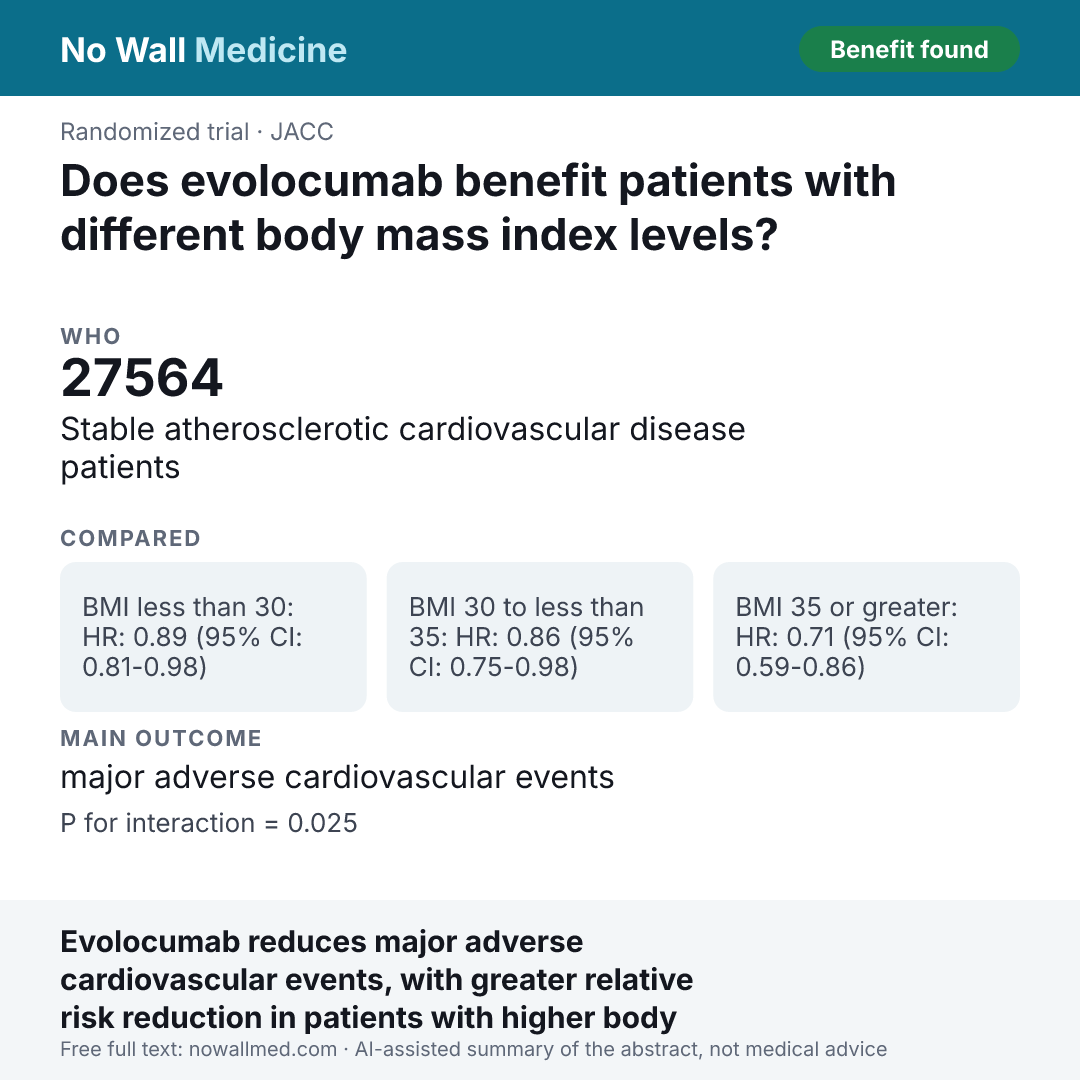
Does evolocumab benefit patients with different body mass index levels?
Who
27564
Stable atherosclerotic cardiovascular disease patients
Compared
BMI less than 30: HR: 0.89 (95% CI: 0.81-0.98)
BMI 30 to less than 35: HR: 0.86 (95% CI: 0.75-0.98)
BMI 35 or greater: HR: 0.71 (95% CI: 0.59-0.86)
Main outcome
major adverse cardiovascular events
Result: P for interaction = 0.025
Bottom line: Evolocumab reduces major adverse cardiovascular events, with greater relative risk reduction in patients with higher body mass index.
JACC · 2025-12-10 · Save PNG
Clinical question: Does evolocumab benefit patients with different body mass index levels?
Key points
- 27,564 stable atherosclerotic cardiovascular disease patients were randomized to evolocumab or placebo in the FOURIER trial.
- Evolocumab reduced the primary endpoint risk by 29% in patients with BMI ≥35 kg/m2 compared to 11% in those with BMI <30 kg/m2.
- In the placebo group, each 5-unit increase in BMI above 30 kg/m2 was linked to an 11% higher risk of major events.
Headline and key points written with AI from the paper’s abstract, with every number checked against it. Read the paper before relying on them.
Was this summary helpful?
Subject terms
Headline, design, result, key points, caveat and citation as plain text.
Cite this article
Kang YM, Giugliano RP, Keech AC, et al. Obesity-Associated Cardiovascular Risk and Benefit From PCSK9 Inhibition: A Prespecified Analysis From FOURIER. J Am Coll Cardiol. 2026;87(21):3016-3025. doi:10.1016/j.jacc.2025.10.036
Spotted a mistake? Suggest a correction